

Wagering on human enhancement, is it likely that lightweight exoskeletons will become common?
Credit: Hypershell
Hypershell is attempting to create a new niche that merges wearables with robotics. This Chinese startup specializes in lightweight exoskeletons designed for both outdoor and daily use, focusing on assistance for the lower limbs. The system utilizes motors and onboard sensors to provide additional power while walking or climbing, reducing strain and enhancing efficiency. In terms of design, it resembles wearable equipment more than conventional industrial exoskeletons.
The team aligns with the typical profile of a hard-tech startup, with core members possessing backgrounds in robotics, mechanical engineering, and consumer electronics. Their experience encompasses both industrial research and development as well as consumer product design. This interdisciplinary background has influenced a product strategy that sets Hypershell apart from traditional medical or industrial exoskeleton manufacturers. Instead, the emphasis is on lightweight design, user-friendliness, and aesthetic appeal, which lowers the barrier for everyday use.
Rather than initially entering highly regulated fields like healthcare or rehabilitation, Hypershell aims for more accessible consumer applications, such as outdoor sports and human enhancement. This strategy circumvents extensive regulatory challenges and allows for quicker iterations and real-world validation of product-market fit. The company perceives its product as a new category that integrates elements of sports equipment and robotics—focused more on augmenting human ability than replacing it.
On the commercial side, Hypershell is adopting a niche-first strategy before expanding further. The current offerings are aimed at outdoor enthusiasts, long-distance hikers, and early adopters more inclined to embrace new technologies. By concentrating on this demographic, the company hopes to establish brand recognition and product credibility before gradually reaching a larger consumer audience. International markets, particularly North America and Europe, are targeted for expansion, given their comparatively high openness to new wearable tech.
Hypershell has successfully navigated several initial funding rounds, with backers primarily from firms invested in hard tech and consumer electronics. Some investors view the company as a potential entry point for consumer-grade applications in the broader robotics field, contending that improving cost management and scaling up manufacturing could open a largely untapped market. However, some concerns persist regarding the need for exoskeleton products to achieve a better balance between battery life, weight, and cost, which remains a significant barrier to widespread adoption.
As developments in battery technology, materials science, and control algorithms progress, lightweight exoskeletons are gradually moving from laboratory settings to the consumer market, though this transition is expected to be slow rather than rapid. In the short term, such devices are more likely to find acceptance as specialized tools for particular applications rather than as everyday consumer items. Reflecting this reality, the company is adopting a methodical approach to product development, emphasizing iterative improvements and real-world user input.
Hypershell anticipates two primary challenges ahead. The first is to further reduce costs without sacrificing performance. Currently, its consumer products are positioned in the mid-to-high price bracket, with the X series exoskeletons priced between approximately $899 and $1,999, depending on the model and configuration. This pricing underscores the early stage of the category and the cost structure associated with hardware components like motors, batteries, and materials.
The second challenge is to identify and validate application scenarios that genuinely hold the potential for scaling through continuous product refinement. If the company can make significant strides in both areas, it has a strong opportunity to secure a position in the developing field of human-machine integration.
Jessie Wu is a tech journalist based in Shanghai, covering consumer electronics, semiconductors, and the gaming industry for TechNode. Reach her via email: jessie.wu@technode.com.


Other articles
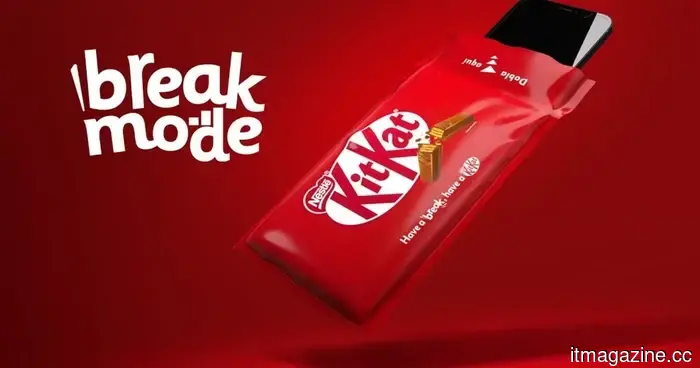 KitKat features a unique chocolate wrapper that disconnects your phone from the external environment.
KitKat has introduced a chocolate wrapper that functions as a Faraday cage, effectively blocking all phone signals as soon as your device is placed inside.
KitKat features a unique chocolate wrapper that disconnects your phone from the external environment.
KitKat has introduced a chocolate wrapper that functions as a Faraday cage, effectively blocking all phone signals as soon as your device is placed inside.
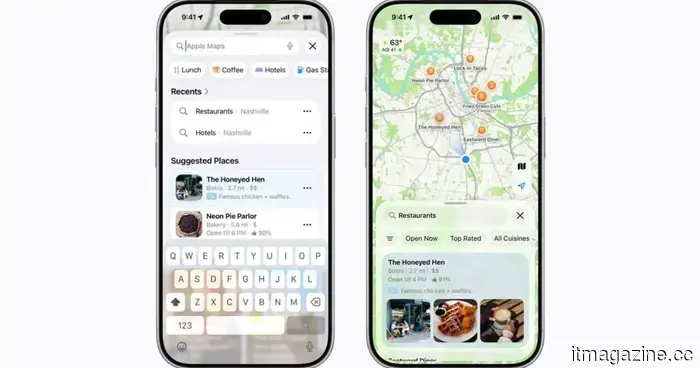 Each call you make is helping to create a map of your city, and it could potentially alleviate our traffic issues.
A group of researchers has developed a tool that illustrates how cities function, utilizing only anonymous cell phone data.
Each call you make is helping to create a map of your city, and it could potentially alleviate our traffic issues.
A group of researchers has developed a tool that illustrates how cities function, utilizing only anonymous cell phone data.
 Anthropic aims for a valuation of $900 billion in a possible $50 billion funding round.
Anthropic is considering a funding round of $50 billion at a valuation exceeding $900 billion, which could position it as more valuable than OpenAI.
Anthropic aims for a valuation of $900 billion in a possible $50 billion funding round.
Anthropic is considering a funding round of $50 billion at a valuation exceeding $900 billion, which could position it as more valuable than OpenAI.
 Banking on human enhancement, will lightweight exoskeletons become widely adopted?
Hypershell aims to establish a new category that merges wearables and robotics. This Chinese startup specializes in developing lightweight exoskeletons.
Banking on human enhancement, will lightweight exoskeletons become widely adopted?
Hypershell aims to establish a new category that merges wearables and robotics. This Chinese startup specializes in developing lightweight exoskeletons.
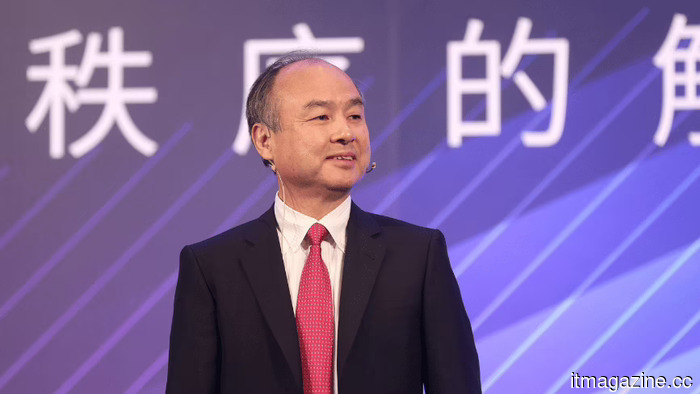 Eight banks are currently supporting SoftBank's unprecedented $40 billion loan to OpenAI.
HSBC, BNP Paribas, and Intesa Sanpaolo are part of a group of eight banks participating in SoftBank's $40 billion bridge loan for OpenAI.
Eight banks are currently supporting SoftBank's unprecedented $40 billion loan to OpenAI.
HSBC, BNP Paribas, and Intesa Sanpaolo are part of a group of eight banks participating in SoftBank's $40 billion bridge loan for OpenAI.
 The Trump administration halts the rollout of Anthropic's Mythos.
The White House has informed Anthropic that it is against the expansion of Mythos access to an additional 70 organizations, citing concerns regarding security and computing resources.
The Trump administration halts the rollout of Anthropic's Mythos.
The White House has informed Anthropic that it is against the expansion of Mythos access to an additional 70 organizations, citing concerns regarding security and computing resources.
Wagering on human enhancement, is it likely that lightweight exoskeletons will become common?
Hypershell is aiming to establish a new category that combines wearables and robotics. The Chinese startup specializes in lightweight exoskeletons.