
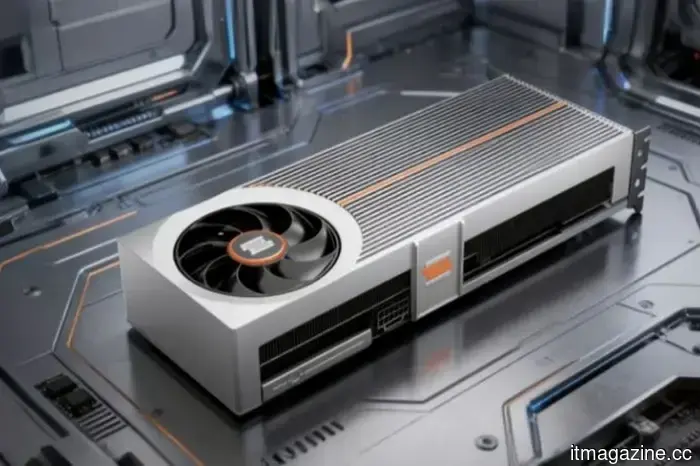
The Chinese GPU manufacturer has received the Microsoft WHQL certification for the first time.
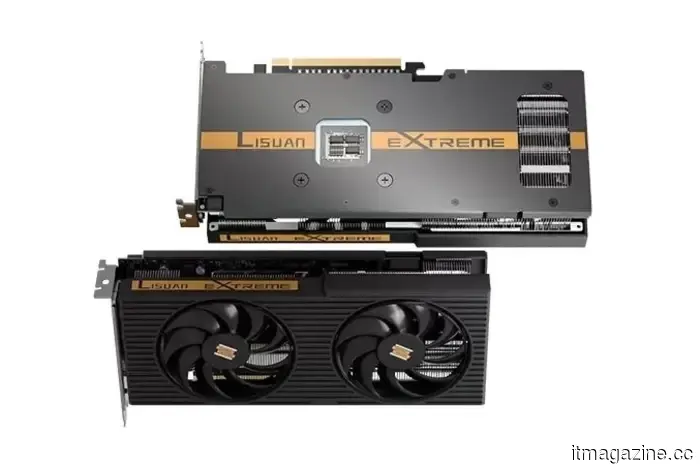
The history of graphics processors for the mass market of Windows has been enriched with a new name. The Chinese company Lisuan Tech, with its graphics card LX 7G100, has officially become the fourth GPU manufacturer in the world whose drivers have passed Microsoft WHQL certification. Previously, this milestone was only achieved by Nvidia, AMD, and Intel.
What is behind the WHQL abbreviation
Microsoft conducts rigorous tests for compatibility, stability, and security of the device's operation with the operating system. Without this mark, drivers do not make it to the Windows Update center, and users have to install them manually at the risk of encountering errors. For Lisuan Tech, obtaining the Windows Hardware Quality Labs certificate means that their GPU will be recognized by the system automatically, work without conflicts, and not scare customers with warnings about unsigned drivers. Essentially, this is a pass into the mass consumer market.
Truly independent development
In an industry where many newcomers use licensed off-the-shelf blocks from ARM or Imagination Technologies, Lisuan Tech emphasizes complete independence. The company claims that its TrueGPU architecture, instruction set, and software stack are created from scratch by its own efforts. This approach allows them not to depend on foreign technologies, although it requires colossal resources for debugging.
The model LX 7G106, which will go on sale on June 18, 2026, on the Chinese platform JD.com, is built on TSMC's 6nm process and is equipped with 12GB of GDDR6 memory. The manufacturer compares its computational capabilities to the Nvidia GeForce RTX 4060 and claims support for heavy games like Cyberpunk 2077. However, the head of Lisuan Tech himself admits that the situation is more complicated in real gaming scenarios. According to him, performance in games needs improvement, especially frame stability and driver maturity.
How competitors will react
Obtaining Microsoft certification is a huge technical success, but competing with decades of optimization from Nvidia and AMD in each specific game is something Lisuan Tech is unlikely to achieve for now. The company has taken the first and very important step, but turning it into full-fledged competition in the global market will not be easy.
For Nvidia, AMD, and Intel, WHQL certification is not an event that can disturb their peace. They passed this milestone many years ago, and for them, having drivers in Windows Update is routine. Therefore, no official statements criticizing or mocking the newcomer are to be expected. It would be akin to a well-established car manufacturer mocking a startup for having its car receive a technical certificate.
Most likely, competitors will move to quiet but targeted actions. They have long been working with the Chinese market, where the use of local components is legislatively encouraged. Now that Lisuan Tech has an officially recognized status, global vendors may offer special conditions or price concessions to large Chinese OEM assemblers to delay replacing imported graphics cards with domestic ones. This is a classic reaction to the emergence of a local competitor.
Another likely step from Nvidia, AMD, and Intel is to subtly emphasize their own advantages where WHQL won't help. They may remind partners and game developers of decades of optimized libraries, ready profiles for thousands of games, and well-established work with professional software.
Skepticism from game developers
Although they are not direct chipmaker competitors, development studios will also react cautiously. One WHQL certification will not prompt them to urgently test their games on Lisuan Tech. They will observe how the drivers perform in real scenarios, considering the candid admission from the head of Lisuan Tech about performance issues in games. Competitors may use this uncertainty to strengthen partnership programs for developers.
Thus, the reaction from American manufacturers will be calm and methodical. They will not raise alarms but will enhance marketing and work with key clients in China. For them, the emergence of Lisuan Tech with full Windows support is not a threat but a reminder that the monopoly on graphics drivers is gradually fading, and they need to pay closer attention to developments.
Geopolitics is more important than certifications
Obtaining WHQL from Microsoft does not, by itself, open doors to America or Europe. It is a technical document that confirms compatibility with Windows but does not grant permission for sales. The path for Lisuan Tech to Western countries is blocked by entirely different barriers, which are not related to the quality of the drivers.
American sanctions as the main barrier
The United States has imposed strict export restrictions on Chinese semiconductor companies, especially those developing advanced GPUs. Lisuan Tech uses TSMC's 6nm process, which formally does not fall under the strictest bans on chip manufacturing equipment, but the mere fact of developing a graphics processor in China draws close attention from American regulators.
Virtually any modern GPU can be used not only in gaming but also in scientific calculations or artificial intelligence. Suspicions of military or dual-use applications will be sufficient grounds to block Lisuan Tech's supplies to the U.S. Moreover, American sanctions may prohibit the use of American software or technologies in development, while Lisuan Tech declares complete independence, but even the mere affiliation with Chinese jurisdiction today is a red card for the American market.
Europe as a slightly more complex case
The European Union has not imposed such direct and extensive sanctions against Chinese chips as the U.S. However, Europe closely coordinates export control with America. Additionally, Europe has certification requirements not only for software but also for hardware safety. European buyers of graphics cards are unlikely to pay mass attention to a new brand from China. They care not only about WHQL but also about reputation, support in popular games, and simply familiarity with Nvidia or AMD. Deprived of a loud name, Lisuan Tech will face a cold reception in Europe even without political obstacles.
Practical logistics are also not in the company's favor
To sell graphics cards in the U.S. or EU, a distribution network must be established, technical support must be provided considering different time zones and languages, and additional permits for importing electronics must be obtained. For a young Chinese company that is just entering the domestic market with one model, such investments are premature. Most likely, the management of Lisuan Tech understands this. Their priority for 2026 is clearly defined. Sales will start on the Chinese platform JD.com, and this is logical. First, they need to gain trust within the country, where the government supports import substitution.
If Lisuan Tech does attempt to penetrate the Western market, competitors will almost certainly leverage political leverage. They may direct inquiries to regulators about the origin of technologies or compliance with sanction regimes. Even in the absence of direct violations, such checks can drag on for years.
Lisuan Tech graphics cards will not appear in America and Europe for now
Formally, no one can prohibit Lisuan Tech from applying for sales in Europe or the U.S. In practice, however, the combination of export control, political tension between China and the West, and lack of brand recognition makes such an exit practically impossible in the coming years. WHQL certification gives the company the right to claim that it is technically ready for the global market.
However, geopolitics will respond with just one thing: it doesn't matter at all.
Other articles
 Uber now allows you to reserve hotel accommodations and have your driver deliver snacks to you.
Uber has introduced hotel booking, in-car snack delivery, and a variety of new travel features during its annual event.
Uber now allows you to reserve hotel accommodations and have your driver deliver snacks to you.
Uber has introduced hotel booking, in-car snack delivery, and a variety of new travel features during its annual event.
 PlayStation requires verification of your documents before you can engage in party chat.
PlayStation's updated age verification methods might safeguard younger players, but gamers are less than pleased about needing to provide a phone number, facial scan, or identification simply to maintain access to party chat.
PlayStation requires verification of your documents before you can engage in party chat.
PlayStation's updated age verification methods might safeguard younger players, but gamers are less than pleased about needing to provide a phone number, facial scan, or identification simply to maintain access to party chat.
 Uber now allows you to reserve hotel accommodations and have your driver deliver snacks.
Uber has introduced hotel reservations, in-car snack delivery, and a series of new travel features at its annual event.
Uber now allows you to reserve hotel accommodations and have your driver deliver snacks.
Uber has introduced hotel reservations, in-car snack delivery, and a series of new travel features at its annual event.
 The recent April update has significantly improved your Google Home.
Gemini for Home has significantly improved its speed, the camera experience in Google Home has undergone a major visual and functional update, and all users now have access to media controls.
The recent April update has significantly improved your Google Home.
Gemini for Home has significantly improved its speed, the camera experience in Google Home has undergone a major visual and functional update, and all users now have access to media controls.
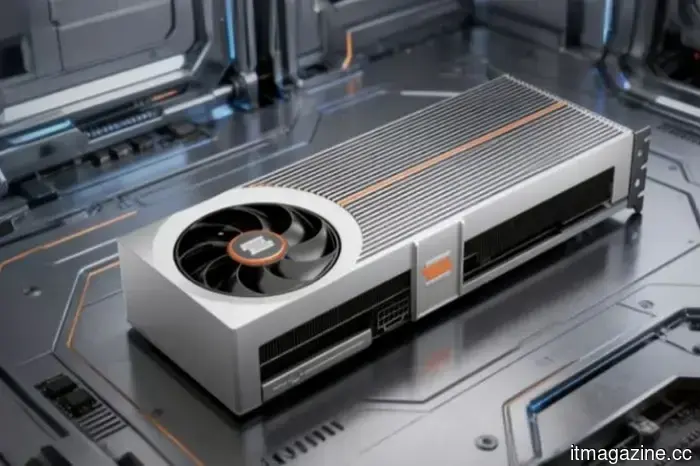 The Chinese GPU manufacturer has received the Microsoft WHQL certification for the first time.
The history of graphics processors for the mass market of Windows has been enriched with a new name. The Chinese company Lisuan Tech, with its LX 7G100 graphics card, has officially become the fourth GPU manufacturer in the world whose drivers have passed Microsoft WHQL certification. Previously, this milestone was only achieved by Nvidia, AMD, and Intel.
The Chinese GPU manufacturer has received the Microsoft WHQL certification for the first time.
The history of graphics processors for the mass market of Windows has been enriched with a new name. The Chinese company Lisuan Tech, with its LX 7G100 graphics card, has officially become the fourth GPU manufacturer in the world whose drivers have passed Microsoft WHQL certification. Previously, this milestone was only achieved by Nvidia, AMD, and Intel.
 Your Google Home has significantly improved with the recent April update.
Gemini for Home has significantly improved its speed, the camera experience in Google Home has undergone a visual and functional revamp, and media controls are now accessible to all users.
Your Google Home has significantly improved with the recent April update.
Gemini for Home has significantly improved its speed, the camera experience in Google Home has undergone a visual and functional revamp, and media controls are now accessible to all users.
The Chinese GPU manufacturer has received the Microsoft WHQL certification for the first time.
The history of graphics processors for the mass market of Windows has been enriched with a new name. The Chinese company Lisuan Tech, with its LX 7G100 graphics card, has officially become the fourth GPU manufacturer in the world whose drivers have passed Microsoft WHQL certification. Previously, this milestone was achieved only by Nvidia, AMD, and Intel.