
LG Electronics and Nvidia are engaged in discussions regarding robotics and AI data centers.
Discussions initiated by Nvidia's Madison Huang aim to enhance LG's physical AI goals and provide Nvidia with an important consumer electronics partner as physical AI transitions from laboratory settings to practical applications on factory floors.
On Wednesday, LG Electronics confirmed that it is in talks with Nvidia regarding potential collaboration in three key areas: robotics, AI data centers, and mobility. This announcement, which was reported by Reuters, followed Huang's visit to LG Electronics’ headquarters in Yeouido, Seoul, where she met with LG CEO Ryu Jae-cheol and representatives from other leading South Korean tech firms.
No formal agreements have been established yet; the discussions are still at an exploratory stage without any specific products, investments, or timelines outlined. However, the topics being covered align closely with both companies’ publicly stated strategic goals, indicating that this is more than a mere courtesy meeting.
What each side offers:
For LG, the rationale behind this collaboration is clear. The company is among the largest manufacturers of home appliances globally, and it has shifted its growth strategy toward AI-integrated physical systems. At CES 2026 in January, LG introduced CLOiD, a home robot equipped with two articulated arms that feature seven degrees of freedom each and five independently acting fingers per hand. This robot embodies LG’s vision of a ‘Zero Labor Home,’ where connected devices and robots streamline household tasks.
LG’s broader strategy on AI, as presented at CES, revolves around three main pillars: product excellence, a coordinated smart home ecosystem, and advancements in AI-enabled vehicles and HVAC solutions for AI data centers. CLOiD utilizes LG’s proprietary ‘Affectionate Intelligence’ platform, which supports contextual awareness, natural interaction, and ongoing learning within the home environment.
However, CLOiD lacks Nvidia’s Isaac robotics system, which includes a simulation environment, pre-trained manipulation models, digital twin infrastructure based on the Omniverse, and GPU computing optimized for real-time physical AI processes—capabilities Nvidia has developed over the past two years.
By integrating Nvidia’s physical AI platform with CLOiD, LG could gain access to a well-established pipeline for moving from development to deployment, reducing the transition period between prototype and production.
For Nvidia, the appeal lies in reaching consumer markets. Its current robotics partnerships, such as the Siemens factory trial where a Humanoid HMND 01 Alpha utilized Nvidia’s AI stack for eight hours of live operations, are primarily situated in industrial contexts. Partnering with LG would open up a different segment, as LG has a vast distribution network, a globally connected base of home appliances through its ThinQ ecosystem, and tangible plans to introduce robots into households.
If Nvidia's Isaac platform is incorporated into CLOiD, it would tap into a rich training environment, involving actual homes, tasks, and variability.
While discussions around robotics are the most prominent, the data center and mobility dialogues may hold even more immediate commercial potential.
Regarding data centers, LG's CES presentation highlighted its aim to be a provider of energy-efficient HVAC and thermal management solutions for AI data centers, a field that is becoming increasingly important as GPU clusters demand more efficient cooling solutions. Nvidia’s data center business has been a major contributor to its record revenues over the last two years, representing the leading context for AI infrastructure deployment globally. A partnership in data center thermal management could position LG as a hardware supplier within Nvidia’s ecosystem, providing support at the infrastructure level alongside the AI compute layer.
In terms of mobility, both companies have established automotive AI programs that align well for potential collaboration. Nvidia’s DRIVE platform is one of the most widely utilized AI computing systems within autonomous vehicles. LG’s automotive components division, which develops in-vehicle infotainment, camera systems, and AI-driven in-vehicle solutions, is among LG’s fastest-growing units. By collaborating, they could integrate LG’s in-cabin AI features with Nvidia’s DRIVE compute platform.
Wednesday’s announcement indicates that the physical AI landscape—where AI is deployed in robots and autonomous systems operating in the real world, distinct from software models in the cloud—is accelerating from previous controlled trials into formal commercial partnerships. For instance, Sereact has raised $110 million to enhance robot adaptability, highlighting the influx of capital into the robotics intelligence segment. The previous Siemens-Nvidia deployment illustrated that physical AI could function in active production settings; the discussions with LG imply that this technology is now moving into consumer households.
For Nvidia, extending physical AI partnerships beyond strictly industrial applications into consumer electronics is strategically significant. Its Omniverse and Isaac platforms are designed as universal frameworks for physical AI, much like its GPU architecture has become the standard for cloud AI. Each major robotics company that incorporates the Nvidia stack reinforces this position. LG, with its extensive home appliance reach and commitment to integrating robots into households, represents a fundamentally different and potentially larger type of partner compared to a German factory or logistics warehouse.
Other articles
 China warns the EU of extensive reprisals.
China's commerce ministry has officially warned the EU of potential retaliation if the new Cybersecurity Act prohibits Huawei and ZTE.
China warns the EU of extensive reprisals.
China's commerce ministry has officially warned the EU of potential retaliation if the new Cybersecurity Act prohibits Huawei and ZTE.
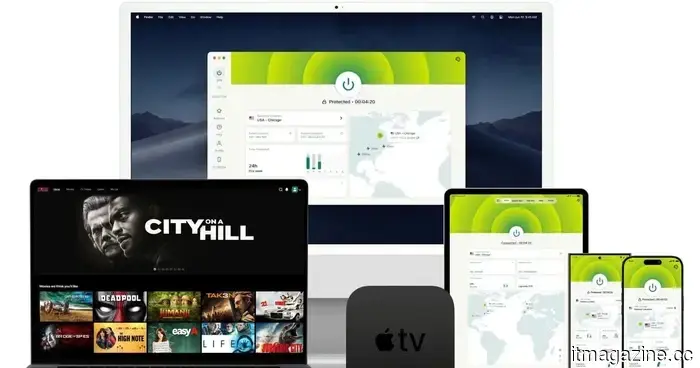 ExpressVPN Simplifies Your Internet Experience and Continues to Be the Benchmark for Privacy in 2026
Concerned about your data being monitored or your connection being insecure? ExpressVPN sets the standard for a more secure online experience, enabling you to browse safely without interfering with your surfing, starting at just $3.49 per month.
ExpressVPN Simplifies Your Internet Experience and Continues to Be the Benchmark for Privacy in 2026
Concerned about your data being monitored or your connection being insecure? ExpressVPN sets the standard for a more secure online experience, enabling you to browse safely without interfering with your surfing, starting at just $3.49 per month.
 LG Electronics and Nvidia are discussing collaboration in the fields of robotics and AI data centers.
LG Electronics and Nvidia have announced discussions regarding robotics, AI data centers, and mobility, following a visit from Nvidia's Madison Huang to LG's headquarters in Seoul.
LG Electronics and Nvidia are discussing collaboration in the fields of robotics and AI data centers.
LG Electronics and Nvidia have announced discussions regarding robotics, AI data centers, and mobility, following a visit from Nvidia's Madison Huang to LG's headquarters in Seoul.
 Claude recently acquired a scam detector, which could help you avoid an expensive error.
Malwarebytes is now combined with Claude. Simply paste a potentially harmful link, phone number, or email address to receive an immediate response about its legitimacy.
Claude recently acquired a scam detector, which could help you avoid an expensive error.
Malwarebytes is now combined with Claude. Simply paste a potentially harmful link, phone number, or email address to receive an immediate response about its legitimacy.
 Perplexity Comet Browser has finally mastered multitasking on the iPad.
Perplexity Comet now functions more seamlessly with iPadOS, providing users with a compelling reason to consider the AI browser instead of Safari or Chrome.
Perplexity Comet Browser has finally mastered multitasking on the iPad.
Perplexity Comet now functions more seamlessly with iPadOS, providing users with a compelling reason to consider the AI browser instead of Safari or Chrome.
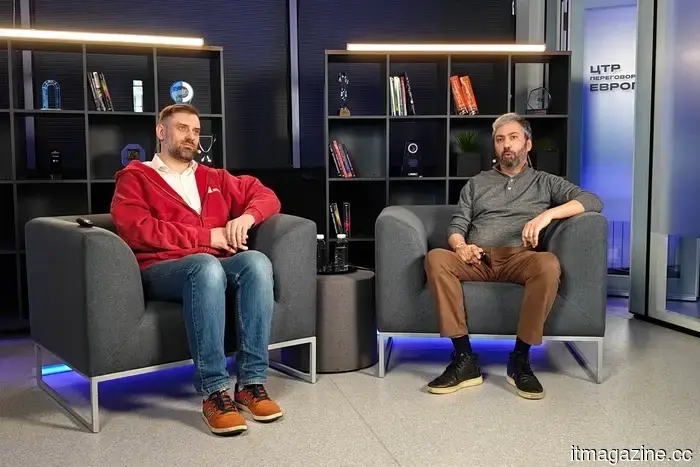 Cyber Backup 18.5 focuses on performance in large infrastructures.
Timur Guseynov, product marketing manager, and Dmitry Antonov, director of backup systems, conducted a presentation on Cyber Backup 18.5: about why the release is dedicated specifically to performance, what tasks it addresses in enterprise scenarios, and what lies ahead for the product.
Cyber Backup 18.5 focuses on performance in large infrastructures.
Timur Guseynov, product marketing manager, and Dmitry Antonov, director of backup systems, conducted a presentation on Cyber Backup 18.5: about why the release is dedicated specifically to performance, what tasks it addresses in enterprise scenarios, and what lies ahead for the product.
LG Electronics and Nvidia are engaged in discussions regarding robotics and AI data centers.
LG Electronics and Nvidia have announced discussions regarding robotics, AI data centers, and mobility, following a visit from Nvidia’s Madison Huang to LG's headquarters in Seoul.