
LG Electronics and Nvidia are discussing collaboration in the fields of robotics and AI data centers.
The conversations, initiated by a visit from Nvidia’s Madison Huang, would enhance LG’s ambitions in physical AI and provide Nvidia with another significant consumer electronics partner at a time when physical AI is transitioning from research labs to real-world applications.
On Wednesday, LG Electronics confirmed that it has been in talks with Nvidia regarding potential collaboration in three key fields: robotics, AI data centers, and mobility. This announcement, which was reported by Reuters, follows Madison Huang's visit to LG Electronics' headquarters in Yeouido, Seoul, along with other prominent South Korean tech firms. LG CEO Ryu Jae-cheol was present at the meeting.
As of now, no formal agreement has been made public. The discussions are still in the early exploratory phase, and no specific products, investment figures, or timelines have been defined. However, the three areas being discussed align clearly with both companies' most emphasized strategic goals, indicating that the discussions are substantial rather than just a courtesy meeting.
What do both sides bring to the negotiating table?
For LG, the rationale is clear. The company stands as one of the largest home appliance manufacturers globally, but its growth strategy has increasingly shifted towards AI-integrated physical systems.
At CES 2026 in January, LG introduced CLOiD, a home robot equipped with two articulated arms, each with seven degrees of freedom and five individually functioning fingers. This robot reflects the company’s ‘Zero Labor Home’ vision, where interconnected robots and appliances take over household tasks' manual and cognitive demands.
LG’s broader presentation at CES emphasized its AI strategy, focusing on three main pillars: outstanding devices, a coordinated smart home ecosystem, and expansion into AI-driven vehicles as well as AI data center HVAC solutions.
CLOiD operates on LG’s own ‘Affectionate Intelligence’ platform, which provides contextual awareness, natural interaction, and ongoing learning from the home environment.
However, it lacks Nvidia’s Isaac robotics stack, which includes a simulation environment, pre-trained manipulation models, an Omniverse-based digital twin infrastructure, and GPU compute resources optimized for real-time physical AI inference that Nvidia has been developing over the last two years.
Incorporating Nvidia’s physical AI platform into CLOiD would grant LG access to a validated development-to-deployment pipeline that can streamline the transition from prototype to production, something that other serious robotics firms are racing to obtain.
For Nvidia, the appeal lies in reaching a consumer scale. Its current robotics collaborations, like the Siemens factory trial, where a Humanoid HMND 01 Alpha operated for eight hours on the Nvidia physical AI stack, are primarily focused on industrial and enterprise environments.
Partnership with LG would represent an entirely different sector: a company with extensive mass-market distribution, a global network of connected home appliances through its ThinQ ecosystem, and plans to introduce a robot into consumers' homes.
If Nvidia’s Isaac framework is integrated into CLOiD, it would gain access to an incredibly data-rich training environment involving real households, actual tasks, and significant variability.
While the robotics aspect is the most prominent, discussions surrounding data centers and mobility may hold greater immediate commercial importance.
Regarding data centers, LG’s CES presentation clearly positioned the company as a provider of high-efficiency HVAC and thermal management solutions specifically for AI data centers, a critical product category given the rising power density of GPU clusters, which makes traditional cooling systems inadequate.
Nvidia’s data center operations, which significantly contributed to its record revenues in the past two years, represent the most significant context for AI infrastructure deployment worldwide.
A partnership focused on data center thermal management would establish LG as a hardware supplier within Nvidia’s ecosystem at the infrastructure level, enhancing the AI compute layer rather than competing against it.
In terms of mobility, both companies have established automotive AI initiatives that align well for collaboration. Nvidia’s DRIVE platform is one of the most widely implemented AI computing systems in autonomous and semi-autonomous vehicles.
LG’s automotive components division, which manufactures in-vehicle infotainment, camera systems, EV components, and various ‘AI-powered in-vehicle solutions’ such as gaze-tracking and multimodal generative AI platforms, is one of LG’s fastest growing areas.
The two firms already work within overlapping functionalities of vehicles; formal collaboration could potentially merge LG’s in-cabin AI experience with Nvidia’s DRIVE computing platform.
Wednesday’s announcement marks a notable indication that the race in physical AI—the application of AI in robots and autonomous systems in the real world, as opposed to cloud-based software models—is evolving from trial phases into commercial partnerships.
For instance, Sereact raised $110 million to advance AI that enables adaptable robotics, emphasizing the influx of capital into the intelligence layer of robotics. The Siemens–Nvidia factory trial showcased the practicality of physical AI in real production settings; the discussions with LG suggest that this is extending into consumer households.
For Nvidia, expanding its physical AI partnerships beyond strictly industrial applications to include
Other articles
 Snapchat's latest advertising format makes AI chatbots resemble sales representatives.
Snapchat's AI Sponsored Snaps might appear to be a novel advertising format, but they also demonstrate the rapid transition of chatbots from handling complaints to pursuing sales.
Snapchat's latest advertising format makes AI chatbots resemble sales representatives.
Snapchat's AI Sponsored Snaps might appear to be a novel advertising format, but they also demonstrate the rapid transition of chatbots from handling complaints to pursuing sales.
 Perplexity Comet Browser has finally mastered multitasking on the iPad.
Perplexity Comet now integrates more seamlessly with iPadOS, providing users with a compelling reason to choose the AI browser over Safari or Chrome.
Perplexity Comet Browser has finally mastered multitasking on the iPad.
Perplexity Comet now integrates more seamlessly with iPadOS, providing users with a compelling reason to choose the AI browser over Safari or Chrome.
 Claude recently acquired a scam detector, which could help you avoid an expensive error.
Malwarebytes is now combined with Claude. Simply paste a potentially harmful link, phone number, or email address to receive an immediate response about its legitimacy.
Claude recently acquired a scam detector, which could help you avoid an expensive error.
Malwarebytes is now combined with Claude. Simply paste a potentially harmful link, phone number, or email address to receive an immediate response about its legitimacy.
 Perplexity Comet Browser has finally mastered multitasking on the iPad.
Perplexity Comet now functions more seamlessly with iPadOS, providing users with a compelling reason to consider the AI browser instead of Safari or Chrome.
Perplexity Comet Browser has finally mastered multitasking on the iPad.
Perplexity Comet now functions more seamlessly with iPadOS, providing users with a compelling reason to consider the AI browser instead of Safari or Chrome.
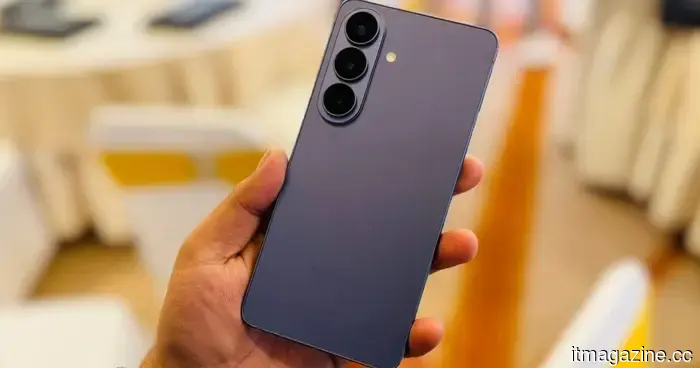 The Galaxy S27 series from Samsung could finally move away from the uninspiring camera design.
Samsung is said to be experimenting with a different camera arrangement for the Galaxy S27, and this adjustment may be introduced due to the new magnetic charging feature.
The Galaxy S27 series from Samsung could finally move away from the uninspiring camera design.
Samsung is said to be experimenting with a different camera arrangement for the Galaxy S27, and this adjustment may be introduced due to the new magnetic charging feature.
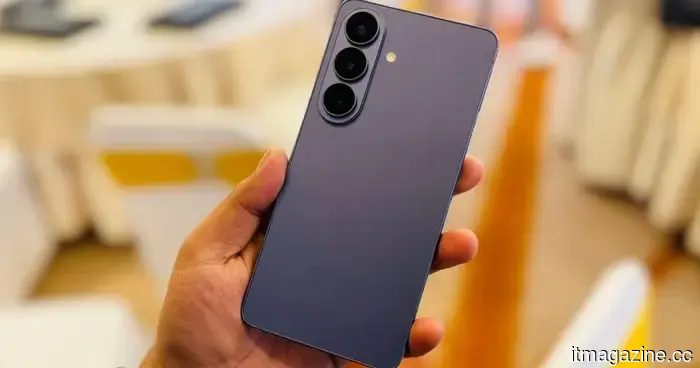 Samsung's Galaxy S27 series may finally move away from the unexciting camera design.
Samsung is said to be experimenting with a different camera arrangement for the Galaxy S27, and this modification may be due to the introduction of new magnetic charging capabilities.
Samsung's Galaxy S27 series may finally move away from the unexciting camera design.
Samsung is said to be experimenting with a different camera arrangement for the Galaxy S27, and this modification may be due to the introduction of new magnetic charging capabilities.
LG Electronics and Nvidia are discussing collaboration in the fields of robotics and AI data centers.
LG Electronics and Nvidia have announced discussions regarding robotics, AI data centers, and mobility, following a visit from Nvidia's Madison Huang to LG's headquarters in Seoul.