

WhatsApp for Windows feels worse than it ever has, and I'm exhausted from pretending that's not the case.
WhatsApp for PC is generally viewed as a basic app that doesn’t warrant much thought. Like its versions for Android and iOS, it is designed to be a dependable messaging tool for keeping in touch with friends, family, and work.
You launch the app, respond to messages, attach files, possibly take a brief call, and continue with your day. However, the current iteration of WhatsApp for Windows feels as if it is constantly resisting you in these regards.
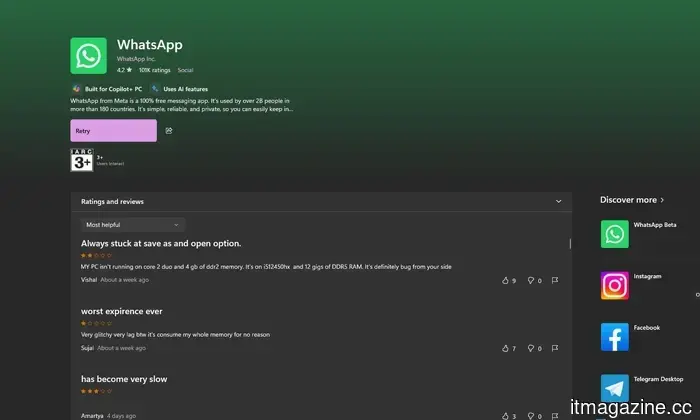
In recent months, the app has become progressively controversial among desktop users. Common issues reported include sluggish typing, slow startup, excessive RAM consumption, chat synchronization problems, unexpected logouts, and an overarching sense that the app now functions more like a web interface than a true Windows desktop application.
What are the main challenges?
Many users believe that Meta has essentially replaced a more efficient native Windows application with a WebView2-based version, and the complaints correspond with what you would anticipate from such a change. A recent Reddit thread from late March described the latest version as a cumbersome "web wrapper," citing idle RAM consumption close to 2GB, noticeable input lag, slower startup times, and poorer offline functionality.
Most of these frustrations mirrored my own encounters with the app in the past few weeks. PC Gamer documented the same transition, observing similar reports of significantly increased memory usage compared to the previous UWP app. All of this is frustrating on its own—and given how crucial responsiveness is for desktop messaging applications, any minor inconvenience makes the entire experience feel flawed.
Another significant issue is the reconnection problem that has affected the app for months. Even if the app remains open, WhatsApp on Windows can become entirely unresponsive, requiring you to manually click a "reconnect" prompt to begin receiving messages again. This is puzzling, as messaging is a core function of any messaging application.
Users are frustrated with persistent issues
User feedback is consistently repetitive. They frequently mention problems like delayed typing, sluggish scrolling, slow loading times, crashes, and recurrent logouts that necessitate re-linking the app and resynchronizing chats. There have even been cases of users being logged out "mid-conversation."
Several commenters in those discussions have stated they are reverting to the browser or using WhatsApp Web as an application because it feels more reliable.
It seems as if Meta is indifferent
The current experience of WhatsApp for Windows is a continual trade-off. The app is bulkier, slower, less user-friendly, and less dependable than it ought to be. The most frustrating aspect is that this is not a complex creative tool or specialized software.
It is a messaging application, one of the most fundamental types of software that people engage with daily. If WhatsApp for PC cannot maintain a reliable connection, remain quick, and function as expected, then it is failing at the one task it absolutely needed to accomplish.

Other articles
 The Intel Wildcat Lake processors are quite expensive, yet testing reveals they fall short compared to the MacBook Neo.
Intel's Wildcat Lake processors are designed to be fanless, suitable for laptops, and come with a surprisingly high price tag. Here’s what you should know before you get too enthusiastic.
The Intel Wildcat Lake processors are quite expensive, yet testing reveals they fall short compared to the MacBook Neo.
Intel's Wildcat Lake processors are designed to be fanless, suitable for laptops, and come with a surprisingly high price tag. Here’s what you should know before you get too enthusiastic.
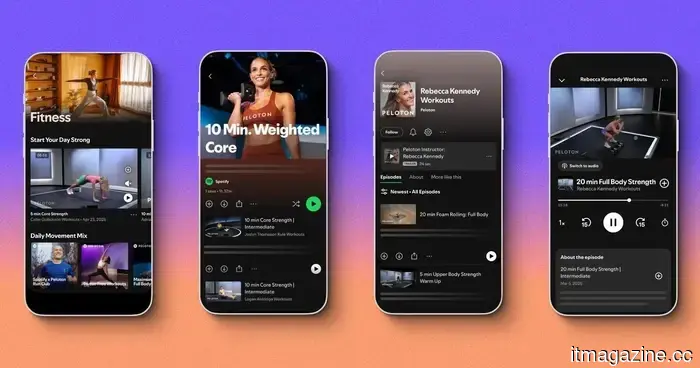 Spotify aims to serve as your fitness coach by offering guided workout sessions.
Spotify has officially ventured into the fitness sector by launching a specialized Fitness hub, allowing Premium users to access more than 1,400 Peloton classes on demand.
Spotify aims to serve as your fitness coach by offering guided workout sessions.
Spotify has officially ventured into the fitness sector by launching a specialized Fitness hub, allowing Premium users to access more than 1,400 Peloton classes on demand.
 VITURE Beast XR glasses launch featuring a 174-inch virtual display and an expanded field of view.
VITURE has introduced its Beast XR glasses, which feature an expanded virtual display, enhanced brightness, and standalone capabilities, with the intention of making XR experiences more accessible to everyday users.
VITURE Beast XR glasses launch featuring a 174-inch virtual display and an expanded field of view.
VITURE has introduced its Beast XR glasses, which feature an expanded virtual display, enhanced brightness, and standalone capabilities, with the intention of making XR experiences more accessible to everyday users.
 Samsung's wallet introduces an impressive trip planning feature that will make you desire a Galaxy phone.
Samsung has introduced a solution for scattered travel confirmations: the new Trips feature in Samsung Wallet, which consolidates all aspects of your journey into a single, organized, chronological display.
Samsung's wallet introduces an impressive trip planning feature that will make you desire a Galaxy phone.
Samsung has introduced a solution for scattered travel confirmations: the new Trips feature in Samsung Wallet, which consolidates all aspects of your journey into a single, organized, chronological display.
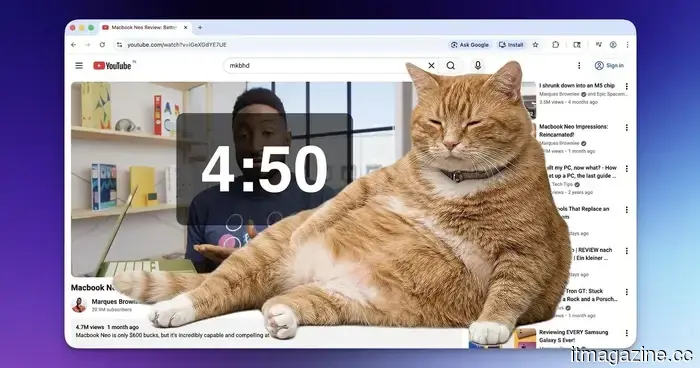 This Chrome extension allows an adorable overweight ginger cat to occupy your screen until you decide to take a break.
Unable to stop scrolling? This free Chrome extension brings a cute cat to your screen whenever you spend excessive time on social media.
This Chrome extension allows an adorable overweight ginger cat to occupy your screen until you decide to take a break.
Unable to stop scrolling? This free Chrome extension brings a cute cat to your screen whenever you spend excessive time on social media.
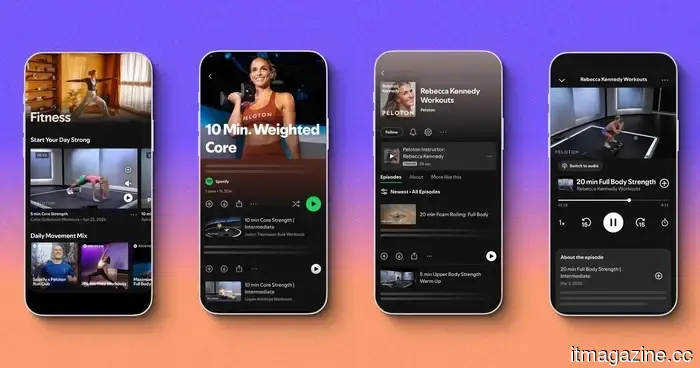 Spotify aims to become your fitness coach by offering guided workout sessions.
Spotify has officially ventured into the fitness sector by introducing a dedicated Fitness hub that allows Premium users to access more than 1,400 Peloton classes on demand.
Spotify aims to become your fitness coach by offering guided workout sessions.
Spotify has officially ventured into the fitness sector by introducing a dedicated Fitness hub that allows Premium users to access more than 1,400 Peloton classes on demand.
WhatsApp for Windows feels worse than it ever has, and I'm exhausted from pretending that's not the case.
Issues such as delays, unexpected logouts, and a controversial redesign are causing significant frustration among many desktop users of WhatsApp's Windows app.