
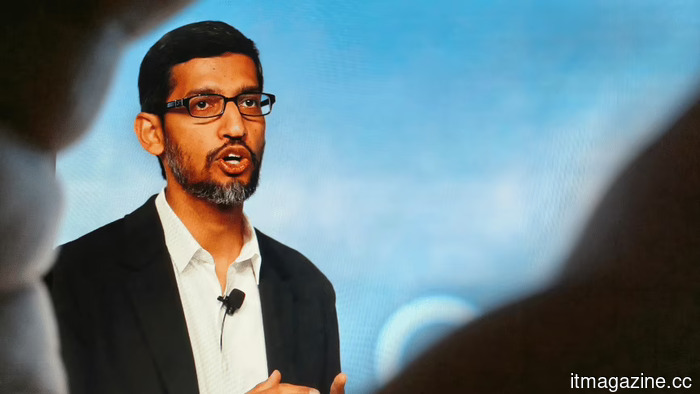
Over 580 Google employees, including researchers from DeepMind, are urging Pichai to decline a classified AI agreement with the Pentagon.
TL;DR: Over 580 Google employees, including more than 20 directors and senior DeepMind researchers, signed a letter urging CEO Sundar Pichai to avoid classified military AI work for the Pentagon. The letter expresses concerns that Google cannot oversee the use of its AI on air-gapped classified networks, making "trust us" the only safeguard against autonomous weapons and mass surveillance. In 2018, Google’s workforce successfully opposed Project Maven, but the company has since altered its AI principles, secured part of a $9 billion cloud contract with the Pentagon, and is now negotiating classified access under "all lawful uses" terms.
More than 580 Google employees, which includes over 20 directors, senior directors, and vice presidents, have penned a letter to CEO Sundar Pichai, urging him to reject classified military AI projects for the Pentagon, as reported by Bloomberg. The letter, which has signatures from several senior researchers at Google DeepMind, was sent to Pichai on Monday. It states, “We are Google employees who are very concerned about the ongoing negotiations between Google and the US Department of Defense." They emphasize that as AI professionals, they understand that these technologies can concentrate power and may produce errors. The signatories are demanding that Google refuse all classified tasks, arguing that on secure networks disconnected from the public internet, the company would not be able to monitor how its AI is applied. The letter asserts, “The only way to ensure that Google does not become linked to any such harms is to decline all classified workloads. Otherwise, such uses could happen without our awareness or ability to prevent them.”
The background is significant. Google employees have taken a stand before. In 2018, around 4,000 workers signed an internal petition, leading to over 12 resignations over Project Maven, a Pentagon initiative that employed AI to analyze objects in drone video feeds. This protest pressured Google to establish AI principles that committed to avoiding weapons or surveillance technologies, resulting in the Maven contract expiring in March 2019, which was then taken over by Palantir. The Maven contract was valued at a few million dollars, and Palantir’s investment in Maven has since surged to $13 billion. Though the 2018 campaign was a clear victory, it was the last instance where Google’s employees effectively restricted the company’s defense aspirations. Since then, Google has progressively repaired the relationships damaged by the protest.
In December 2022, Google garnered a share of the Pentagon’s $9 billion Joint Warfighting Cloud Capability contract alongside Amazon, Microsoft, and Oracle. In February 2025, Google altered its AI principles, dropping a clause that committed to not using technology for “weapons or other technologies whose principal purpose or implementation is to cause or directly facilitate injury to people,” and avoiding “technologies that gather or utilize information for surveillance violating internationally accepted norms.” A blog post co-authored by Demis Hassabis, CEO of Google DeepMind, cited the growing competitive landscape for AI leadership as rationale for the change. Human Rights Watch and Amnesty International criticized this shift. By December 2025, the Pentagon launched GenAI.mil, a platform utilizing Google’s Gemini chatbot, accessible to all defense personnel. Defense Secretary Pete Hegseth remarked, “the future of American warfare is here, and it’s spelled AI.” In March 2026, Google rolled out Gemini AI agents to three million Pentagon personnel at the unclassified level, including pre-built agents for tasks such as summarizing meeting notes and constructing budgets.
The classified agreement represents the next advancement. Emil Michael, the under secretary of defense for research and engineering, indicated to Bloomberg in March that the Pentagon would “begin with unclassified, as that’s where the majority of users are, and then progress to classified and top secret uses.” He confirmed that discussions with Google regarding the application of Gemini agents on classified cloud infrastructure were already in progress. In April, The Information stated that negotiations were moving towards “all lawful uses” of Google’s AI tools — a phrase that does not align with the strict red lines set by Anthropic before being categorized as a supply-chain risk by the Pentagon for refusing to lift restrictions on autonomous weapons and domestic mass surveillance. The Pentagon contested Anthropic’s characterization, arguing that companies should not dictate usage policies during wartime or military preparations.
OpenAI entered into its own Pentagon agreement soon after Anthropic's blacklisting, specifying three red lines: no mass domestic surveillance, no autonomous weapons, and no high-stakes automated decisions. However, the enforcement of these conditions on classified networks is precisely the issue raised by Google’s employees. In an air-gapped system, the AI operates on a network inherently isolated from Google’s infrastructure, preventing the company from monitoring queries, outputs, or decisions based on those outputs. The assurance of “trust us” from Pentagon officials is the sole mechanism guarding against uses that may breach any negotiated red lines. Sofia Liguori, an AI
Other articles
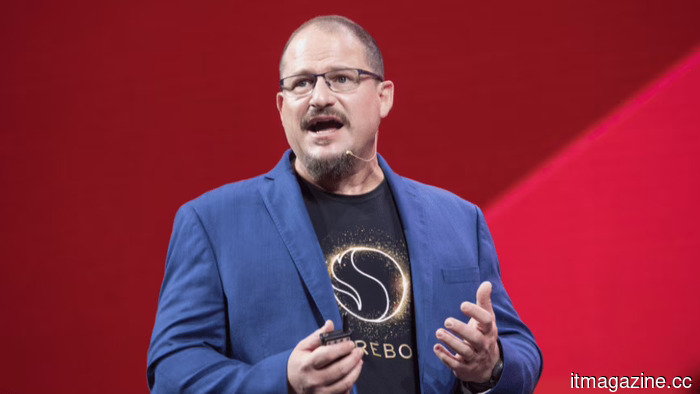 OpenAI is collaborating with Qualcomm and MediaTek to develop an AI agent smartphone, aiming for 300-400 million annual shipments by 2028.
According to analyst Ming-Chi Kuo, OpenAI is developing an agent-first smartphone in collaboration with Qualcomm, MediaTek, and Luxshare. The phone will feature no apps, only agents. Mass production is aimed for 2028. Following this news, Qualcomm's shares rose by 13%.
OpenAI is collaborating with Qualcomm and MediaTek to develop an AI agent smartphone, aiming for 300-400 million annual shipments by 2028.
According to analyst Ming-Chi Kuo, OpenAI is developing an agent-first smartphone in collaboration with Qualcomm, MediaTek, and Luxshare. The phone will feature no apps, only agents. Mass production is aimed for 2028. Following this news, Qualcomm's shares rose by 13%.
 VITURE Beast XR glasses launch featuring a 174-inch virtual display and an expanded field of view.
VITURE has introduced its Beast XR glasses, which feature an expanded virtual display, enhanced brightness, and standalone capabilities, with the intention of making XR experiences more accessible to everyday users.
VITURE Beast XR glasses launch featuring a 174-inch virtual display and an expanded field of view.
VITURE has introduced its Beast XR glasses, which feature an expanded virtual display, enhanced brightness, and standalone capabilities, with the intention of making XR experiences more accessible to everyday users.
 How Arpit Agrawal is expanding consumer markets in emerging economies
Arpit Agrawal is developing distribution ecosystems in emerging markets by integrating global brands, local connections, and digital technologies to access billions of consumers.
Microsoft relinquishes its exclusive license to OpenAI's technology.
Microsoft and OpenAI have revised their partnership agreement, making Microsoft's license non-exclusive until 2032.
How Arpit Agrawal is expanding consumer markets in emerging economies
Arpit Agrawal is developing distribution ecosystems in emerging markets by integrating global brands, local connections, and digital technologies to access billions of consumers.
Microsoft relinquishes its exclusive license to OpenAI's technology.
Microsoft and OpenAI have revised their partnership agreement, making Microsoft's license non-exclusive until 2032.
 VITURE Beast XR glasses launch featuring a 174-inch virtual display and an expanded field of view.
VITURE has introduced its Beast XR glasses, which feature a larger virtual display, enhanced brightness, and standalone capabilities, with the goal of making XR experiences more accessible to mainstream users.
Microsoft relinquishes its exclusive license to OpenAI’s technology.
Microsoft and OpenAI have restructured their partnership, making Microsoft's license non-exclusive until 2032.
VITURE Beast XR glasses launch featuring a 174-inch virtual display and an expanded field of view.
VITURE has introduced its Beast XR glasses, which feature a larger virtual display, enhanced brightness, and standalone capabilities, with the goal of making XR experiences more accessible to mainstream users.
Microsoft relinquishes its exclusive license to OpenAI’s technology.
Microsoft and OpenAI have restructured their partnership, making Microsoft's license non-exclusive until 2032.
Over 580 Google employees, including researchers from DeepMind, are urging Pichai to decline a classified AI agreement with the Pentagon.
More than 580 Google employees have signed a letter in opposition to classified military AI projects. On air-gapped networks, Google is unable to track the usage of Gemini. Last year, the company eliminated its own restrictions regarding weapons.