
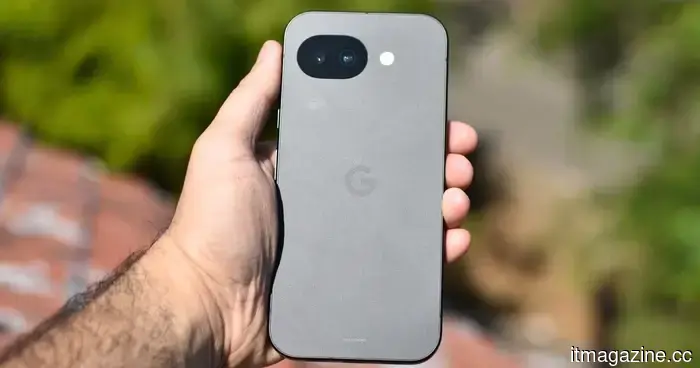
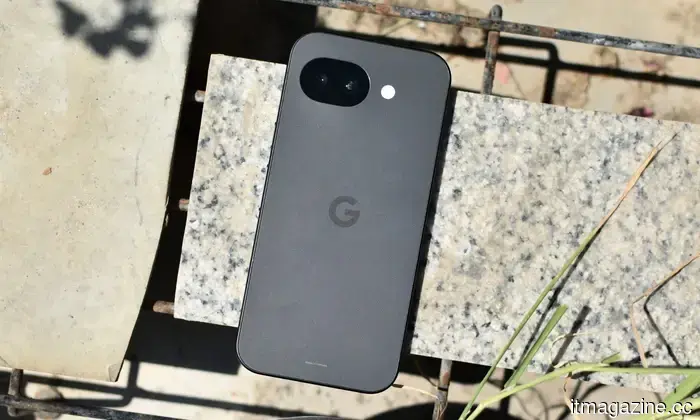
I spent several weeks using the Pixel 10a, and now the discussion about its specifications no longer concerns me.
When Google introduced the Pixel 10a, I followed the usual routine: examined the specifications, compared the chip to what other smartphones in its price range offer, and felt a familiar discomfort. I pondered, “What’s the purpose of this from Google?”
The Pixel 10a came equipped with a Tensor G4 chip (from 2024) that fell short in benchmarks, had thicker front bezels, a 120Hz display without a genuinely variable refresh rate, lacked a telephoto camera, and its battery charged slower than its competitors. On paper, it appeared like a device that was already defeated before stepping into the ring.
However, after four weeks of usage, I’ve come to a perspective I hadn’t anticipated but now wish to defend: the Pixel 10a’s specifications are not the right criteria to evaluate this smartphone. After using it regularly, I realized it's not meant for those who often rely on specs to make purchase decisions; it’s designed for individuals who actually use their phones.
**A display that fades into the background (in a good way)**
Let’s discuss the display. While the bezels are broader than those on rival devices, and it doesn't feature an LTPO panel that scales down to 1Hz during inactivity, I noticed over time that app transitions were smooth, navigation gestures were well-aligned with finger movements, and scrolling felt effortless on the Pixel 10a.
On sunny days, the Pixel 10a’s brightness level was adequate — I didn’t need to cover the screen with my hand, proving that real-world usability matters more than just peak brightness metrics.
**The chipset may lag in benchmarks, but performs admirably in daily tasks**
In regard to the chipset, it becomes easier to dismiss comparisons now. While the Tensor G4 falls significantly behind the Tensor G5, my experience using it alongside my iPhone 17 revealed that I never sensed its benchmarking shortcomings in daily use.
As the creator of the Android ecosystem, Google has optimized the chipset (and its supporting hardware) effectively, allowing for seamless performance in everyday tasks. First-party apps launch quickly, and Google’s Gemini AI assistant operates smoothly, benefiting from a capable TPU.
Though it could be debated that the Pixel 10a’s rivals offer dedicated telephoto lenses for more versatility, after taking approximately 800 photos and around 100 videos with this device, I've concluded that two well-optimized lenses, combined with years of advancements in computational photography, can outperform three inferior ones.
**Exceptional cameras and battery life enhance the overall experience**
Whether or not you're aware of the Pixel 10a’s primary camera resolution, it certainly takes balanced and natural images, with consistently accurate, if not precise, skin tones. Features like Night Sight and Photo Unblur, which enhance the photography experience, are software-based rather than tied to the hardware.
Similarly, the battery performance of the Pixel 10a has provided me with about seven to eight hours of screen time with ease. Even on long 12 to 14-hour workdays, it often carries over into the next morning. Although the charging speed lags behind its competitors, it appears the phone is not intended for quick recharge scenarios; instead, it emphasizes endurance over speed.
In my view, this is complemented by Google’s impeccable Android experience, which operates on the device in its purest and most efficient form. The Pixel 10a exemplifies how a smartphone with less impressive hardware can still deliver outstanding usability through well-optimized software, which aligns with the company’s commitment to seven years of software support.
**Pixel 10a: A dependable phone**
The Pixel 10a may not excel in spec lists, but it triumphs in practical moments — whether you're seeking a quick answer from Gemini, snapping a photo against the light, or requiring a long-lasting battery even when it's nearly depleted. You can't quantify the overall experience through benchmarks, and that's why the spec arguments no longer concern me.
Other articles
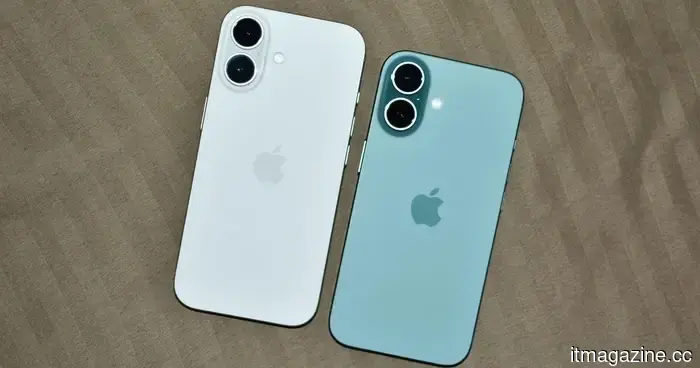 The iPhone 17 impressed me, yet I would still suggest the iPhone 16 to the majority of individuals.
Returning to the iPhone 16 after using the iPhone 17 for six months made me realize that a one-year difference in the product cycle and a one-tier variation in quality are not equivalent.
The iPhone 17 impressed me, yet I would still suggest the iPhone 16 to the majority of individuals.
Returning to the iPhone 16 after using the iPhone 17 for six months made me realize that a one-year difference in the product cycle and a one-tier variation in quality are not equivalent.
 If you believe that managing a celebrity fan page on social media is easy, reconsider that notion.
Managing a celebrity fan page isn’t as simple as it appears. What may seem like innocent fandom on the internet can quickly evolve into a demanding, full-time responsibility.
If you believe that managing a celebrity fan page on social media is easy, reconsider that notion.
Managing a celebrity fan page isn’t as simple as it appears. What may seem like innocent fandom on the internet can quickly evolve into a demanding, full-time responsibility.
 DeepSeek reduces V4-Pro prices by 75%.
DeepSeek is providing a 75% discount on V4-Pro until May 5 and reducing API cache hit prices to one-tenth across its entire range of products.
DeepSeek reduces V4-Pro prices by 75%.
DeepSeek is providing a 75% discount on V4-Pro until May 5 and reducing API cache hit prices to one-tenth across its entire range of products.
 X launches the XChat messaging application for iPhone users.
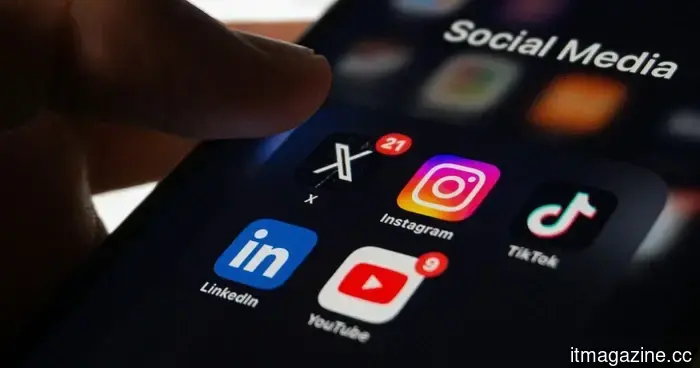
X has introduced XChat for iOS, a standalone messaging application designed to enhance its ecosystem and compete with well-known chat platforms by prioritizing privacy features and social integration.
X launches the XChat messaging application for iPhone users.
X has introduced XChat for iOS, a standalone messaging application designed to enhance its ecosystem and compete with well-known chat platforms by prioritizing privacy features and social integration.
 Forget about smartwatches; your clothing might soon monitor your health.
A new smart fabric, which is powered by your phone, could discreetly take the place of wearable health trackers as we currently understand them.
Forget about smartwatches; your clothing might soon monitor your health.
A new smart fabric, which is powered by your phone, could discreetly take the place of wearable health trackers as we currently understand them.
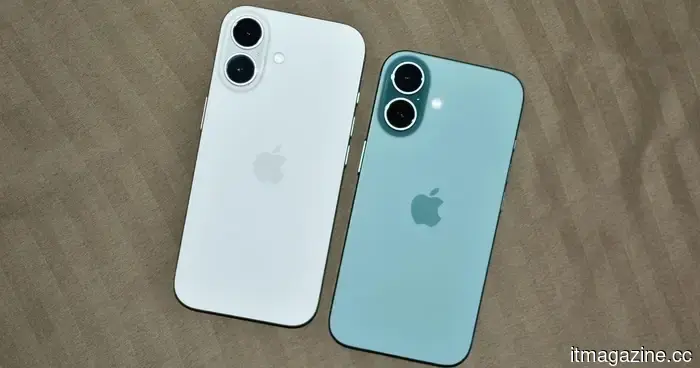 I was impressed by the iPhone 17, but I would still suggest the iPhone 16 to most users.
Returning to the iPhone 16 after using the iPhone 17 for six months has shown me that a one-year gap in product cycles and a single tier difference in quality are not equivalent.
I was impressed by the iPhone 17, but I would still suggest the iPhone 16 to most users.
Returning to the iPhone 16 after using the iPhone 17 for six months has shown me that a one-year gap in product cycles and a single tier difference in quality are not equivalent.
I spent several weeks using the Pixel 10a, and now the discussion about its specifications no longer concerns me.
Spending four weeks with the Pixel 10a made it clear that relying on the spec sheet is truly not the right way to evaluate this phone, and our fixation on it says more about ourselves than it does about the device.