
China instructs Meta to reverse its $2 billion purchase of Manus.
On Monday, the Office of the Working Mechanism for Foreign Investment Security Review of the NDRC issued a formal order to cancel Meta's $2 billion acquisition of Manus, the agentic AI startup, four months after the deal was initially announced. Co-founders Xiao Hong and Ji Yichao have been prohibited from leaving China since March.
The NDRC's directive marks the culmination of a regulatory process that commenced shortly after the announcement of the deal in December 2025. This process escalated to exit bans on Manus's co-founders in March 2026 and has now concluded with a significant intervention by China regarding a US technology acquisition of a Chinese-founded firm since the onset of the current trade tensions.
Founded by Xiao Hong (CEO) and Ji Yichao (Chief Scientist) in China and registered in Singapore, Manus represents a typical structure for Chinese AI startups that aim for global investment while retaining operational ties to China. The company, which emerged in early 2025 as a highly advanced agentic AI platform, can autonomously perform intricate multi-step tasks across web browsers, code editors, and file systems without human oversight.
In April 2025, Manus secured $75 million in funding from Benchmark, a leading US venture capital firm, following its acquisition by Meta in a deal reported by the Wall Street Journal to be valued at over $2 billion. Meta stated that there would be no ongoing Chinese ownership interest post-acquisition and that Manus would halt all services and operations within China.
The Chinese government's concerns did not hinge on the $2 billion valuation or Meta's market presence in China, where Meta’s consumer applications are already banned. Instead, the issue centered on the type of assets being transferred. In January 2026, China’s Ministry of Commerce initiated a formal investigation focused on export control laws and the definition of technology export, particularly when the asset in question is a team, a system, and operational know-how tied to a Chinese-founded organization.
The case of Manus has brought to light the regulatory question of whether an AI team constitutes an export, a matter that lacks a clear resolution in any jurisdiction. Authorities in China restricted Xiao Hong and Ji Yichao from leaving the country after calling them to Beijing for questioning regarding potential breaches of foreign direct investment regulations. Following those meetings, the duo, based in Singapore, were informed they could not leave China.
The Washington Post recently reported that the Manus case has highlighted what Chinese tech workers describe as "a new red line": the threshold at which a Chinese-founded, Singapore-incorporated AI firm becomes subject to Chinese state oversight regarding its capacity to be acquired by a US entity. This red line, now established by the cancellation order, has significant implications for any Chinese-founded AI startup outside of China contemplating a similar international exit.
The Manus case also serves as the catalyst for a broader policy in China requiring governmental approval before Chinese tech companies engage with US capital, leading to a multi-agency investigation spearheaded by the NDRC and including the Ministry of Commerce in response to the Meta-Manus deal. This new policy, which Reuters reported as unverified when announced last Thursday, has now seen its first concrete enforcement with the cancellation order issued on Monday.
The Meta-Manus situation transcends being a mere data point in the US-China AI competition; it has instigated China to formalize a new regulatory framework governing technology outflows at the crossroads of AI, foreign investment, and national security.
For Meta, the practical ramifications are significant yet contained. The company invested $2 billion for a team and technology it now cannot officially integrate or must unwind to meet Chinese regulatory requirements. Whether Meta can recuperate any part of its acquisition costs, retain any members of the Manus team outside China, or argue that the Singapore incorporation shields the deal from NDRC jurisdiction will be determined through legal processes rather than public statements.
The broader strategic consequence is clear: any US technology firms looking to acquire a Chinese-founded AI startup must now view the NDRC's foreign investment security review as a substantial risk to the deal, irrespective of the company’s place of incorporation.
Other articles
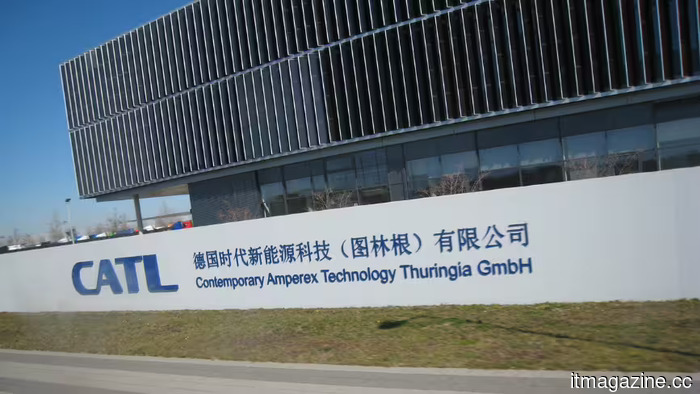 CATL announces a $5 billion share placement in Hong Kong.
CATL is aiming to raise $5 billion through a share placement in Hong Kong, which could become the city's largest deal in four years, as the leading EV battery manufacturer takes advantage of a 160% surge in its stock price.
CATL announces a $5 billion share placement in Hong Kong.
CATL is aiming to raise $5 billion through a share placement in Hong Kong, which could become the city's largest deal in four years, as the leading EV battery manufacturer takes advantage of a 160% surge in its stock price.
 Google DeepMind is set to establish its inaugural AI campus globally in Seoul.
Google DeepMind is set to establish its inaugural AI campus in Seoul following the signing of a memorandum of understanding (MOU) by Demis Hassabis with South Korea’s Science Ministry on Monday.
Google DeepMind is set to establish its inaugural AI campus globally in Seoul.
Google DeepMind is set to establish its inaugural AI campus in Seoul following the signing of a memorandum of understanding (MOU) by Demis Hassabis with South Korea’s Science Ministry on Monday.
 A Samsung leak indicates that its forthcoming wide foldable phone will stand out prominently amid a multitude of devices.
Leaked prototypes showcase a broader, shorter Galaxy Fold featuring a passport-like design and seemingly supporting Qi2 magnets, and we are definitely excited about it.
A Samsung leak indicates that its forthcoming wide foldable phone will stand out prominently amid a multitude of devices.
Leaked prototypes showcase a broader, shorter Galaxy Fold featuring a passport-like design and seemingly supporting Qi2 magnets, and we are definitely excited about it.
 Google DeepMind is set to establish its inaugural AI campus globally in Seoul.
Google DeepMind will launch its inaugural AI campus in Seoul following the signing of a memorandum of understanding by Demis Hassabis with South Korea's Science Ministry on Monday.
Google DeepMind is set to establish its inaugural AI campus globally in Seoul.
Google DeepMind will launch its inaugural AI campus in Seoul following the signing of a memorandum of understanding by Demis Hassabis with South Korea's Science Ministry on Monday.
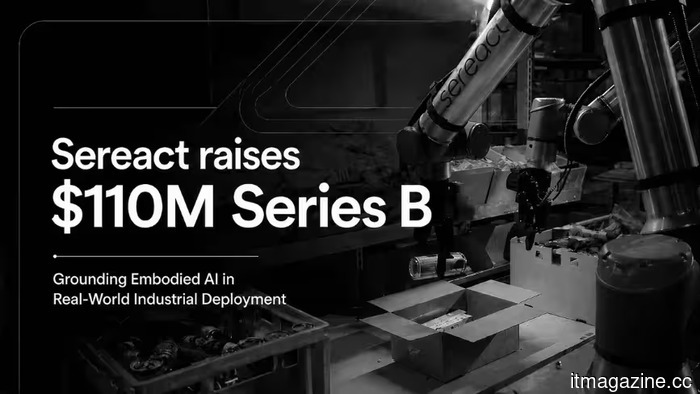 Sereact secures $110 million to enhance its AI that enables any robot to become adaptable.
Sereact, located in Stuttgart, has secured $110 million in Series B funding led by Headline to advance AI technology that enables robots to foresee outcomes prior to taking action.
Sereact secures $110 million to enhance its AI that enables any robot to become adaptable.
Sereact, located in Stuttgart, has secured $110 million in Series B funding led by Headline to advance AI technology that enables robots to foresee outcomes prior to taking action.
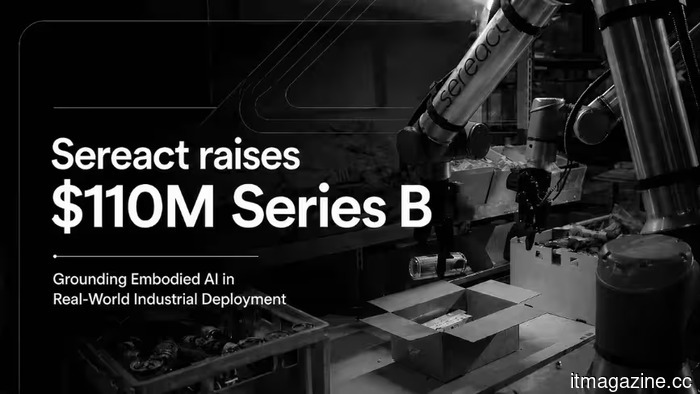 Sereact secures $110 million to expand its AI technology that allows any robot to become adaptable.
Sereact, located in Stuttgart, has secured $110 million in a Series B funding round led by Headline to advance AI that enables robots to foresee outcomes before taking action.
Sereact secures $110 million to expand its AI technology that allows any robot to become adaptable.
Sereact, located in Stuttgart, has secured $110 million in a Series B funding round led by Headline to advance AI that enables robots to foresee outcomes before taking action.
China instructs Meta to reverse its $2 billion purchase of Manus.
China's National Development and Reform Commission has officially instructed Meta to reverse its $2 billion purchase of the AI startup Manus, a transaction that triggered Beijing's updated regulations on US investment approvals.