
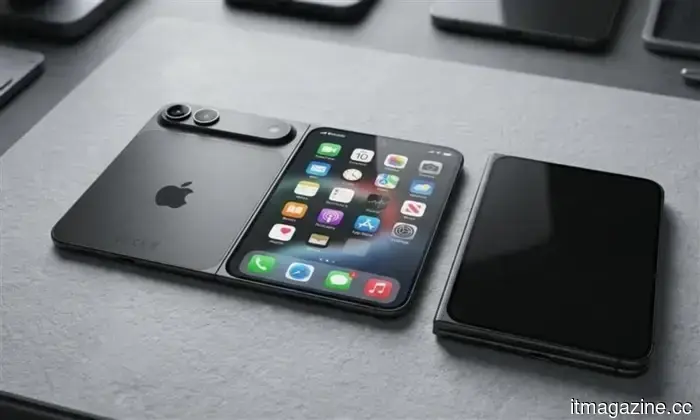
A leak regarding the iPhone Fold suggests a foldable device that may exceed thinness expectations.
Apple's rumored iPhone Fold may redefine standards with its exceptionally thin foldable design.
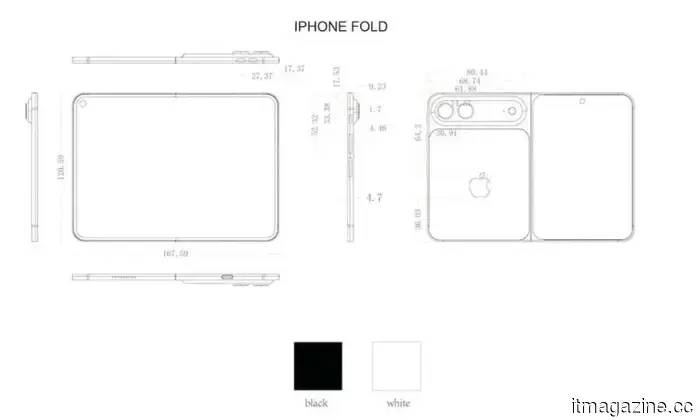
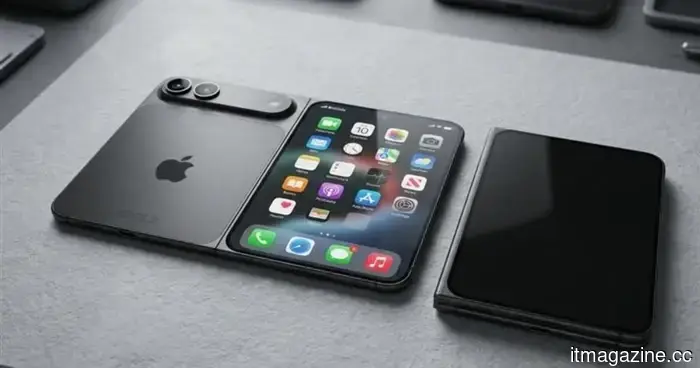
Recent information has provided more clarity on Apple's much-anticipated foldable iPhone, particularly focusing on its thickness. Renders shared by South Korean leaker yeux1122 on Naver, which are reportedly based on designs from an Apple case supplier, indicate that the device has a folded thickness of around 9.23mm. This is slimmer than the approximately 9.6mm dimension mentioned in previous speculations.
The renders also suggest a maximum thickness of about 13mm when factoring in the camera area, making the camera module a prominent aspect of the phone's design, even as the folded body remains impressively slender for a book-style foldable. This leak reiterates earlier reports that suggest Apple will offer two color options: silver and black.
How thin are we really talking?
For context, Samsung's Galaxy Z Fold 7 measures 8.9mm when folded and 4.2mm when unfolded. This means Samsung's current model remains slightly thinner in its folded state, but the leaked measurement places the iPhone Fold closely in line with an established device.
Honor's Magic V6 and Oppo Find N6 also have similar thicknesses to their Samsung counterpart, and soon, potentially Apple as well. Additionally, Samsung's rumored Galaxy Z Fold 8 Wide is said to be 9.8mm while folded and 4.3mm when unfolded, which would make Apple's first foldable iPhone thinner, at least before considering the camera bump.
What's on the horizon?
Reports regarding Apple's foldable indicate it will have a book-style design featuring a 5.5-inch outer display and a 7.8-inch inner screen, allowing for a tablet-like experience when opened. A recent claim from Weibo leaker Instant Digital also suggested that Apple might incorporate a Camera Control button despite the slim design.
In terms of software, it is expected to adopt some multitasking features from iPadOS, although we shouldn't anticipate any significant innovations like Stage Manager being included in the foldable. The pricing remains unverified, but current reports suggest it will start above $2,000. Apple is reportedly aiming for a September 2026 launch for the iPhone Fold, with initial availability possibly limited, and it may be released after the iPhone 18 Pro models.
I have around four years of experience, primarily covering gaming, PC hardware, and smartphones. In my spare time, I enjoy...
Samsung has leaked details about its upcoming wider foldable, which will stand out in a crowded market.
Samsung is working on a wider version of its Galaxy Fold, and if you've been following recent tech developments, this shouldn't be surprising. Although its arrival was anticipated, new dummy units have provided our first confirmed look at the design, generating a lot of excitement.
The design is unlike anything else currently available in the market.
The iPhone 17 impressed me, but I would still recommend the iPhone 16 to most users.
The iPhone 16 shares its design, software, AI capabilities, and main camera with its successor, all at a lower cost.
While using the iPhone 17, I picked up my iPhone 16 to view an older video, leading to a realization: there was nothing about the iPhone 16 that felt inferior to its successor. It wasn't slower, the design felt quite similar, and nothing about it seemed "old" or "outdated." That realization lingered with me for a few days.
Over time, the smartphone industry has conditioned us to consider yearly upgrades—regardless of how minor—as significant, but after switching back to the iPhone 16 post-using the iPhone 17 for over six months, I recognized that this isn't always the case. We often focus too much on the smallest differences in specifications, forgetting that a company's product cycle isn't a direct indicator of obsolescence.
I spent several weeks with the Pixel 10a, and now the debate over specs doesn't concern me.
Google's most budget-friendly Pixel sacrifices raw power and a telephoto lens for something less tangible: a phone that consistently performs well each time.
When Google unveiled the Pixel 10a, I followed the usual steps: I opened the specs sheet, compared the chip with what other smartphones at the same price point offered, and felt the familiar unease. I questioned, “What’s the purpose of this device?”
The Pixel 10a features a Tensor G4 chip (from 2024) that did not impress in benchmarks, thicker front bezels, a 120Hz display without a true variable refresh rate, an absence of a telephoto camera, and a battery that supports slower charging than competitors. On paper, it appeared as though this phone was destined to struggle before even entering the market (and in a competitive atmosphere at that).


Other articles
 An iPhone Fold leak suggests a foldable device that may surpass current thinness expectations.
Alleged schematics of the forthcoming foldable iPhone indicate that it may be slimmer than previous leaks suggested, resembling the dimensions of popular foldable Android smartphones.
An iPhone Fold leak suggests a foldable device that may surpass current thinness expectations.
Alleged schematics of the forthcoming foldable iPhone indicate that it may be slimmer than previous leaks suggested, resembling the dimensions of popular foldable Android smartphones.
 Apple may revive the popularity of curved displays with the iPhone celebrating its 20th anniversary.
Apple's iPhone, marking its 20th anniversary, is set to be a notable design shift, showcasing a subtle four-edge micro-curve along with a COE OLED panel manufactured by Samsung.
Apple may revive the popularity of curved displays with the iPhone celebrating its 20th anniversary.
Apple's iPhone, marking its 20th anniversary, is set to be a notable design shift, showcasing a subtle four-edge micro-curve along with a COE OLED panel manufactured by Samsung.
 The applications that assist me in keeping track of my reading objectives in 2026.
Reading more is a goal that seems straightforward but can easily unravel. Here are the four apps that are helping me maintain my reading habit in 2026.
The applications that assist me in keeping track of my reading objectives in 2026.
Reading more is a goal that seems straightforward but can easily unravel. Here are the four apps that are helping me maintain my reading habit in 2026.
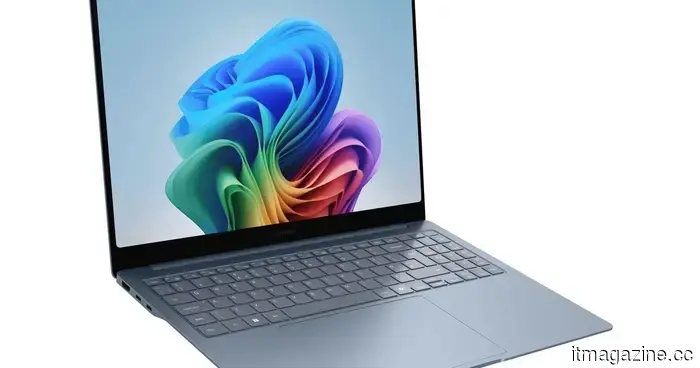 Samsung's latest Galaxy Book, equipped with Snapdragon, isn't the MacBook Neo competitor I had anticipated.
The Snapdragon X2 Elite chip and AMOLED display seem impressive, but Samsung’s forthcoming Galaxy Book 6 Edge might not arrive in the expected position.
Samsung's latest Galaxy Book, equipped with Snapdragon, isn't the MacBook Neo competitor I had anticipated.
The Snapdragon X2 Elite chip and AMOLED display seem impressive, but Samsung’s forthcoming Galaxy Book 6 Edge might not arrive in the expected position.
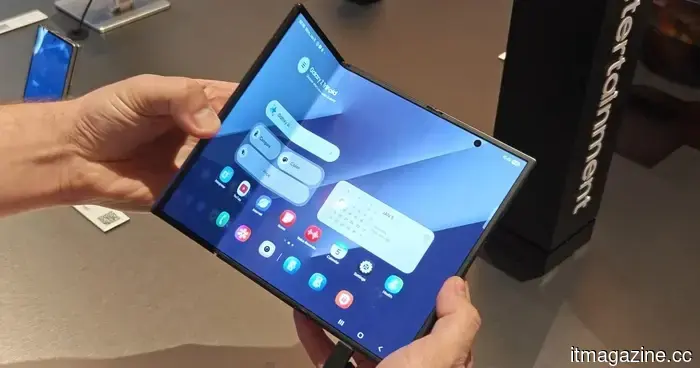 The Galaxy Z TriFold has come to an end. Here’s what I hope its next version will improve.
The TriFold was Samsung's most ambitious smartphone in years, but it also faced significant compromises. Its successor must avoid making the same errors.
The Galaxy Z TriFold has come to an end. Here’s what I hope its next version will improve.
The TriFold was Samsung's most ambitious smartphone in years, but it also faced significant compromises. Its successor must avoid making the same errors.
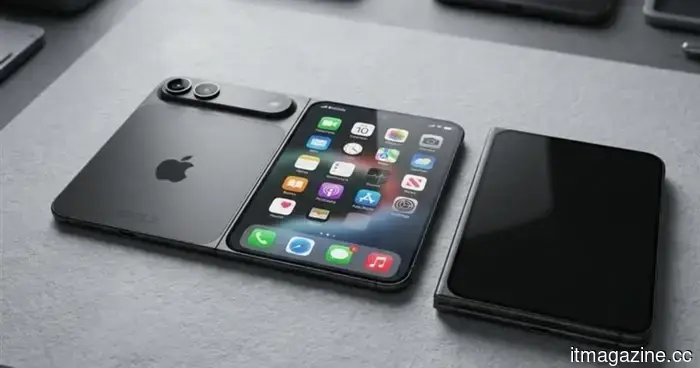 A leak regarding the iPhone Fold suggests that the foldable phone may exceed expectations for thinness.
Alleged designs for the forthcoming foldable iPhone imply that it might be slimmer than previous leaks suggested, aligning it with popular foldable Android smartphones.
A leak regarding the iPhone Fold suggests that the foldable phone may exceed expectations for thinness.
Alleged designs for the forthcoming foldable iPhone imply that it might be slimmer than previous leaks suggested, aligning it with popular foldable Android smartphones.
A leak regarding the iPhone Fold suggests a foldable device that may exceed thinness expectations.
Alleged diagrams of the next foldable iPhone imply that it might be slimmer than previous leaks suggested, aligning it with popular foldable Android smartphones.