

The value of the US government's stake in Intel has reached $36 billion. This outcome was not part of any plans made in Washington.
In summary: The U.S. government's 9.9% ownership of Intel, which was obtained for $8.9 billion last August by converting CHIPS Act grants and Secure Enclave funds into equity at $20.47 per share, has now gained significant value, reaching around $36 billion following a 20%+ surge in Intel's stock after a substantial Q1 earnings report. This unrealized gain of $26.5 billion marks one of the most lucrative government investments in American industrial history, although it was incidental: Trump had been against the conditions of the CHIPS Act and opted for converting the grants to equity as a matter of fiscal responsibility rather than an industrial plan. There hasn’t been any defined exit strategy.
The U.S. government possesses around 433 million shares of Intel, purchased last August for $8.9 billion at a price of $20.47 per share. After Intel's stock rose over 20% on Wednesday due to an earnings beat that took analysts by surprise, this stake is now valued at approximately $36 billion. This equates to an unrealized gain of $26.5 billion, reflecting a 300% return within eight months. This investment is, without a doubt, among the most profitable by the government in American industrial history, a result that was largely unplanned.
The narrative of how the federal government acquired a 9.9% stake in one of the leading chip manufacturers in the U.S. exemplifies political opportunism leading to an unexpectedly positive outcome. The CHIPS and Science Act, enacted in 2022, designated $52 billion for domestic semiconductor production, with Intel receiving the largest share: $8.5 billion in grants and $11 billion in loans. Upon the Trump administration's arrival, it resisted the program's stipulations, which included project labor agreements, union requirements for construction, a five-year stock buyback freeze, and Intel's commitment to invest $100 billion of its own funds. Instead of releasing the remaining grants, the administration converted $5.7 billion in unallocated CHIPS Act funds and $3.2 billion from the Secure Enclave defense initiative into a direct equity stake, effectively removing the original conditions. Senator Elizabeth Warren criticized this act as handing “billions of dollars to Intel, with no significant requirements attached.”
The unforeseen financial boost
Previously, Trump criticized the CHIPS Act as “a terrible deal” and pushed for its repeal. The conversion to equity was characterized not as a strategic industrial decision but rather as fiscal prudence: if taxpayer money was to be spent on a chipmaker, the government should at least hold a share in the company. The arrangement includes a five-year warrant for an additional 5% of Intel shares at $20, which can only be exercised if Intel sells majority control of its foundry operations, serving as a deterrent to foreign ownership of domestic chip manufacturing. The government holds no position on the board and has agreed to vote its shares in accordance with Intel's board decisions, rendering it a passive investor without influence on management.
What has changed is not the government's role but rather Intel's prospects. Under CEO Lip-Bu Tan, who succeeded Pat Gelsinger in March 2025, Intel exceeded earnings expectations for six consecutive quarters. In the first quarter, revenue reached $13.6 billion, 10% above forecasts, while adjusted earnings per share were at $0.29—29 times the $0.01 anticipated by analysts. Revenue from data centers and AI increased to $5.1 billion, a 22% rise year-over-year. The company projected second-quarter revenue between $13.8 billion and $14.8 billion, around $1 billion more than analysts expected. So far this year, Intel's stock has increased by over 80%, with an 84% rise in 2025 alone. The government made its investment at a low point in a cycle that has since dramatically improved.
The Tan revival
Gelsinger was ousted in December 2024 after Intel's stock had plummeted by 60% under his management, with the company reporting a $16.6 billion loss, announcing a halt to its dividend, and laying off 15,000 employees. Lip-Bu Tan, former CEO of Cadence Design Systems and once an Intel board member, took charge of a distressed company and executed a turnaround that garnered him recognition from Time magazine as one of its 100 most influential people. He eliminated over 20,000 additional jobs, refocused efforts on the 18A chip-making process, and formed partnerships previously thought unlikely within a year.
Intel 18A, the manufacturing process incorporating RibbonFET gate-all-around transistors and PowerVia backside power delivery, entered high-volume production in January 2026. Current yields exceed 60% and are improving by approximately 7% monthly, with industry-standard levels expected by 2027. Microsoft is utilizing Intel Foundry for
Other articles
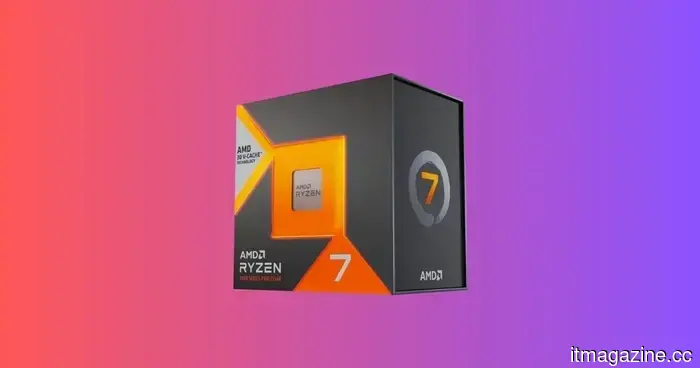 One of the top gaming CPUs ever produced has just seen a price drop of $60: the AMD Ryzen 7 7800X3D is now available for $388.
Since its release, the AMD Ryzen 7 7800X3D has consistently ranked as the top gaming CPU, and currently priced at $388.98, it is $60 lower than its original list price of $449. For those constructing or enhancing an AM5 system with a focus on gaming performance, the Ryzen 7 7800X3D continues to be the ideal processor, and this discount makes the […]
One of the top gaming CPUs ever produced has just seen a price drop of $60: the AMD Ryzen 7 7800X3D is now available for $388.
Since its release, the AMD Ryzen 7 7800X3D has consistently ranked as the top gaming CPU, and currently priced at $388.98, it is $60 lower than its original list price of $449. For those constructing or enhancing an AM5 system with a focus on gaming performance, the Ryzen 7 7800X3D continues to be the ideal processor, and this discount makes the […]
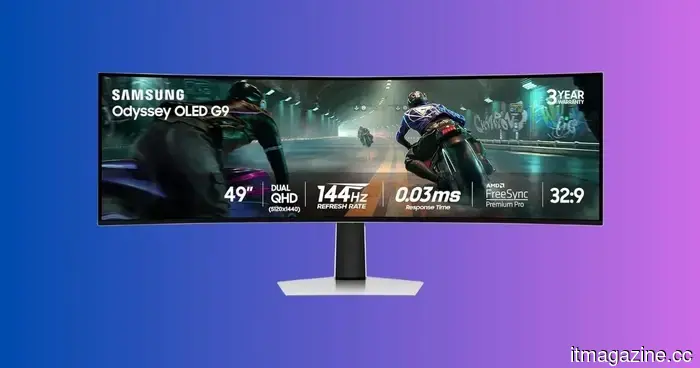 The Samsung Odyssey OLED G9 is currently 31% discounted, and for $899, you can get a 49-inch QD-OLED ultrawide monitor that I would confidently recommend.
The Samsung Odyssey OLED G9 is currently priced at $899.99, offering a savings of $400 from its original list price of $1,299.99. It’s a monitor purchase that makes everything you previously set up seem like a compromise. This model features a 49-inch curved QD-OLED panel with Dual QHD resolution, a refresh rate of 144Hz, and a response time of 0.03ms, which is a remarkable specification.
The Samsung Odyssey OLED G9 is currently 31% discounted, and for $899, you can get a 49-inch QD-OLED ultrawide monitor that I would confidently recommend.
The Samsung Odyssey OLED G9 is currently priced at $899.99, offering a savings of $400 from its original list price of $1,299.99. It’s a monitor purchase that makes everything you previously set up seem like a compromise. This model features a 49-inch curved QD-OLED panel with Dual QHD resolution, a refresh rate of 144Hz, and a response time of 0.03ms, which is a remarkable specification.
 Despite rumors of reductions, Apple may still deliver a performance showcase with the iPhone 18.
Apple's iPhone 18 could put an end to cost-cutting doubts with its 2nm A20 chip, 12GB of RAM in the standard versions, variable-aperture cameras in the Pro models, and Apple's proprietary C2 modem.
Despite rumors of reductions, Apple may still deliver a performance showcase with the iPhone 18.
Apple's iPhone 18 could put an end to cost-cutting doubts with its 2nm A20 chip, 12GB of RAM in the standard versions, variable-aperture cameras in the Pro models, and Apple's proprietary C2 modem.
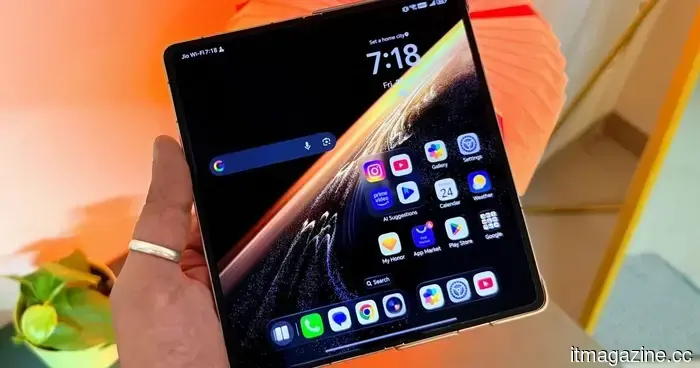 I've just moved to my first major foldable device, and I now understand the attraction.
After years of doubt and frustrating experiences with flip phones, transitioning to a book-style foldable finally resonated with me. Whether I'm reading books, watching videos, or multitasking, I've discovered that the larger screen enhances my daily activities in ways that are difficult to overlook.
I've just moved to my first major foldable device, and I now understand the attraction.
After years of doubt and frustrating experiences with flip phones, transitioning to a book-style foldable finally resonated with me. Whether I'm reading books, watching videos, or multitasking, I've discovered that the larger screen enhances my daily activities in ways that are difficult to overlook.
 The EU's initiative for child safety has hit a roadblock as the ePrivacy derogation has lapsed, an age verification application was compromised, and the CSA Regulation is stalled in trilogue discussions.
The ePrivacy derogation ended on April 3, the EU age verification application was compromised within minutes, and the CSA Regulation is still at a standstill. Europe's child safety measures require the data that its privacy regulations prohibit.
The EU's initiative for child safety has hit a roadblock as the ePrivacy derogation has lapsed, an age verification application was compromised, and the CSA Regulation is stalled in trilogue discussions.
The ePrivacy derogation ended on April 3, the EU age verification application was compromised within minutes, and the CSA Regulation is still at a standstill. Europe's child safety measures require the data that its privacy regulations prohibit.
 The Fire TV Stick HD has quietly launched along with an adapter, but it's not fully prepared for prime usage.
Amazon's latest Gigabit Ethernet Adapter appears to be an enhancement for the Fire TV Stick HD, but there's an important hardware detail to consider.
The Fire TV Stick HD has quietly launched along with an adapter, but it's not fully prepared for prime usage.
Amazon's latest Gigabit Ethernet Adapter appears to be an enhancement for the Fire TV Stick HD, but there's an important hardware detail to consider.
The value of the US government's stake in Intel has reached $36 billion. This outcome was not part of any plans made in Washington.
The U.S. government’s 9.9% stake in Intel, obtained for $8.9 billion through converted CHIPS Act funds, has risen in value to $36 billion following a surge in Q1 earnings. There is currently no exit strategy in place.