
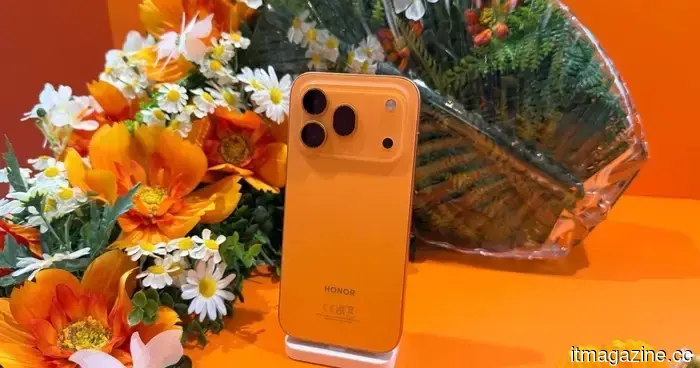
The discussion around "iPhone clones" is outdated.
For years, labeling a phone as an "iPhone clone" was the fastest way to completely dismiss it. This term implied poor design, subpar hardware, and an experience that fell apart as soon as one began using it. Early imitators earned this negative reputation by mimicking the appearance of Apple’s iPhone while lacking any of its quality. These devices featured inferior displays, sluggish performance, unreliable cameras, and a build quality that offered little reassurance.
At that time, the term served not only as criticism but also as a warning sign.
The stigma attached to clones has not aged well.
The market has progressed, yet the old definition of an "iPhone clone" and the associated stigma remain unchanged. Phones that draw from Apple’s design continue to be hastily dismissed, despite the fact that this label no longer accurately reflects the quality of the device.
Growing competition, particularly among Chinese manufacturers, has compelled companies to enhance their offerings. The divide between mid-range and flagship phones has become so minimal that, for most users, it is barely perceivable in daily use. However…
Whenever a phone that resembles the iPhone appears, the discussion almost automatically reverts to “clone.”
Moreover, shouldn't we also consider the issue of a tired design that has lingered for too long? Samsung clearly faces a design dilemma as its entry-level, mid-range, and flagship models tend to look nearly indistinguishable unless you inspect them up close. Personally, I would prefer my phone to resemble an iPhone and deliver substantial features rather than look like countless other models from four years ago and fall short in terms of value.
Familiar in appearance, but only part of the narrative.
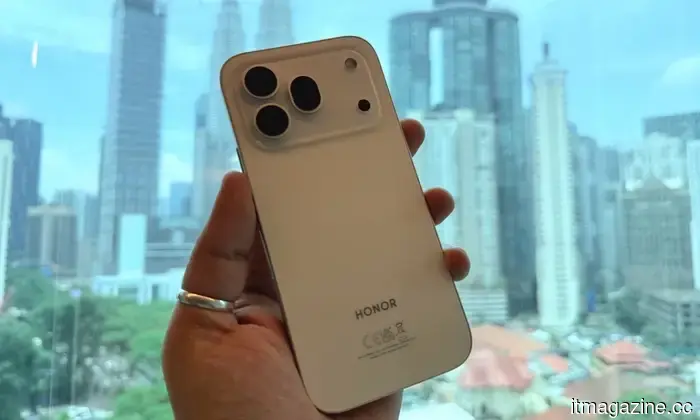
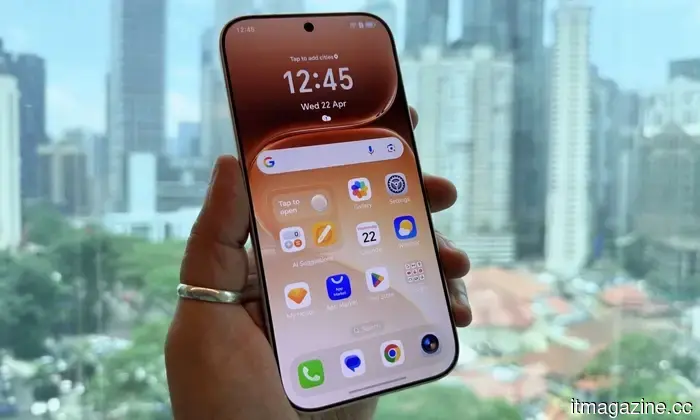
Take Honor’s newly launched 600 series, for instance. Yes, it resembles the iPhone, and the design language is evidently inspired by it—there’s no point in denying that. However, stopping the discussion there overlooks what truly matters.
Once you examine the features of the phones, the narrative changes. The Honor 600 Pro offers a sharp display with a high refresh rate that feels fluid during everyday use. It’s designed with a focus on battery life, capable of easily lasting a full day and often more. Quick wired and wireless charging alleviates many of the usual concerns associated with battery anxiety.
While the cameras may not be revolutionary, they are more than sufficient for the everyday needs of most users, even if they do not rival flagship devices in every situation. This doesn't align with the older perception of a cheap imitation. Instead, it showcases the significant evolution within this segment.
The value proposition has shifted.
This is where things get intriguing. Phones like the Honor 600 Pro are not attempting to outdo the iPhone on its own turf. They are redefining the terms entirely.
For many consumers, it seldom comes down to having the absolute best camera or the most powerful processor. Instead, it’s about obtaining a device that performs well without costing an exorbitant amount. In that framework…
These so-called clones begin to make much more sense.
If you can access most of the experience at a lower price point, the design becomes less critical. In some instances, it may barely influence the purchasing decision at all.
What truly matters beyond the first week.
Design captures attention. It sparks discussions. However, it is also the aspect of the experience that diminishes the fastest. What ultimately remains significant are the other features.
Does the phone maintain smooth operation after months of use? Does the battery perform when it’s needed? Can it take photos you’re comfortable sharing without second-guessing? Is there consistent software support? These are the factors that shape a device over time, and this is precisely where modern mid-range and affordable flagship smartphones have made the most progress.
That’s why the “clone” argument increasingly seems misplaced. It focuses on a phone's appearance on day one instead of evaluating its performance on day one hundred.
Perhaps it’s time to retire the label.
This isn’t to suggest that design isn’t important—it is. Originality still matters, and the industry requires innovators who are willing to take risks rather than playing it safe. However…
Dismissing a phone solely because it resembles an iPhone feels like a trivial viewpoint.
Retiring the “clone” label doesn’t imply giving brands a pass for lack of original design. It acknowledges that in 2026, a phone's shape is the least compelling aspect of it.
If a device excels in critical areas like display quality, battery life, performance, software support, and overall usability, all at a more accessible price, then its resemblance is merely a side note to a more significant truth: the supposed ‘copy’ could very well be the smarter investment. More crucially, it indicates that we should begin discussing how these devices are compelling the “originals” to justify their premium prices more than ever.
Other articles
 This AI bot handles the mindless scrolling on the internet for you, allowing you to avoid the mental clutter.
Noscroll is an innovative AI-driven service that keeps track of your social media feeds, news websites, and more, and then sends you the key points via text. No need to scroll.
This AI bot handles the mindless scrolling on the internet for you, allowing you to avoid the mental clutter.
Noscroll is an innovative AI-driven service that keeps track of your social media feeds, news websites, and more, and then sends you the key points via text. No need to scroll.
 Scientists feigned delusions in conversations with AI. Grok and Gemini supported their behavior.
Researchers evaluated five prominent AI chatbots with a simulated user exhibiting signs of psychosis. Some of the chatbots exacerbated the situation, while others advised the user to disconnect and reach out to someone.
Scientists feigned delusions in conversations with AI. Grok and Gemini supported their behavior.
Researchers evaluated five prominent AI chatbots with a simulated user exhibiting signs of psychosis. Some of the chatbots exacerbated the situation, while others advised the user to disconnect and reach out to someone.
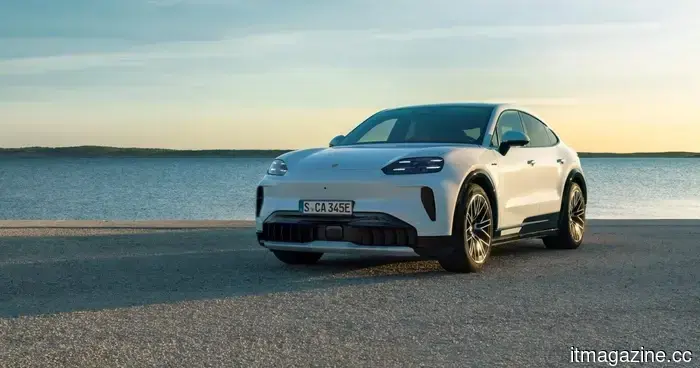 Porsche unveils an all-electric Cayenne Coupe featuring an impressive power enhancement.
Porsche's Cayenne Coupe will transition to a fully electric version in 2026, featuring three models that offer power outputs from 435 hp to 1,139 hp, with a base price of $113,800.
Porsche unveils an all-electric Cayenne Coupe featuring an impressive power enhancement.
Porsche's Cayenne Coupe will transition to a fully electric version in 2026, featuring three models that offer power outputs from 435 hp to 1,139 hp, with a base price of $113,800.
 Fed up with Gemini and ChatGPT? Claude is now here to assist you with Spotify, Uber, and additional integrations.
Claude now integrates with AllTrails, Uber, Spotify, Instacart, TripAdvisor, and more, combining your daily apps into one conversation, allowing you to plan, shop, and book without the need to switch between tabs.
Fed up with Gemini and ChatGPT? Claude is now here to assist you with Spotify, Uber, and additional integrations.
Claude now integrates with AllTrails, Uber, Spotify, Instacart, TripAdvisor, and more, combining your daily apps into one conversation, allowing you to plan, shop, and book without the need to switch between tabs.
 Xbox Game Pass may become more affordable with a partnership with Discord.
Subscribers of Discord Nitro might soon be offered a bundle of the Xbox Game Pass Starter Edition that includes more than 50 games and offers restricted cloud streaming.
Xbox Game Pass may become more affordable with a partnership with Discord.
Subscribers of Discord Nitro might soon be offered a bundle of the Xbox Game Pass Starter Edition that includes more than 50 games and offers restricted cloud streaming.
 The 'Star City' spinoff of For All Mankind finally presents the Soviet perspective on the space race in a new trailer.
Apple TV has released a trailer for Star City, the spinoff of For All Mankind that delves into the Soviet perspective of the alternate history space race, taking place entirely in the paranoid-infused 1970s.
The 'Star City' spinoff of For All Mankind finally presents the Soviet perspective on the space race in a new trailer.
Apple TV has released a trailer for Star City, the spinoff of For All Mankind that delves into the Soviet perspective of the alternate history space race, taking place entirely in the paranoid-infused 1970s.
The discussion around "iPhone clones" is outdated.
For many years, labeling a phone as an “iPhone clone” was an immediate way to disregard it completely. This label suggested unoriginal design, inferior materials, and an experience that deteriorated as soon as you used it. The initial imitators deserved that image. They replicated the appearance of Apple’s iPhone but lacked any real quality. Poor screens, sluggish performance, [...]