

Tesla sales and soaring gas prices: Interest in electric vehicles is increasing, yet the US market has contracted by 28% following the expiration of the tax credit.
Summary: US gasoline prices exceeded $4 per gallon for the first time in four years (+30% YoY), influenced by the Iran conflict and disruptions in the Strait of Hormuz. Tesla delivered 358,023 vehicles in Q1 2026, marking a 6% increase compared to a weak previous quarter, but fell short of estimates by 7,600 units. While interest in consumer EVs is increasing (Edmunds: 23.8% consideration), overall US EV sales dropped 28% YoY following the expiration of the $7,500 federal tax credit. Tesla's US EV market share increased to 54-58%, primarily because competitors saw a sharper decline in sales.
In April, the national average price for a gallon of gasoline surpassed $4 for the first time in four years, reflecting an approximate 30% increase year-over-year, leading to a predictable narrative: that elevated fuel prices benefit electric vehicle sales, and consequently, Tesla. Bloomberg’s post-earnings coverage on Wednesday presented this view, which, while not incorrect, is somewhat misleading. Tesla's Q1 2026 deliveries exceeded a weak comparison quarter by 6%, but were 7,600 vehicles below Wall Street's estimates, amid data that showed an overall contraction of the US EV market by 28% YoY. Higher gas prices are nudging consumers toward electric vehicles, yet this nudge is insufficient to compensate for the absence of the $7,500 federal tax credit.
Tesla released its earnings for the first quarter on Tuesday, just before the Bloomberg segment aired. Revenue reached $22.39 billion, a 16% increase year-over-year but $780 million shy of consensus expectations. Net income rose to $477 million, up 17%. Earnings per share of $0.41 surpassed the estimate of $0.38. The company delivered 358,023 vehicles against a production output of 408,386, indicating a gap of around 50,000 units, which suggests either a demand shortage or a strategic inventory increase ahead of the Model Y Juniper refresh. Tesla regained the title of global quarterly EV sales leader from BYD, but the production surplus and delivery shortfall complicate this achievement.
The data indicates a rise in consumer interest. According to Edmunds, the week of March 9 to 15 saw electrified vehicle consideration reach 23.8% of all vehicle research, the highest weekly figure for 2026, up from 22.4% the week prior. Cox Automotive reported that new EV sales in March were 20% higher than in February, with interest up 16% for the quarter compared to Q4 2025. Colin McKerracher from BloombergNEF remarked, “we see from basically every indicator we can find that people are more interested than ever in EVs.” Sales of used EVs also increased by 12% to 93,500 units in the quarter, with prices now within $1,300 of comparable gasoline vehicles.
The interest in EVs is authentic; however, the conversion rate is not proportional. Total new EV sales in the US dropped to between 212,600 and 216,400 units in Q1 2026, a 28% decrease from 296,304 in Q1 2025. January alone experienced a 41% year-over-year decline. CNN Business bluntly stated, “$4 gas won’t spark an EV buying spree.” NBC News noted that although rising fuel prices generated renewed interest, “affordability is a top barrier.” The disparity between interest and sales can be attributed to a single policy change: the $7,500 federal EV tax credit expired on September 30, 2025, as part of the administration’s “Big Beautiful Bill.” The $4,000 credit for used EVs expired simultaneously. Ford and GM have launched their own $7,500 incentive programs to replace the federal credit, but Tesla has not followed suit.
The surge in gasoline prices stems from a specific geopolitical crisis rather than a gradual market shift. Military actions against Iran starting on February 28 and the effective closure of the Strait of Hormuz caused Brent crude oil prices to rise from $61 per barrel at the beginning of the year to $118 by the end of March. Middle Eastern and Asian refineries slashed operations by approximately 6 million barrels per day. Distillate crack spreads reached record highs of $1.42 per gallon, compared to a five-year average of $0.68. By mid-April, signals of de-escalation had begun to ease prices, with WTI at $87.42 and Brent at $95.48, yet the national average remained above $4.
Tariffs from the Trump administration on Canadian oil could increase prices by 20 to 50 cents per gallon in some areas, though the overall impact of tariffs on fuel prices is mixed. The IEA’s April oil market
Other articles
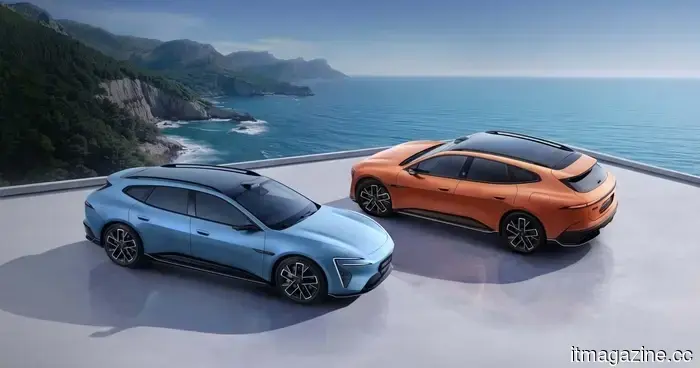 This stylish electric sedan is priced at less than $32,900 and surpasses Tesla with a range exceeding 770 miles.
The new Avatr sedan features a sophisticated design, is priced below $32,900, and offers a range-extending configuration that is estimated to achieve over 770 miles of CLTC driving.
This stylish electric sedan is priced at less than $32,900 and surpasses Tesla with a range exceeding 770 miles.
The new Avatr sedan features a sophisticated design, is priced below $32,900, and offers a range-extending configuration that is estimated to achieve over 770 miles of CLTC driving.
 Meta will allow parents to view their children's conversations with AI and step in before any potential risks escalate.
Meta is providing parents with weekly summaries of the topics discussed in their teenagers' Meta AI conversations on Facebook, Messenger, and Instagram.
Meta will allow parents to view their children's conversations with AI and step in before any potential risks escalate.
Meta is providing parents with weekly summaries of the topics discussed in their teenagers' Meta AI conversations on Facebook, Messenger, and Instagram.
 Fall Detection is a fantastic feature of smartwatches, but Google is prioritizing "account first!"
Google might soon necessitate a Google account for the Pixel Watch Fall Detection feature, bringing an end to one of the more adaptable setup options for this feature. This change will also include a grace period prior to enforcement, according to recently found app strings.
Fall Detection is a fantastic feature of smartwatches, but Google is prioritizing "account first!"
Google might soon necessitate a Google account for the Pixel Watch Fall Detection feature, bringing an end to one of the more adaptable setup options for this feature. This change will also include a grace period prior to enforcement, according to recently found app strings.
 How AI Is Transforming Workers' Compensation Claims and Healthcare Processes
Workers' compensation is advancing as artificial intelligence enhances claims processing, decision-making, and access to medical services. Here’s how businesses such as Claim Clarity are tackling this issue.
How AI Is Transforming Workers' Compensation Claims and Healthcare Processes
Workers' compensation is advancing as artificial intelligence enhances claims processing, decision-making, and access to medical services. Here’s how businesses such as Claim Clarity are tackling this issue.
 Volvo's parent company has created an elegant electric sedan priced at $14,300, which will unfortunately be unavailable to US consumers.
The Geely Galaxy A7 EV features a conventional design, boasts a claimed range of 550km, and is priced to compete with many rivals. However, this electric sedan launched in China seems destined to stay unattainable for buyers in the US.
Volvo's parent company has created an elegant electric sedan priced at $14,300, which will unfortunately be unavailable to US consumers.
The Geely Galaxy A7 EV features a conventional design, boasts a claimed range of 550km, and is priced to compete with many rivals. However, this electric sedan launched in China seems destined to stay unattainable for buyers in the US.
 AI has accelerated the most harmful type of abusive content found online, and guardians are struggling to keep pace.
Watchdog data indicates that generative AI is accelerating the production of child sexual abuse imagery, complicating enforcement efforts and making it significantly tougher for regulators to manage.
AI has accelerated the most harmful type of abusive content found online, and guardians are struggling to keep pace.
Watchdog data indicates that generative AI is accelerating the production of child sexual abuse imagery, complicating enforcement efforts and making it significantly tougher for regulators to manage.
Tesla sales and soaring gas prices: Interest in electric vehicles is increasing, yet the US market has contracted by 28% following the expiration of the tax credit.
Gas prices in the US exceeded $4 per gallon, and interest in electric vehicles reached levels not seen since 2026. However, overall electric vehicle sales declined by 28%, and Tesla fell short of its delivery projections. The tax credit had a greater impact than fuel prices.