
Musk’s SpaceX is considering GPU manufacturing due to difficulties with Nvidia’s supply.
SpaceX harbors ambitious aspirations in GPU development alongside an even more significant dream of an IPO to support these goals.
Reports indicate that SpaceX intends to produce its own GPUs, which are essential for artificial intelligence. This information was revealed through excerpts from its S-1 registration, a document that companies submit to the U.S. Securities and Exchange Commission when planning to go public.
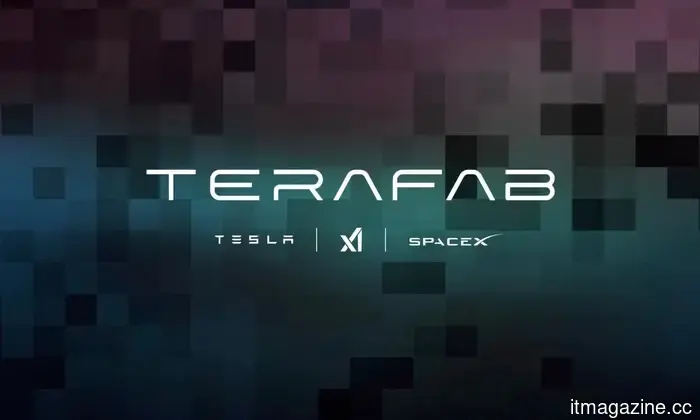
According to Reuters, SpaceX has identified "manufacturing our own GPUs" as one of its foremost capital expenditures for the future. This announcement follows Elon Musk's introduction of a TeraFab chip factory dedicated to creating chips resilient enough to withstand space's extreme conditions and to power its orbital AI data centers.
Why is SpaceX venturing into chip production?
The primary reason is supply. During the TeraFab announcement, Elon Musk noted that acquiring all current chipsets would only satisfy 2% of their anticipated needs.
In their filing, SpaceX cautioned potential investors that they lack long-term agreements with numerous chip suppliers, making it uncertain whether they can obtain enough computing hardware for their growth.
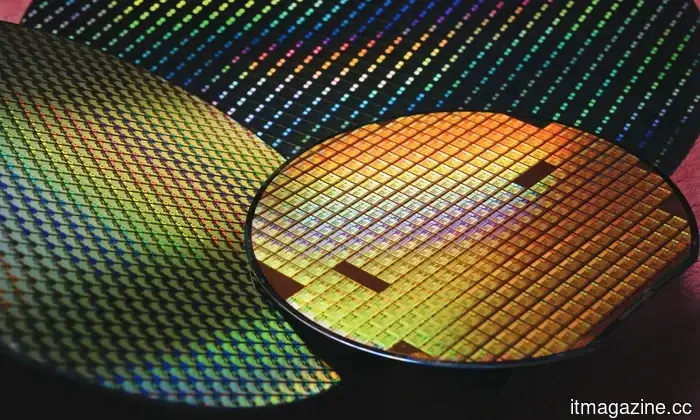
While designing and manufacturing custom chips appears to be a straightforward solution when supply is insufficient, chip production entails a highly complex process, and SpaceX does not currently operate as a semiconductor company.
Is GPU production feasible for them?
Realistically, it poses a significant challenge. In the same S-1 filing, SpaceX indicated that their aspirations for orbital data centers might not reach commercial viability. Advanced chip manufacturing involves intricate processes with thousands of tightly controlled steps that must be executed flawlessly each time.
TeraFab has considerable hurdles to navigate before mastering these complexities. There’s a reason that ASML is the sole vendor of photolithography machines and that TSMC holds a near-monopoly in high-end chip manufacturing.
Musk has stated that TeraFab will manage all aspects of chip production, including design, fabrication, packaging, and testing, all in one facility. Whether SpaceX can achieve this remains to be seen.
---
Rachit is an experienced tech journalist with over seven years of experience in the consumer technology field.
---
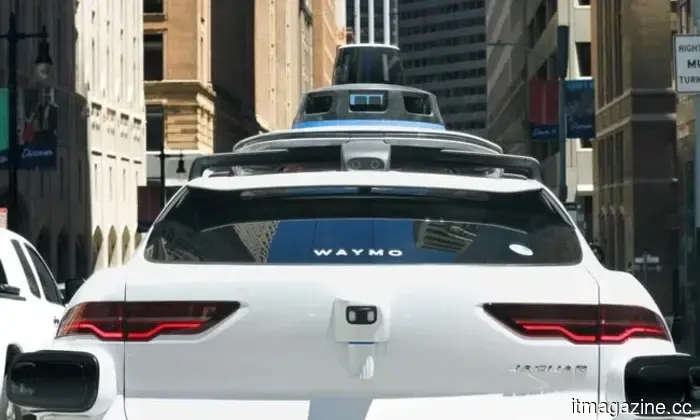
Autonomous cars were meant to liberate us from traffic congestion. Research suggests otherwise.
The vision of self-driving vehicles promised a future where one could relax while the car navigates through traffic. However, a recent study from the University of Texas at Arlington brings troubling news. The research indicates that the widespread use of autonomous vehicles could actually worsen traffic conditions significantly. Professors Stephen Mattingly and Farah Naz conducted a meta-analysis on the potential impact of self-driving cars on vehicle miles traveled (VMT) and found an average increase of 5.95%. For non-shared autonomous vehicles, that increase rises to nearly 7%.
---
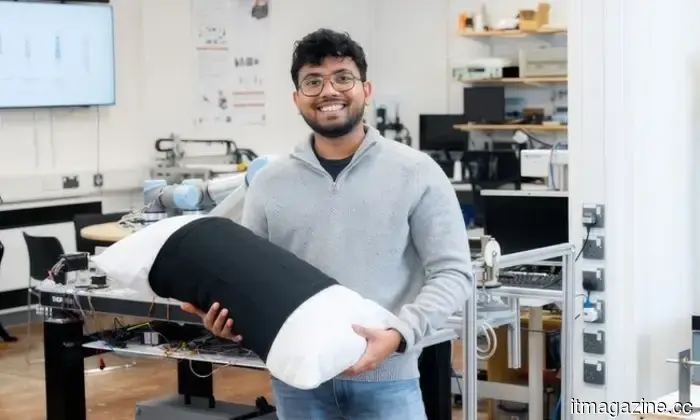
This intelligent pillow ensures that deaf users won’t miss emergency alarms or phone calls.
Sleeping through a phone call can be frustrating, but missing a fire alarm is far worse. Thus, this innovative smart pillow concept appears to be more practical than gimmicky. Researchers at Nottingham Trent University have created a smart pillow sleeve designed to assist deaf individuals in waking up to significant nighttime alerts. Unlike a regular smart pillow, this team’s design involves a smart sleeve that fits over a standard pillow and can be placed inside a typical pillowcase. It vibrates upon receiving notifications from connected alarms or calls.
---
ChatGPT's workspace agents are transforming AI into a collaborative team member.
OpenAI is elevating ChatGPT beyond simple query responses, and this latest upgrade marks a noticeable shift. With the introduction of workspace agents, ChatGPT resembles more of a comprehensive work assistant rather than just a chatbot. What are workspace agents in ChatGPT, and how do they function?

Другие статьи
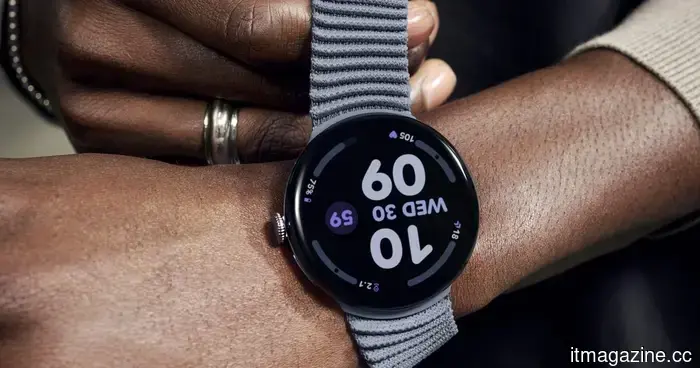 Fall Detection is a fantastic feature of smartwatches, but Google is prioritizing "account first!"
Google might soon necessitate a Google account for the Pixel Watch Fall Detection feature, bringing an end to one of the more adaptable setup options for this feature. This change will also include a grace period prior to enforcement, according to recently found app strings.
Fall Detection is a fantastic feature of smartwatches, but Google is prioritizing "account first!"
Google might soon necessitate a Google account for the Pixel Watch Fall Detection feature, bringing an end to one of the more adaptable setup options for this feature. This change will also include a grace period prior to enforcement, according to recently found app strings.
 UK Biobank data from 500,000 volunteers has been offered for sale on Alibaba following breaches of access agreements by Chinese research institutions.
Health information from 500,000 UK Biobank volunteers was listed for sale on Alibaba following breaches of data-sharing agreements by three Chinese research institutions. The Information Commissioner's Office is currently conducting an investigation.
UK Biobank data from 500,000 volunteers has been offered for sale on Alibaba following breaches of access agreements by Chinese research institutions.
Health information from 500,000 UK Biobank volunteers was listed for sale on Alibaba following breaches of data-sharing agreements by three Chinese research institutions. The Information Commissioner's Office is currently conducting an investigation.
 AI has accelerated the most harmful type of abusive content found online, and guardians are struggling to keep pace.
Watchdog data indicates that generative AI is accelerating the production of child sexual abuse imagery, complicating enforcement efforts and making it significantly tougher for regulators to manage.
Rilian secures $17.5 million to introduce agentic AI in sovereign defense.
Rilian has secured $17.5 million in funding led by 8VC to implement agentic AI in air-gapped defense and sovereign cloud settings.
OpenAI has introduced GPT-5.5, marking its first entirely retrained base model since GPT-4.5.
OpenAI has introduced GPT-5.5, its initial fully retrained base model following GPT-4.5, aimed at enterprises with capabilities in agentic coding, computer utilization, and knowledge-based tasks.
AI has accelerated the most harmful type of abusive content found online, and guardians are struggling to keep pace.
Watchdog data indicates that generative AI is accelerating the production of child sexual abuse imagery, complicating enforcement efforts and making it significantly tougher for regulators to manage.
Rilian secures $17.5 million to introduce agentic AI in sovereign defense.
Rilian has secured $17.5 million in funding led by 8VC to implement agentic AI in air-gapped defense and sovereign cloud settings.
OpenAI has introduced GPT-5.5, marking its first entirely retrained base model since GPT-4.5.
OpenAI has introduced GPT-5.5, its initial fully retrained base model following GPT-4.5, aimed at enterprises with capabilities in agentic coding, computer utilization, and knowledge-based tasks.
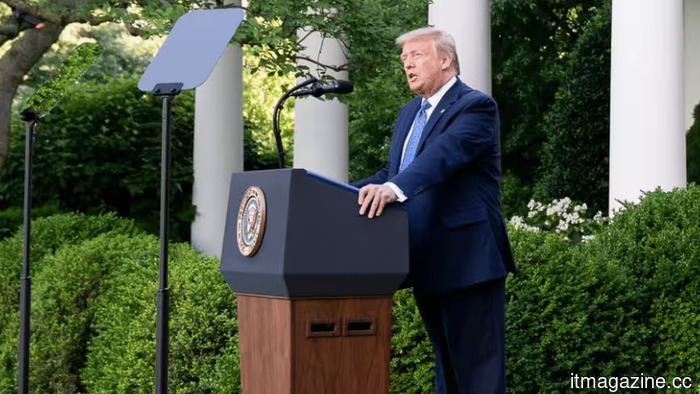 The United States has recently instructed China to cease its imitation of American AI. However, implementing this directive will be the challenging aspect.
The OSTP reports that China is conducting large-scale operations to extract US AI models. OpenAI, Anthropic, and Google are collaborating to share threat intelligence. Meanwhile, Congress is in the process of creating sanctions.
The United States has recently instructed China to cease its imitation of American AI. However, implementing this directive will be the challenging aspect.
The OSTP reports that China is conducting large-scale operations to extract US AI models. OpenAI, Anthropic, and Google are collaborating to share threat intelligence. Meanwhile, Congress is in the process of creating sanctions.
Musk’s SpaceX is considering GPU manufacturing due to difficulties with Nvidia’s supply.
SpaceX aims to develop its own GPUs, but the process of chip manufacturing is quite challenging. Here's what we currently know.