
Rilian secures $17.5 million to introduce agentic AI in sovereign defense.
The startup Rilian, located in McLean, Virginia, has developed the Caspian platform, which operates as a command layer above existing security systems, deploying pre-trained AI agents into environments that are air-gapped and adhere to compliance restrictions. Co-founder Nick Pompeo is the son of Mike Pompeo, the former US Secretary of State.
Rilian has secured $17.5 million in seed funding and seed extension funding for its efforts in creating agentic AI systems for defense and national security purposes. This funding round was led by 8VC, First In, and Tamarack Global, and included contributions from 8090 Industries, Liquid 2 Ventures, Perot Jain, and Protego Ventures. The funds will be allocated towards expanding market presence in the US and Gulf Cooperation Council countries, hiring engineers, and conducting research and development of AI-driven cyber and defense solutions for government and critical infrastructure operators.
Caspian, the company’s principal product, serves as an AI-native security orchestration platform, acting as a command layer over an organization’s entire security architecture. Instead of necessitating human analysts to oversee numerous disconnected tools, Caspian utilizes pre-trained AI agents to automate the processes of threat detection, countermeasures, and targeting independently.
This platform is purposely structured for environments where commercial security tools typically face challenges, such as air-gapped networks, government cloud deployments, on-premise infrastructures, and systems bound by compliance regulations. Rilian claims that Caspian can implement capability updates within days rather than weeks, and it is designed to encapsulate the institutional knowledge of human security professionals to expedite onboarding.
Rilian addresses a structural issue. Although defense ministries and national security agencies have ample access to sophisticated cybersecurity technologies produced by companies in places like Silicon Valley, Tel Aviv, and Northern Virginia, the real challenge lies in deployment—effectively translating these capabilities into operational use at a national level within environments that are intentionally disconnected from the internet, subject to stringent procurement regulations, and staffed by a limited number of authorized personnel.
CEO and co-founder Christian Schnedler characterized this as a procurement and manpower issue disguised as a technological problem, stating, “Rilian was built to transform security into an execution success, rather than a procurement and human staffing problem.”
The investor group reflects the global aspirations of Rilian. 8VC is a San Francisco-based firm co-founded by Joe Lonsdale and includes investments in Palantir and Anduril, while First In holds stakes in Anduril, the defense technology company founded by Palmer Luckey. Tamarack Global focuses on defense and national security investments. Protego Ventures, an Israeli defense-tech fund established by Lital Leshem and Lee Moser in 2024, has raised $70 million for defense startups; Leshem is also a co-founder of Carbyne, which was sold to Axon for $625 million earlier this year.
The combination of US and Israeli defense-tech investors, along with Gulf-centered capital, indicates that Rilian is strategically targeting the defense technology triangle between the US, Israel, and GCC that has gained importance since the Abraham Accords.
Christian Schnedler serves as CEO, with Dan Fischer as a co-founder. The third co-founder, Nick Pompeo, is the son of Mike Pompeo, who was the CIA Director and US Secretary of State during Donald Trump’s first term. Nick Pompeo’s connections within circles of US national security and defense procurement provide essential context for a company focused on accelerating government adoption of defense technology.
Rilian has already publicly disclosed one major customer. In July 2025, it finalized a contract with the UAE Cybersecurity Council, which is the nation's cybersecurity authority, to implement Caspian across the UAE’s National Security Operations Centre (NSOC) for the protection of critical infrastructure, including operational technology (OT) environments. This contract marks the platform’s first nation-scale implementation. Additionally, Rilian has formed partnerships with technology providers such as SentinelOne, Censys, and SimSpace to enhance the Caspian ecosystem.
The market information referenced in the press release indicates that global cybersecurity and risk management spending exceeds $200 billion annually, according to Gartner, with the government and public sector segment projected to grow from $45-50 billion in 2025 to more than $70 billion by 2030. This sets the context for the company's target market, though it should be interpreted as part of the company’s narrative rather than as external validation.
Other articles
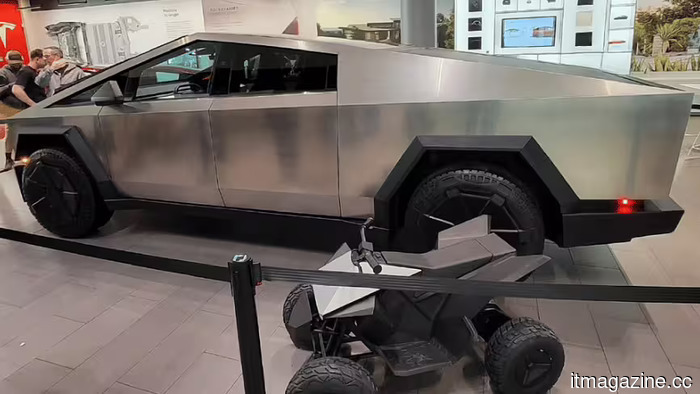 Tesla sales and elevated gasoline prices: Interest in electric vehicles is increasing, yet the US market contracted by 28% following the expiration of the tax credit.
Gas prices in the US surpassed $4 per gallon, and interest in electric vehicles (EVs) reached its highest level since 2026. However, overall EV sales declined by 28%, and Tesla did not meet its delivery projections. The tax credit had a greater impact than the price at the gas station.
Tesla sales and elevated gasoline prices: Interest in electric vehicles is increasing, yet the US market contracted by 28% following the expiration of the tax credit.
Gas prices in the US surpassed $4 per gallon, and interest in electric vehicles (EVs) reached its highest level since 2026. However, overall EV sales declined by 28%, and Tesla did not meet its delivery projections. The tax credit had a greater impact than the price at the gas station.
 How AI Is Transforming Workers' Compensation Claims and Healthcare Processes
Workers' compensation is advancing as artificial intelligence enhances claims processing, decision-making, and access to medical services. Here’s how businesses such as Claim Clarity are tackling this issue.
How AI Is Transforming Workers' Compensation Claims and Healthcare Processes
Workers' compensation is advancing as artificial intelligence enhances claims processing, decision-making, and access to medical services. Here’s how businesses such as Claim Clarity are tackling this issue.
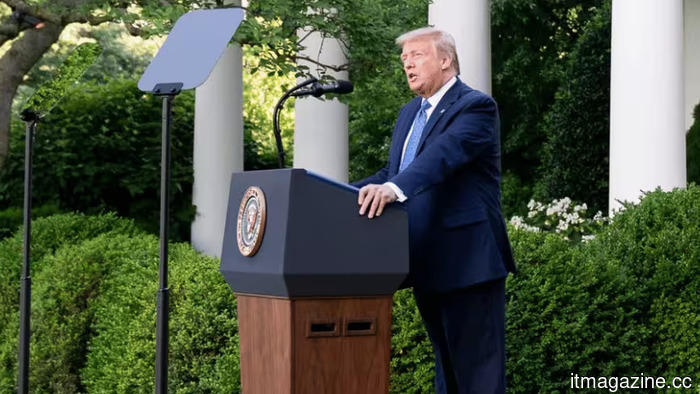 The US has informed China to cease its imitation of American AI. However, implementing this directive poses a significant challenge.
The OSTP reports that China is conducting large-scale efforts to extract US AI models. OpenAI, Anthropic, and Google are collaborating on threat intelligence. Congress is working on drafting sanctions.
The US has informed China to cease its imitation of American AI. However, implementing this directive poses a significant challenge.
The OSTP reports that China is conducting large-scale efforts to extract US AI models. OpenAI, Anthropic, and Google are collaborating on threat intelligence. Congress is working on drafting sanctions.
 SoftBank is looking for a $10 billion margin loan collateralized by OpenAI shares at a rate of SOFR+425 basis points as its leverage structure becomes more complex.
SoftBank is securing a $10 billion loan using its stake in OpenAI as collateral, with a spread nearly three times higher than that of its 2018 margin loan with Alibaba. S&P has downgraded its credit outlook to negative.
SoftBank is looking for a $10 billion margin loan collateralized by OpenAI shares at a rate of SOFR+425 basis points as its leverage structure becomes more complex.
SoftBank is securing a $10 billion loan using its stake in OpenAI as collateral, with a spread nearly three times higher than that of its 2018 margin loan with Alibaba. S&P has downgraded its credit outlook to negative.
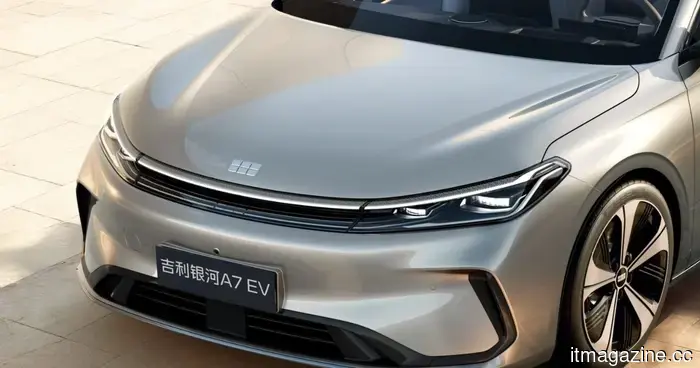 Volvo's parent company has created an elegant electric sedan priced at $14,300, which will unfortunately be unavailable to US consumers.
The Geely Galaxy A7 EV features a conventional design, boasts a claimed range of 550km, and is priced to compete with many rivals. However, this electric sedan launched in China seems destined to stay unattainable for buyers in the US.
Volvo's parent company has created an elegant electric sedan priced at $14,300, which will unfortunately be unavailable to US consumers.
The Geely Galaxy A7 EV features a conventional design, boasts a claimed range of 550km, and is priced to compete with many rivals. However, this electric sedan launched in China seems destined to stay unattainable for buyers in the US.
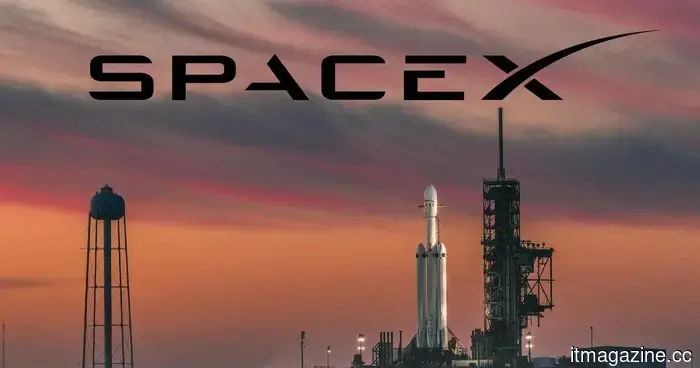 Musk’s SpaceX is considering GPU manufacturing due to difficulties with Nvidia’s supply.
SpaceX aims to develop its own GPUs, but the process of chip manufacturing is quite challenging. Here's what we currently know.
Musk’s SpaceX is considering GPU manufacturing due to difficulties with Nvidia’s supply.
SpaceX aims to develop its own GPUs, but the process of chip manufacturing is quite challenging. Here's what we currently know.
Rilian secures $17.5 million to introduce agentic AI in sovereign defense.
Rilian has secured $17.5 million in funding led by 8VC to implement agentic AI in air-gapped defense and sovereign cloud settings.