
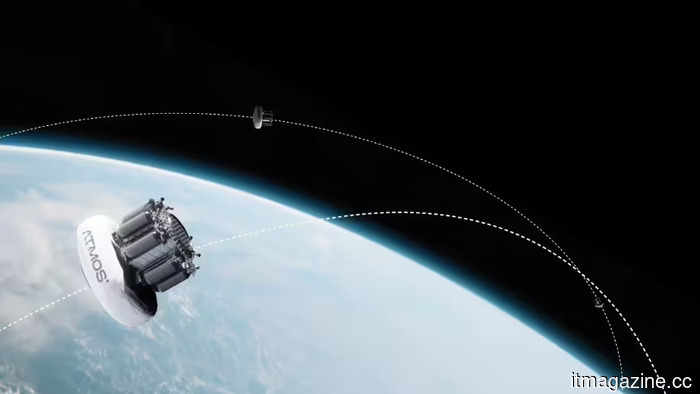
ATMOS secures €25.7 million to enable regular orbital returns.
One year after successfully operating the continent's first private re-entry capsule, the German-French startup is transitioning from demonstration projects to active operations. This funding round supports three PHOENIX 2 vehicles, a new defense initiative, and a next-generation 1-tonne capsule.
ATMOS Space Cargo, the European firm working on orbital transport and re-entry vehicles, has secured €25.7 million in a Series A funding round. This financing is co-led by Balnord and Expansion Ventures, with Keen Defence and Security coming on board as a strategic co-investor.
The European Innovation Council is involved through its Accelerator program by providing blended financing, which combines grants and equity. Returning investors include OTB Ventures, High-Tech Gründerfonds, APEX Ventures, Seraphim, Faber, E2MC, Kirch Ventures, Lennertz & Co., Mätch VC, MBG Baden-Württemberg, and Tech Horizons.
Founded by CEO Sebastian Klaus, the company operates from locations in Lichtenau, Germany, and Strasbourg, France.
This funding round comes roughly a year after ATMOS flew and successfully recovered its first prototype re-entry capsule, PHOENIX 1, during SpaceX’s Bandwagon-3 rideshare mission in April 2025.
That mission marked the first private orbital return by a European entity and validated the Inflatable Atmospheric Decelerator (IAD) technology at the core of the PHOENIX system. This technology features an inflatable structure that acts as both a heat shield and an aerodynamic brake, enabling controlled atmospheric re-entry without the use of ablative materials and offering greater payload-to-mass efficiency compared to traditional capsule designs.
The insights gained from PHOENIX 1 have helped inform the design of PHOENIX 2, which is now set for flight.
PHOENIX 2 is a free-flying spacecraft equipped with integrated propulsion, power, and thermal management systems, able to support missions ranging from hours to several months in Low Earth Orbit, with a payload capacity of 100 kilograms.
The Series A funding will be used to establish an initial fleet of three PHOENIX 2 vehicles, executing a phased mission campaign rather than isolated flights. This methodical approach is aimed at establishing operational regularity, minimizing program risks, and providing commercial and institutional clients with a reliable service to plan for.
Plans for recovery operations are already underway near Santa Maria in the Azores, following a commercial re-entry license granted by Portugal’s national communications authority (ANACOM-09/2026-AE, awarded March 2026). This is the first license of its kind issued by an EU member state for the controlled return and recovery of a dedicated commercial spacecraft.
In conjunction with this operational endeavor, ATMOS is launching ATMOS WORKS, a separate unit focusing on government and defense customers. The dual-use design of the PHOENIX platform allows it to carry and return sensitive equipment and data securely, perform time-critical operations, and support in-orbit demonstration and validation, aligning it with European defense and intelligence needs.
The involvement of Keen Defence and Security as a co-investor indicates institutional confidence in this direction. ATMOS plans to release further details about ATMOS WORKS separately.
Development of PHOENIX 3 has also commenced, with the new vehicle designed to accommodate a payload of around one metric tonne—approximately ten times the capacity of PHOENIX 2—and featuring a 15-meter inflatable atmospheric decelerator.
This scale-up aims to address larger payload classes, combined multi-customer missions, and future institutional and security needs.
CEO Klaus has noted that theoretically, the IAD architecture can scale up to around 25,000 kilograms before the combined weight of the gas and inflation system becomes excessive relative to the heat shield.
The strategic significance of this funding round is clear. Europe currently lacks a sovereign and reliable capability to return payloads from orbit.
NASA’s Dragon capsule services U.S. customers through a distinct supply chain, while the only other available returning capsule system for European researchers is China's Shenzhou, which comes with various access and political complexities.
ATMOS stands out as the only private European company with a demonstrated re-entry and recovery operation, placing it in a market position that is not easily replicable in the short term.
The EIC’s involvement, alongside defense-oriented investors, signifies a belief that orbital return represents not just a commercial logistics endeavor but also a vital aspect of European strategic autonomy in space—the capacity for independent orbital access and return from European territory.
ATMOS’s inaugural PHOENIX 2 mission will be part of a SpaceX Falcon 9 rideshare, carrying Space Cargo Unlimited’s BentoBox microgravity platform, marking the first of a seven-mission initiative announced in November 2025.
A public confirmation of the launch window has yet to be provided.
Other articles
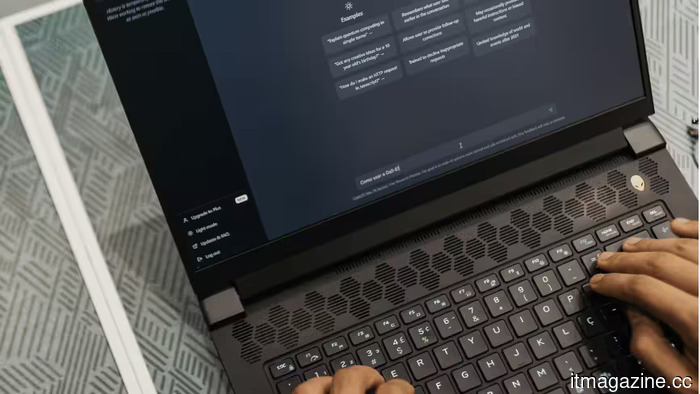 OpenAI transitions ChatGPT advertising to a cost-per-click model as the $60 CPM declines over ten weeks and ad revenue goals reach $2.5 billion.
OpenAI has shifted ChatGPT advertising from a CPM model to a CPC model, with bids ranging from $3 to $5, following a decline in launch pricing. The firm anticipates generating $2.5 billion in ad revenue this year, despite facing $14 billion in losses.
OpenAI transitions ChatGPT advertising to a cost-per-click model as the $60 CPM declines over ten weeks and ad revenue goals reach $2.5 billion.
OpenAI has shifted ChatGPT advertising from a CPM model to a CPC model, with bids ranging from $3 to $5, following a decline in launch pricing. The firm anticipates generating $2.5 billion in ad revenue this year, despite facing $14 billion in losses.
 Several new features from the Galaxy S26 are being rolled out to older Samsung flagship devices and foldables.
Samsung will be providing certain Galaxy S26 AI functionalities to previous Galaxy flagship devices and foldables via One UI 8.5.
Several new features from the Galaxy S26 are being rolled out to older Samsung flagship devices and foldables.
Samsung will be providing certain Galaxy S26 AI functionalities to previous Galaxy flagship devices and foldables via One UI 8.5.
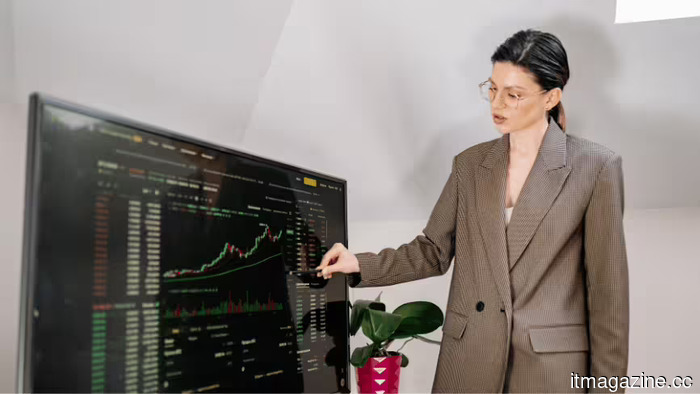 Japanet increases its VC fund to $200 million, four times its previous amount, following impressive returns from early investments in Anthropic and xAI.
Japanet, the prominent TV shopping company in Japan, has increased its venture fund from $50 million to $200 million following initial investments in Anthropic, xAI, and OpenAI via Pegasus Tech Ventures.
Meta is implementing tracking software on the computers of its employees in the US.
Meta is implementing software on the computers of its US employees to track mouse movements, record keystrokes, and capture screenshots for the purpose of training its AI agents.
OpenAI plans to invest up to $1.5 billion of its own funds into DeployCo.
OpenAI is poised to invest as much as $1.5 billion in DeployCo, a $10 billion private equity joint venture alongside TPG, Bain, Advent, Brookfield, and Goanna, promising investors a 17.5% annual return.
Japanet increases its VC fund to $200 million, four times its previous amount, following impressive returns from early investments in Anthropic and xAI.
Japanet, the prominent TV shopping company in Japan, has increased its venture fund from $50 million to $200 million following initial investments in Anthropic, xAI, and OpenAI via Pegasus Tech Ventures.
Meta is implementing tracking software on the computers of its employees in the US.
Meta is implementing software on the computers of its US employees to track mouse movements, record keystrokes, and capture screenshots for the purpose of training its AI agents.
OpenAI plans to invest up to $1.5 billion of its own funds into DeployCo.
OpenAI is poised to invest as much as $1.5 billion in DeployCo, a $10 billion private equity joint venture alongside TPG, Bain, Advent, Brookfield, and Goanna, promising investors a 17.5% annual return.
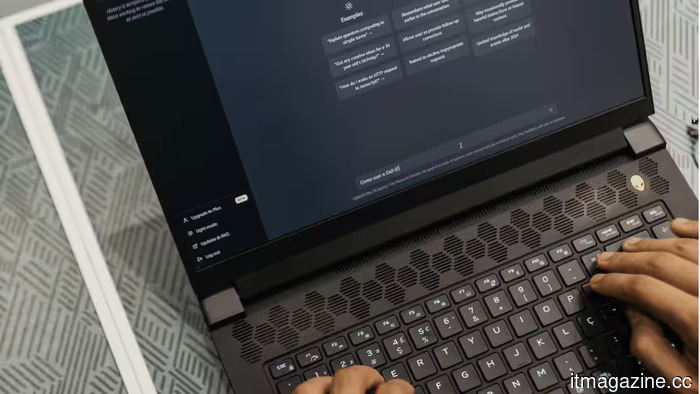 OpenAI transitions ChatGPT advertisements to a cost-per-click model as the $60 CPM diminishes over ten weeks, and ad revenue goals reach $2.5 billion.
OpenAI has shifted the advertising model for ChatGPT from CPM to CPC, implementing bids of $3 to $5 following a decline in launch pricing. The company anticipates generating $2.5 billion in ad revenue this year, despite facing $14 billion in losses.
OpenAI transitions ChatGPT advertisements to a cost-per-click model as the $60 CPM diminishes over ten weeks, and ad revenue goals reach $2.5 billion.
OpenAI has shifted the advertising model for ChatGPT from CPM to CPC, implementing bids of $3 to $5 following a decline in launch pricing. The company anticipates generating $2.5 billion in ad revenue this year, despite facing $14 billion in losses.
ATMOS secures €25.7 million to enable regular orbital returns.
ATMOS Space Cargo has completed a €25.7M Series A funding round to finance three PHOENIX 2 orbital return missions, establish a new defense venture called ATMOS WORKS, and develop PHOENIX 3.