
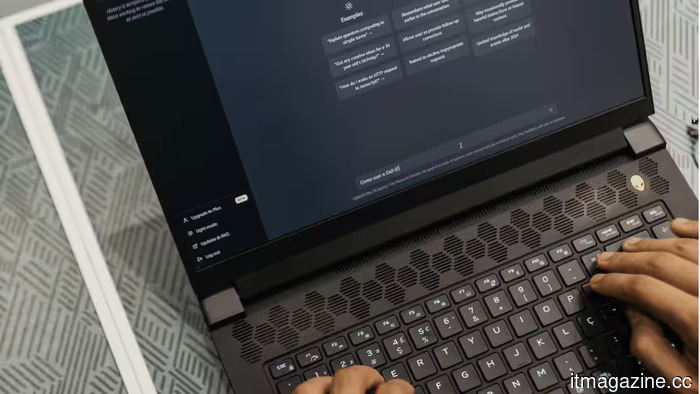
OpenAI transitions ChatGPT advertisements to a cost-per-click model as the $60 CPM diminishes over ten weeks, and ad revenue goals reach $2.5 billion.
Summary: OpenAI has transitioned ChatGPT's advertising model from CPM to cost-per-click pricing, with bids ranging from $3 to $5, after the initial $60 CPM drastically fell to as low as $25 within ten weeks of launch. This change places OpenAI in direct competition with Google and Meta for performance ad budgets, while competitors like Perplexity and Anthropic have branded themselves as ad-free options. OpenAI anticipates $2.5 billion in ad revenue by 2026, scaling up to $100 billion by 2030, amid projected losses of $14 billion this year and an $852 billion valuation that is starting to raise investor concerns.
The company's shift to a cost-per-click advertising model means that advertisers can now bid between $3 and $5 per click, with the minimum spend reduced from $250,000 to $50,000. This pivot, reported by The Information on April 15, was motivated by the decline in value of the initial CPM charged, which went from $60 at launch to as low as $25, proving a volume-dependent impressions model unsustainable for a company projecting substantial losses this year.
Ads are displayed at the bottom of ChatGPT responses, marked as "sponsored" and visually distinct from the answers. Sponsored product cards may be included for product-related queries, similar to Google Shopping. Users on the free tier and the $8-per-month Go plan will see these ads, while those on the Plus, Pro, Business, Enterprise, and Education tiers will not. OpenAI assures advertisers will not have access to user conversations, chat history, or personal information, only providing aggregated performance data such as total views and clicks. Targeting is determined by the context of the current conversation rather than demographic or third-party data.
From initial testing to a full ad platform in just ten weeks
OpenAI first incorporated advertising into ChatGPT on February 9 using a CPM model with a minimum spend requirement of $200,000 to $250,000 and partnered with early advertisers like Target, Ford, Adobe, Mrs. Meyer’s, and Expedia. By April, the pilot had generated annualized revenue exceeding $100 million with hundreds of advertisers involved. OpenAI forecasts that advertising revenue will reach $2.5 billion by 2026, then grow to $11 billion by 2027 and ultimately $100 billion by 2030.
The speed of development has been notable. In June 2024, OpenAI recruited Shivakumar Venkataraman, a veteran of Google’s search ads division, as vice president. Since February, it formed a partnership with StackAdapt for programmatic ad placement, created a conversion tracking pixel for monitoring events like lead generation and subscription activations, and launched a self-service ads manager that opened to global advertisers on April 15. Following this, international expansions into Australia, New Zealand, and Canada took place within 48 hours. OpenAI is also collaborating with Smartly and Criteo to develop conversational ad formats that extend beyond static placements and connect to Criteo’s network of 17,000 advertisers.
The shift to cost-per-click pricing reflects a trend of weakening impressions-based pricing. A leaked StackAdapt presentation, shared with certain buyers on March 27, reported CPMs as low as $15, which is only a quarter of the initial rate. Cost-per-click pricing logically ties revenue to tangible user engagement instead of passive exposure, aligning OpenAI’s model with existing performance evaluation practices of advertisers on Google and Meta. The company is also working on action-driven ad formats aimed at facilitating purchases or app downloads directly within conversations.
The Altman transformation
Sam Altman previously built a public stance against advertising, referring to it as a "momentary industry" in 2024. At Harvard, he described advertisements as a "last resort" and expressed discomfort with the combination of ads and AI, favoring a user-paid model where answers are unbiased by advertising. However, he changed his perspective after observing value-added ads on Instagram.
On February 9, as ads launched, Altman announced on X: “We are starting to test ads in ChatGPT free and Go tiers. Importantly, we will not accept money to influence ChatGPT's responses, and we maintain user privacy from advertisers.” Chris Lehane, OpenAI’s vice president of global affairs, defended this decision by stating that advertising fosters “expanded democratic access” to ChatGPT. In reaction to Anthropic's Super Bowl ads criticizing ChatGPT's decision to include ads, Altman remarked that Anthropic “offers an expensive product to wealthy individuals,” while OpenAI aims to make AI available to “billions who cannot afford subscriptions.”
The competitive landscape is evolving
Major AI companies are now employing different monetization strategies in a way that would have seemed improbable a year prior. Google is integrating ads into 25.5% of AI-generated search results, extending its existing advertising infrastructure into AI Overviews. OpenAI is constructing a
Other articles
 Bond has introduced a post-feed social network that utilizes AI memories to combat doomscrolling, although its data model has sparked concerns.
Bond does not feature a feed or infinite scrolling. Instead, its AI analyzes your photos and videos to suggest real-life activities. The company's business strategy includes licensing that data.
NeoCognition's investment of $40 million in self-learning AI agents
NeoCognition secures $40 million funding from Cambium Capital, Walden Catalyst, Vista, Intel CEO Lip-Bu Tan, and Databricks to develop self-learning AI agents for businesses.
NeoCognition's $40 million investment in self-learning AI agents
NeoCognition secures $40 million in funding from Cambium Capital, Walden Catalyst, Vista, Intel CEO Lip-Bu Tan, and Databricks to develop self-learning AI agents for businesses.
Bond has introduced a post-feed social network that utilizes AI memories to combat doomscrolling, although its data model has sparked concerns.
Bond does not feature a feed or infinite scrolling. Instead, its AI analyzes your photos and videos to suggest real-life activities. The company's business strategy includes licensing that data.
NeoCognition's investment of $40 million in self-learning AI agents
NeoCognition secures $40 million funding from Cambium Capital, Walden Catalyst, Vista, Intel CEO Lip-Bu Tan, and Databricks to develop self-learning AI agents for businesses.
NeoCognition's $40 million investment in self-learning AI agents
NeoCognition secures $40 million in funding from Cambium Capital, Walden Catalyst, Vista, Intel CEO Lip-Bu Tan, and Databricks to develop self-learning AI agents for businesses.
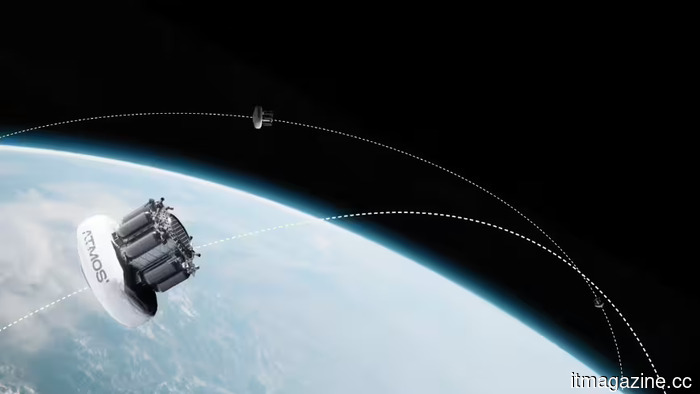 ATMOS secures €25.7M to establish routine orbital returns.
ATMOS Space Cargo has secured €25.7 million in a Series A funding round to support three PHOENIX 2 orbital return missions, establish a new defense venture called ATMOS WORKS, and facilitate the development of PHOENIX 3.
ATMOS secures €25.7M to establish routine orbital returns.
ATMOS Space Cargo has secured €25.7 million in a Series A funding round to support three PHOENIX 2 orbital return missions, establish a new defense venture called ATMOS WORKS, and facilitate the development of PHOENIX 3.
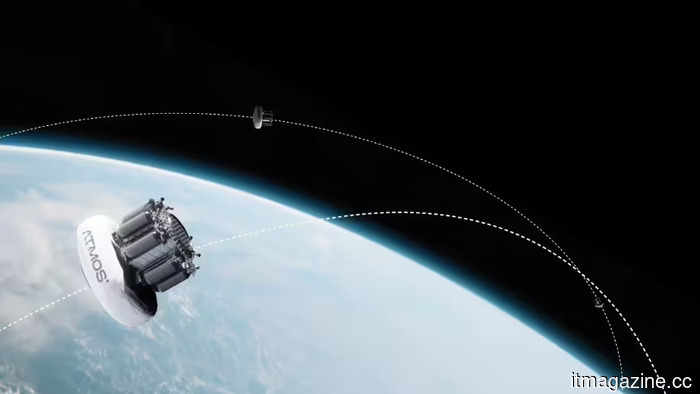 ATMOS secures €25.7 million to enable regular orbital returns.
ATMOS Space Cargo has completed a €25.7M Series A funding round to finance three PHOENIX 2 orbital return missions, establish a new defense venture called ATMOS WORKS, and develop PHOENIX 3.
OpenAI plans to invest up to $1.5 billion of its own funds into DeployCo.
OpenAI is poised to invest as much as $1.5 billion in DeployCo, a $10 billion private equity joint venture alongside TPG, Bain, Advent, Brookfield, and Goanna, promising investors a 17.5% annual return.
ATMOS secures €25.7 million to enable regular orbital returns.
ATMOS Space Cargo has completed a €25.7M Series A funding round to finance three PHOENIX 2 orbital return missions, establish a new defense venture called ATMOS WORKS, and develop PHOENIX 3.
OpenAI plans to invest up to $1.5 billion of its own funds into DeployCo.
OpenAI is poised to invest as much as $1.5 billion in DeployCo, a $10 billion private equity joint venture alongside TPG, Bain, Advent, Brookfield, and Goanna, promising investors a 17.5% annual return.
OpenAI transitions ChatGPT advertisements to a cost-per-click model as the $60 CPM diminishes over ten weeks, and ad revenue goals reach $2.5 billion.
OpenAI has shifted the advertising model for ChatGPT from CPM to CPC, implementing bids of $3 to $5 following a decline in launch pricing. The company anticipates generating $2.5 billion in ad revenue this year, despite facing $14 billion in losses.