

Top 8 supplier management software solutions for 2026
As of 2026, I have dedicated over a decade to analyzing procurement technology and supply chain logistics for publicly traded companies. One key takeaway from these audits is that effectively managing suppliers can significantly impact a business's success. The threat of third-party risk is at an unprecedented level. Increasing tariffs, taxes, and supply chain issues are fueling greater volatility, while regulatory scrutiny continues to rise. Relying on disconnected systems, spreadsheets, and fragmented email communications to track suppliers is no longer a sustainable approach, prompting modern organizations to adopt the latest generation of supplier management software.
Supplier management software provides a digital framework to manage all interactions with third-party vendors. It centralizes supplier data, monitors performance metrics, ensures compliance, and mitigates risks.
However, the expected functionalities of this software are changing rapidly in 2026. Traditionally, these tools served mainly as digital filing systems. Today, the leading platforms actively engage in shaping your procurement strategy, utilizing AI to scan documents, assess risk, and notify you of compliance issues before they escalate into costly problems. Effective supplier management software supports your organization from the initial supplier request and ensures that no vendor is allowed into your ecosystem without thorough vetting.
How to select the ideal supplier management software in 2026
Choosing the right platform requires a strategic mindset. First, consider the total cost of ownership. Many legacy systems may seem affordable initially but often necessitate costly third-party consultants for their implementation and maintenance.
Secondly, prioritize user adoption. If the software is overly complicated or bloated, it will only create challenges for your procurement and legal teams, hampering successful adoption.
Lastly, demand unification. A common error I observe is companies investing in separate solutions for vendor onboarding, contract management, and spend analysis. This approach leads to data silos and increases complexity and risk. The most effective organizations choose platforms that combine contracting, third-party compliance, and spend management into a unified source of data.
Our Evaluation Process
To identify the top supplier management software for 2026, I undertook a thorough analysis of the market, focusing on the following criteria:
- Verified User Reviews: I assessed feedback from independent sources like G2 and Capterra to gauge real-world performance.
- Common Pain Points: I concentrated on customer complaints related to implementation speed, user interface challenges, and customer service responsiveness.
- Data Unification: I examined each platform's capability to consolidate contracting, compliance, and spend data.
- Native AI Capabilities: I evaluated the existence and effectiveness of integrated AI tools and their actual utility.
- Overall Value: I assessed the value proposition for mid-market and enterprise organizations.
The resulting list highlights the most effective tools available today.
The 8 best supplier management software platforms for 2026
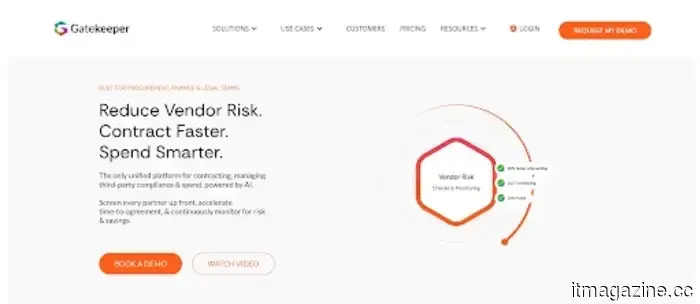
1. Gatekeeper
Best for: Unified contracting, compliance, and spend management.
Pros:
- The only platform that connects vendors, contracts, and spending in one place.
- Integrated AI for automation without needing additional tools.
- User-friendly design that requires no training, ensuring rapid value attainment.
Cons:
- Not a complete Procure to Pay suite, making it unsuitable for those needing a legacy ERP alternative.
Summary:
Gatekeeper stands out as the only unified platform linking contracting, third-party compliance, and spend management. Unlike competitors that serve as point solutions in one area, Gatekeeper reduces fragmentation by offering everything in one platform—resulting in a single audit trail and one source of truth for all contracts, third parties, and expenditures. Its built-in AI, LuminIQ, automates key processes without needing an additional product.
2. Coupa
Best for: Comprehensive procure-to-pay workflow automation.
Pros:
- Strong integration with ERP systems like SAP and Oracle.
- Excellent audit trails for financial monitoring.
Cons:
- Complex and often pricey for those not requiring full P2P functionality.
- Customer service issues are frequently reported.
Summary:
Coupa is a notable player in the spend management arena, providing extensive tools for enterprises wanting to revamp their financial frameworks. However, users report difficulty in customizing the platform to their specific needs, leading to a reliance on external resources for adjustments after setup. Additionally, feedback highlights slow customer service responses, making Coupa potentially too complex for organizations without extensive P2P revamping needs.
3. Ivalua
Best for: Manufacturing and intricate supply chains.
Pros:
- Effectively centralizes supplier information.
- Well-suited for direct materials sourcing.
Cons:
- Known for slow implementation processes.
- Needs considerable technical resources for maintenance.
Summary:
Targeting large businesses with complex source-to-pay needs, Ivalua is favored in the manufacturing industry. Although it has robust supplier relationship management features, it lacks flexibility. Users often cite the system's rigidity and the necessity for developer support as limiting factors. Its complexity requires a dedicated internal team for management, making it less suitable for agile operations.
4. SAP Ariba
Best for: Global enterprises already using SAP.
Pros:
- Extensive global supplier network.




Other articles
 Musk disregards Paris prosecutors in the Grok child pornography inquiry while the US Department of Justice declines to provide assistance.
Musk did not show up before Paris prosecutors who are looking into Grok's estimated 23,000 child sexual images, as the US Department of Justice declined to assist with the French investigation.
Musk disregards Paris prosecutors in the Grok child pornography inquiry while the US Department of Justice declines to provide assistance.
Musk did not show up before Paris prosecutors who are looking into Grok's estimated 23,000 child sexual images, as the US Department of Justice declined to assist with the French investigation.
 One of the most contentious agencies in the US is reportedly sampling the highly potent Mythos AI developed by Anthropic.
The reported use of Anthropic's Mythos by the NSA highlights a widening divide within Washington, as the Pentagon's opposition to the company clashes with the increasing need for advanced AI tools designed for critical cybersecurity tasks.
One of the most contentious agencies in the US is reportedly sampling the highly potent Mythos AI developed by Anthropic.
The reported use of Anthropic's Mythos by the NSA highlights a widening divide within Washington, as the Pentagon's opposition to the company clashes with the increasing need for advanced AI tools designed for critical cybersecurity tasks.
 8 top supplier management software solutions for 2026
Evaluate the top supplier management software platforms for 2026, focusing on their AI functionalities, compliance features, and tools for consolidating supplier, contract, and expenditure data.
8 top supplier management software solutions for 2026
Evaluate the top supplier management software platforms for 2026, focusing on their AI functionalities, compliance features, and tools for consolidating supplier, contract, and expenditure data.
 What’s the truth behind the absence of MagSafe on the iPhone Fold?
Leaked cases for the iPhone Fold indicate that MagSafe remains included, even though previous dummy units lacked it, emphasizing the significant difficulty of incorporating magnets into a super-slim foldable design.
What’s the truth behind the absence of MagSafe on the iPhone Fold?
Leaked cases for the iPhone Fold indicate that MagSafe remains included, even though previous dummy units lacked it, emphasizing the significant difficulty of incorporating magnets into a super-slim foldable design.
 Robots for pool cleaning, window washing, lawn mowing, and house cleaning
We are already accustomed to robots that vacuum and wash the floors of the house, but at the presentation of the company Dreame, robots that wash windows and even pools were showcased!
Robots for pool cleaning, window washing, lawn mowing, and house cleaning
We are already accustomed to robots that vacuum and wash the floors of the house, but at the presentation of the company Dreame, robots that wash windows and even pools were showcased!
 Your stylish Mercedes electric vehicle may soon be powered by Samsung battery cells.
Samsung SDI will provide high-nickel NCM battery cells for the next generation of Mercedes-Benz electric vehicles, marking the Korean battery manufacturer’s initial battery contract for EVs with the carmaker.
Your stylish Mercedes electric vehicle may soon be powered by Samsung battery cells.
Samsung SDI will provide high-nickel NCM battery cells for the next generation of Mercedes-Benz electric vehicles, marking the Korean battery manufacturer’s initial battery contract for EVs with the carmaker.
Top 8 supplier management software solutions for 2026
Evaluate the leading supplier management software platforms for 2026, focusing on AI functionalities, compliance features, and capabilities for consolidating supplier, contract, and spending information.