
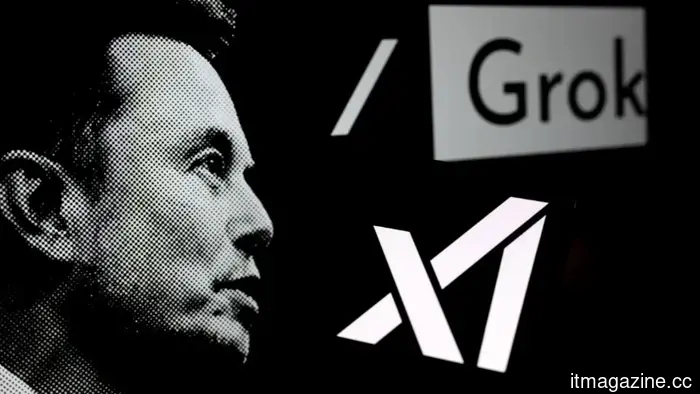
SpaceX's public IPO submission verifies that Musk and insiders maintain significant voting power.
The recently public S-1 prospectus reveals that Musk holds approximately 79% of SpaceX’s voting power while owning around 42% of its equity, a discrepancy due to a dual-class share setup. The company is aiming for a June listing with a valuation of $1.75 trillion and is looking to raise up to $75 billion, featuring an unusually high 30% allocation for retail investors.
SpaceX’s IPO prospectus, which became public following the company’s confidential SEC filing on April 1, 2026, confirms that Elon Musk and other insiders will maintain significant voting control after the listing due to the dual-class share structure. In this arrangement, Musk possesses about 42% of SpaceX's equity but wields around 79% of the voting rights through super-voting shares that offer disproportionately higher voting power.
The latest updates from the EU tech landscape, a narrative from our insightful founder Boris, and some dubious AI-generated art are featured in our weekly free newsletter. Sign up now! Ordinary shares available to the public will come with standard voting rights, granting buyers an economic interest in the company without substantial influence over its direction.
The prospectus marks the first time public investors have access to a comprehensive view of SpaceX’s financial situation. The company's primary launch and Starlink broadband sectors earned about $15 billion to $16 billion in revenue in 2025, yielding roughly $8 billion in profits. By the end of 2025, Starlink, its satellite internet division, had around 9.2 million subscribers and over $10 billion in revenue.
The overall target valuation of $1.75 trillion suggests a revenue multiple near 100x, reflecting investor confidence in future growth for Starlink, Starship, and the xAI artificial intelligence initiatives, rather than its current financial performance. SpaceX acquired xAI, Musk’s AI startup and the owner of social media platform X, in February 2026 in an all-stock deal that valued the unified company at $1.25 trillion, assigning xAI a valuation of about $250 billion and SpaceX $1 trillion.
This merger fundamentally shifts the IPO narrative: SpaceX is now seen not just as a launch and satellite firm but also as an AI infrastructure company, integrating xAI’s Grok models into Starlink's network management and launching what it calls “Orbital AI Data Centers” that combine satellite connectivity with edge computing. The prospectus is anticipated to include the first consolidated financial statements for the merged entity.
The governance framework has faced criticism ahead of the offering. The dual-class structure, commonly found among major US tech firms like Meta and Alphabet, is being applied here at a more significant ratio than usual. Critics argue that public investors purchasing SpaceX shares at a potential record valuation will lack the power to challenge management decisions, replace board members, or address governance failures. Former Fidelity fund manager George Noble described the structure as “the most SHAMELESS structural manipulation of a major index” in a widely circulated post, claiming it effectively turns retail investors into exit liquidity for early insiders who acquired shares at much lower private market prices.
Donald Trump Jr., the eldest son of the US president, is among the current shareholders of SpaceX, holding shares through 1789 Capital, a venture firm he joined after his father’s election victory. SpaceX is aiming for a June listing on the Nasdaq, looking to raise up to $75 billion, surpassing the $29.4 billion raised by Saudi Aramco in 2019, which currently holds the record. The offering includes an atypical retail segment: up to 30% of shares are anticipated to be allocated to individual investors, which is roughly three times higher than the usual standard for large IPOs.
Bank of America, Goldman Sachs, JPMorgan Chase, and Morgan Stanley are serving as lead underwriters. If the offering occurs at the $1.75 trillion valuation, SpaceX would become one of the ten most valuable public companies globally, following only Nvidia, Apple, Alphabet, Microsoft, and Amazon among current S&P 500 members.
The prospectus must be made public at least 15 days before SpaceX launches its investor roadshow. With a June listing target, the roadshow is expected to start during the week of June 8, preceded by preliminary meetings with institutional investors that Reuters reported are already in progress. Whether the June target can be maintained will depend on market conditions; the Nasdaq has experienced volatility recently due to the US-Iran war and rising oil prices, and IPO experts have noted that even a much-anticipated offering can face challenges if market sentiment shifts sharply negative just before pricing.
Other articles
 Meta has recruited five founders from Thinking Machines Lab, including an engineer reportedly valued at $1.5 billion.
Meta has methodically recruited five initial members of Mira Murati's Thinking Machines Lab after she turned down a $1 billion acquisition proposal, resulting in a transformation of its AI division.
Meta has recruited five founders from Thinking Machines Lab, including an engineer reportedly valued at $1.5 billion.
Meta has methodically recruited five initial members of Mira Murati's Thinking Machines Lab after she turned down a $1 billion acquisition proposal, resulting in a transformation of its AI division.
 Following X and Grok, Ofcom has launched an investigation into child safety on Telegram.
Ofcom has initiated a formal inquiry into Telegram in accordance with the UK Online Safety Act, focusing on the platform's adherence to its responsibilities for safeguarding users against CSAM.
Following X and Grok, Ofcom has launched an investigation into child safety on Telegram.
Ofcom has initiated a formal inquiry into Telegram in accordance with the UK Online Safety Act, focusing on the platform's adherence to its responsibilities for safeguarding users against CSAM.
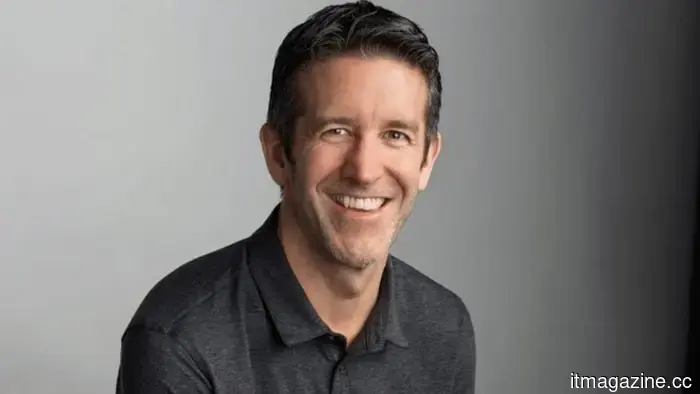 John Ternus profile: the engineer who developed Apple's hardware steps into the role of CEO, facing AI as his greatest challenge.
John Ternus has reversed the decline in Apple's product quality, developed iPadOS, and managed the Apple Silicon project. He now takes on a company that urgently requires an AI strategy.
John Ternus profile: the engineer who developed Apple's hardware steps into the role of CEO, facing AI as his greatest challenge.
John Ternus has reversed the decline in Apple's product quality, developed iPadOS, and managed the Apple Silicon project. He now takes on a company that urgently requires an AI strategy.
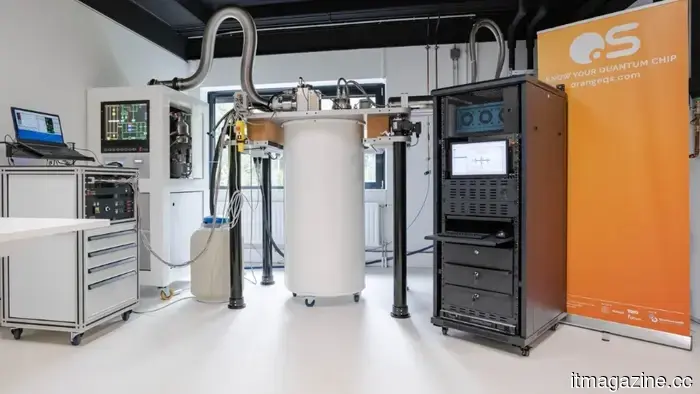 OrangeQS completes a €15 million seed funding round.
OrangeQS secures €15M in seed funding supported by the EIC Fund and initiates the MAX Partnership Programme in collaboration with Rigetti, QuantWare, and Peak Quantum.
OrangeQS completes a €15 million seed funding round.
OrangeQS secures €15M in seed funding supported by the EIC Fund and initiates the MAX Partnership Programme in collaboration with Rigetti, QuantWare, and Peak Quantum.
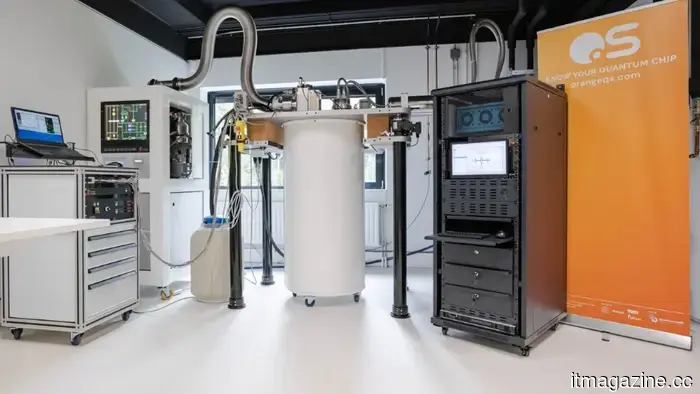 OrangeQS secures €15 million in seed funding.
OrangeQS has successfully completed a €15M seed funding round supported by the EIC Fund and has initiated the MAX Partnership Programme in collaboration with Rigetti, QuantWare, and Peak Quantum.
OrangeQS secures €15 million in seed funding.
OrangeQS has successfully completed a €15M seed funding round supported by the EIC Fund and has initiated the MAX Partnership Programme in collaboration with Rigetti, QuantWare, and Peak Quantum.
 Meta has employed five founders from Thinking Machines Lab, including an engineer who is said to be worth $1.5 billion.
Meta has methodically recruited five original members of Mira Murati's Thinking Machines Lab following her dismissal of a $1 billion acquisition proposal, transforming its AI department.
Meta has employed five founders from Thinking Machines Lab, including an engineer who is said to be worth $1.5 billion.
Meta has methodically recruited five original members of Mira Murati's Thinking Machines Lab following her dismissal of a $1 billion acquisition proposal, transforming its AI department.
SpaceX's public IPO submission verifies that Musk and insiders maintain significant voting power.
SpaceX's public S-1 reveals that Musk holds approximately 79% of the voting rights while having around 42% equity, thanks to a dual-class structure. The company aims for a $1.75 trillion IPO in June, potentially raising up to $75 billion.