
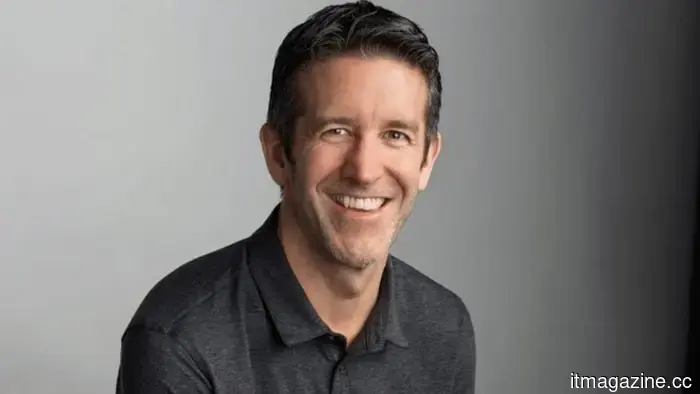
John Ternus profile: the engineer who developed Apple's hardware steps into the role of CEO, facing AI as his greatest challenge.
Summary: Effective September 1, John Ternus will take over as Apple’s new CEO. At 50 years old, Ternus, a mechanical engineer, has notably improved product quality, advocated for iPadOS’s development, led the Apple Silicon transition, and now oversees products making up approximately 80% of the company’s revenue. He focuses on resolving systemic issues rather than placing blame, although critics argue he has yet to introduce a truly novel product category and must address immediate challenges in AI, where Apple lags behind competitors. His “marathon, not a sprint” approach encourages investors to accept that Apple may initially take a back seat before taking the lead.
Ternus graduated with a mechanical engineering degree from the University of Pennsylvania in 1997. While at Penn, he was a competitive swimmer, winning the 50-meter freestyle and the 200-meter individual medley in a university event in 1994. Before joining Apple’s product design team at the age of 26, he spent four years designing virtual reality headsets at Virtual Research Systems, a small company focused on immersive display technologies during the early VR boom.
His rise within Apple’s hardware division was methodical. He was involved with the iPad from the beginning, overseeing every generation and model. He became vice president of hardware engineering in 2013 under Dan Riccio, assuming direct responsibility for AirPods, Mac, and iPad. In 2020, he took charge of iPhone hardware, followed by the Apple Watch in late 2022 and the design teams in late 2025. By the time Tim Cook announced the succession, Ternus had already overseen the development of products generating about 80% of Apple's revenue.
Bloomberg’s profile portrays him as “charismatic and well-liked,” a leader who prefers collaborating with his teams in open office settings rather than isolated executive spaces. Current and former employees indicated to Bloomberg that he “reversed a trend of declining product quality as the company prioritized thinness and sleekness over performance.” His approach to mistakes is systemic, viewing failures as challenges to be addressed through improved leadership instead of attributing blame to individual engineers, breaking away from what sources described as a “cutthroat culture” prior to his leadership.
The products that define him
The most significant product decision directly linked to Ternus is the establishment of iPadOS. He recognized early on that sharing the iOS platform limited the iPad’s hardware capabilities, as its bigger screen and powerful processor were being underutilized by software designed for a phone. He personally advocated for Craig Federighi, Apple’s software chief, to develop a dedicated operating system for the iPad. A hardware executive persuading a software executive to launch a new platform exemplifies strategic ambitions beyond one's specific area. He also championed the Apple Pencil and its magnetic charging mechanism.
The iPhone Air, at 5.6 millimeters, is Apple’s thinnest phone and represents his latest signature product. His team developed a “plateau” design that clusters hardware components at the device's top to minimize flex points, employed Grade 5 titanium for strength and lightness, and created manufacturing techniques suited to its ultra-slim design. “The all-new iPhone Air is so powerful, yet impossibly thin and light, that you really have to hold it to believe it’s real,” Ternus stated at its launch.
Under his leadership, AirPods transformed from basic wireless earbuds into what Apple describes as “the world’s best in-ear headphones,” featuring active noise cancellation and, eventually, FDA-certified over-the-counter hearing aid capabilities. The Mac lineup was completely redesigned around Apple Silicon during his tenure, providing performance and battery life enhancements that made the transition to the M-series one of the most successful platform shifts in computing history.
What he thinks about AI
In an interview with Tom’s Guide in April, Ternus characterized Apple’s approach to artificial intelligence as “a marathon, not a sprint.” He stated, “I think Apple Intelligence is going to keep growing, making what you do better and easier. If we’re doing it right, people won’t even really notice or think about it.” This perspective aligns with Apple’s philosophy that technology should be invisible, enhancing the user experience rather than drawing attention to itself.
On spatial computing, he expressed certainty, if not specifics regarding timelines: “I can’t provide a timeline for when spatial becomes anything else, but it’s inevitable that digital and physical worlds will merge.” Apple is currently testing four frame designs for AI smart glasses, aiming for a 2027 release, a project closely connected to Ternus's prior experience in VR headset development.
His product philosophy is clear: Apple “never considers just shipping technology but always thinks about how to use technology to deliver amazing products, features, and experiences for users.” Regarding Apple Maps, which faced a rocky start but improved over time, he commented, “If you have the vision
Other articles
 DeepWay secures $310 million in pre-IPO funding.
DeepWay secures $310 million in pre-IPO funding in preparation for a listing in Hong Kong, with the Australian superannuation fund NGS Super participating as an international investor.
DeepWay secures $310 million in pre-IPO funding.
DeepWay secures $310 million in pre-IPO funding in preparation for a listing in Hong Kong, with the Australian superannuation fund NGS Super participating as an international investor.
 Top Medical Alert Systems of 2026: A Comparison of 7 Brands for Safety, Price, and Response Time.
Are you searching for the top medical alert system in 2026? We evaluated seven leading brands based on response time, cost, fall detection capabilities, and reliability.
Top Medical Alert Systems of 2026: A Comparison of 7 Brands for Safety, Price, and Response Time.
Are you searching for the top medical alert system in 2026? We evaluated seven leading brands based on response time, cost, fall detection capabilities, and reliability.
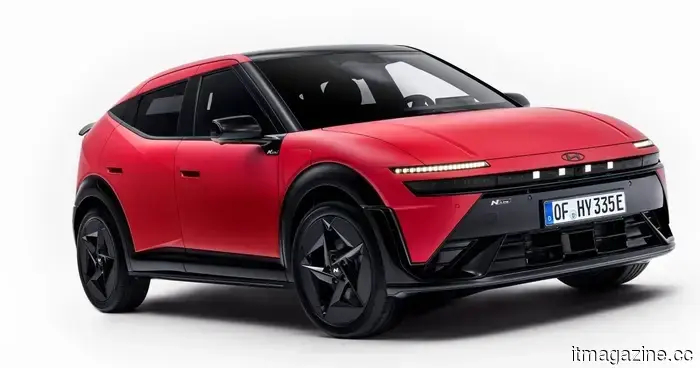 The Hyundai Ioniq 3 boasts impressive range, attractive design, and ample space to impress you.
The new IONIQ 3 from Hyundai is a compact electric hatchback offering a range of up to 496 km, a trunk capacity of 441 liters, and technology aimed at simplifying the experience of owning an electric vehicle.
The Hyundai Ioniq 3 boasts impressive range, attractive design, and ample space to impress you.
The new IONIQ 3 from Hyundai is a compact electric hatchback offering a range of up to 496 km, a trunk capacity of 441 liters, and technology aimed at simplifying the experience of owning an electric vehicle.
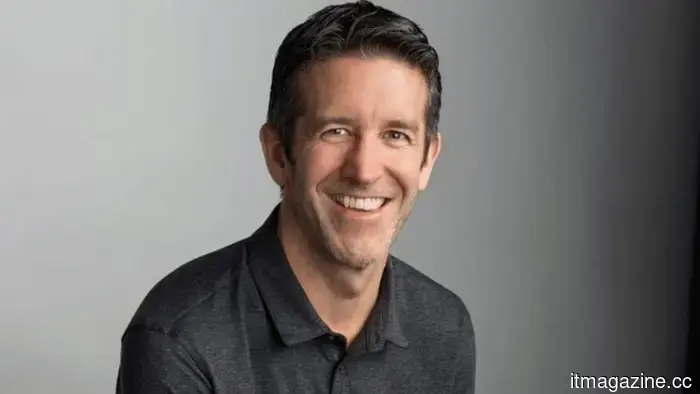 John Ternus profile: the engineer responsible for creating Apple's hardware steps up as CEO, facing the challenge of AI as his primary focus.
John Ternus has turned around Apple's product quality, developed iPadOS, and managed Apple Silicon. He now takes on the responsibility of leading a company that urgently requires an AI strategy.
John Ternus profile: the engineer responsible for creating Apple's hardware steps up as CEO, facing the challenge of AI as his primary focus.
John Ternus has turned around Apple's product quality, developed iPadOS, and managed Apple Silicon. He now takes on the responsibility of leading a company that urgently requires an AI strategy.
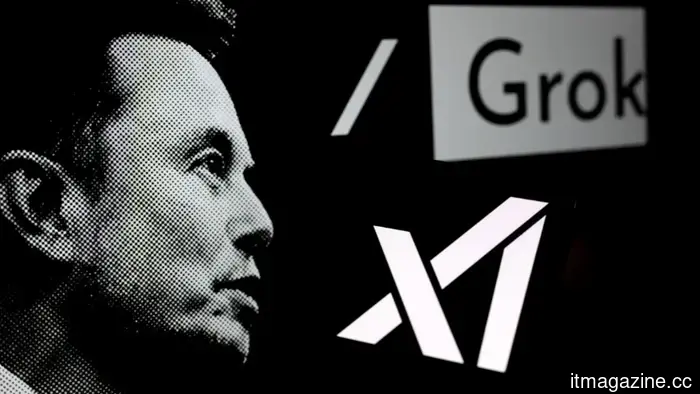 SpaceX's public IPO submission verifies that Musk and other insiders maintain significant voting control.
SpaceX’s public S-1 filing reveals that Musk holds approximately 79% of the voting power with around 42% equity through a dual-class structure, as the company aims for a $1.75 trillion IPO in June, seeking to raise as much as $75 billion.
SpaceX's public IPO submission verifies that Musk and other insiders maintain significant voting control.
SpaceX’s public S-1 filing reveals that Musk holds approximately 79% of the voting power with around 42% equity through a dual-class structure, as the company aims for a $1.75 trillion IPO in June, seeking to raise as much as $75 billion.
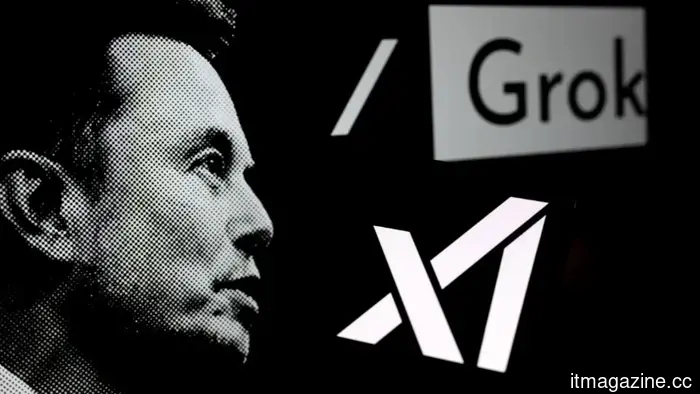 SpaceX's public IPO submission verifies that Musk and insiders maintain significant voting power.
SpaceX's public S-1 reveals that Musk holds approximately 79% of the voting rights while having around 42% equity, thanks to a dual-class structure. The company aims for a $1.75 trillion IPO in June, potentially raising up to $75 billion.
SpaceX's public IPO submission verifies that Musk and insiders maintain significant voting power.
SpaceX's public S-1 reveals that Musk holds approximately 79% of the voting rights while having around 42% equity, thanks to a dual-class structure. The company aims for a $1.75 trillion IPO in June, potentially raising up to $75 billion.
John Ternus profile: the engineer who developed Apple's hardware steps into the role of CEO, facing AI as his greatest challenge.
John Ternus has reversed the decline in Apple's product quality, developed iPadOS, and managed the Apple Silicon project. He now takes on a company that urgently requires an AI strategy.