
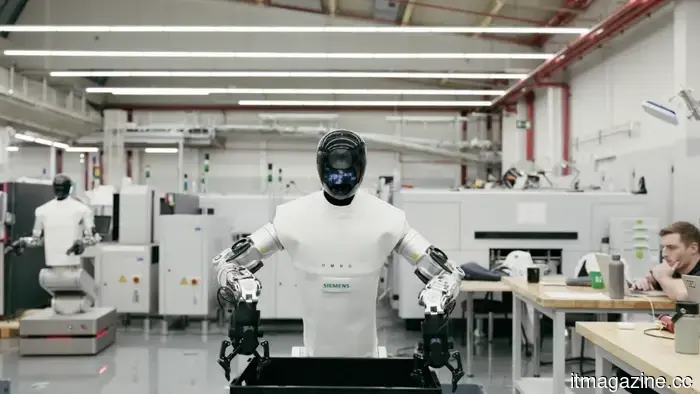
Siemens and Humanoid have launched a humanoid robot that is powered by Nvidia technology.
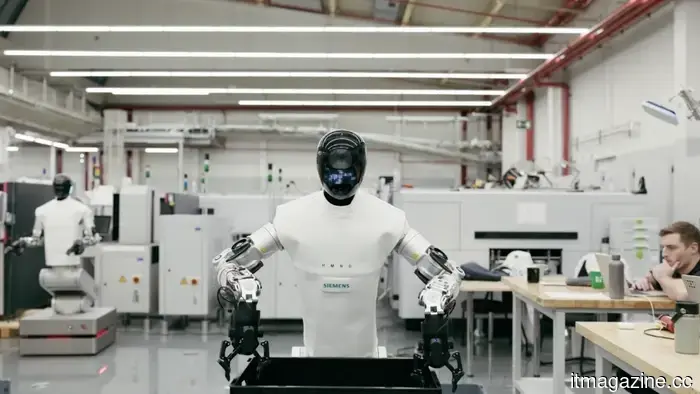
Siemens, Nvidia, and UK robotics startup Humanoid have successfully deployed an AI-driven wheeled humanoid robot in live logistics operations at a Siemens electronics facility in Germany. The HMND 01 Alpha executed over eight hours of autonomous tote handling at a speed of 60 moves per hour, achieving a pick-and-place success rate exceeding 90%. This robot was seamlessly integrated into Siemens’ production systems.
The collaboration involving Siemens and Humanoid, in conjunction with Nvidia, was revealed during Hannover Messe 2026. The introduction builds on a strategic partnership between Siemens and Nvidia first announced at CES. The robot, known as Humanoid’s HMND 01 Alpha, is based on Nvidia’s physical AI framework and autonomously managed tote-destacking tasks for more than eight hours, completing 60 container moves per hour with a pick-and-place success rate above 90%.
The tasks performed by the robot were intentionally mundane: retrieving totes from storage stacks, moving them to conveyor belts, and placing them at designated locations for human workers. These repetitive and physically demanding tasks are typically challenging for industrial automation, especially in unpredictable environments where objects are inconsistently arranged or when coordination with humans in real-time is required.
The trial in Erlangen is noteworthy because it took place in a live production setting, rather than a controlled laboratory, working alongside human operators and other automated systems, and with tangible production implications if the robot faltered.
The HMND 01 Alpha features a wheeled base and a humanoid upper body endowed with sophisticated manipulation skills. Its integration into the Siemens factory was facilitated through the Siemens Xcelerator platform, which encompasses a digital twin, AI-based perception, PLC-robot interfaces, fleet management, and industrial communication systems. This integration enabled the robot to interact in real-time with production workflows, other autonomous guided vehicles, and human staff, showcasing the level of integration that differentiates an actual factory deployment from a mere demonstration.
Stephan Schlauss, Global Head of Manufacturing Motion Control at Siemens, referred to the Erlangen plant as “customer zero,” indicating that Siemens utilized its own factory for initial testing before extending this capability to external clients.
On the Nvidia front, the HMND 01 Alpha employs Nvidia Jetson Thor for edge computing, Nvidia Isaac Sim for simulation, and Nvidia Isaac Lab for reinforcement learning and policy training. The companies noted that utilizing a simulation-first development approach—a method that allows for training and validating the robot's behaviors in a virtual setting before practical deployment—enabled Humanoid to significantly shorten the typical prototype development duration from 18-24 months to approximately seven months.
Deepu Talla, Nvidia’s vice president of robotics and edge AI, characterized the deployment as “paving the way for humanoid robots to achieve real production targets on an active factory floor.”
Founded in 2024 by Artem Sokolov, Humanoid is based in London with additional offices in Boston and Vancouver, and comprises over 200 engineers from various technology firms. The company also produces a bipedal variant of the HMND 01 Alpha, featuring 29 degrees of freedom, RGB cameras, depth sensors, and 6D force/torque sensors.
The wheeled model tested in Erlangen had previously undergone proof-of-concept trials with Schaeffler for picking metallic bearing rings. The Siemens trial, conducted over two weeks in January 2026 leading up to the April announcement, was the most challenging deployment to date.
The companies were cautious not to exaggerate their timelines, labeling the Erlangen trial as “a milestone in the journey to realize physical AI in an industrial context,” yet did not outline a roadmap for commercial rollout.
Siemens emphasizes the broader significance of establishing a “factory-grade model” for humanoid deployment that other companies can replicate, highlighting it as a reference architecture rather than a unique occurrence. This partnership reflects a broader industrial trend where humanoid robots, capable of operating in human-centered environments, are increasingly viewed as a solution to labor shortages in manufacturing sectors where fully automated lines aren't feasible due to product variability, safety requirements, or the need for human-robot collaboration.
Other articles
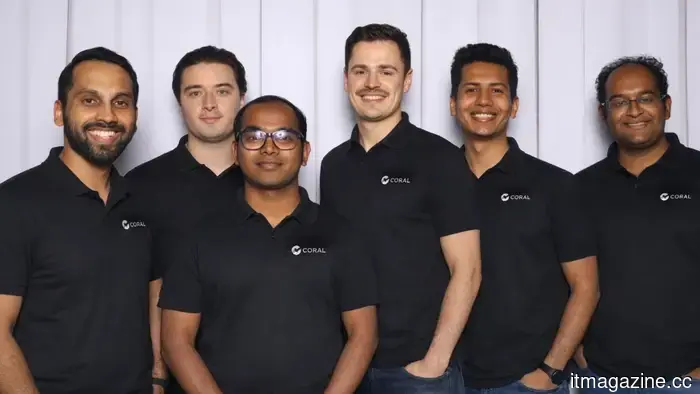 Coral secures $12.5 million to automate the administrative back office of healthcare.
Coral has secured $12.5 million in a Series A funding round led by Lightspeed and Z47 to automate prior authorizations, patient intake processes, and fax workflows for specialty healthcare providers.
Coral secures $12.5 million to automate the administrative back office of healthcare.
Coral has secured $12.5 million in a Series A funding round led by Lightspeed and Z47 to automate prior authorizations, patient intake processes, and fax workflows for specialty healthcare providers.
 The question that AI providers wish VPs of Engineering would never pose
The adoption of AI in coding is rapidly increasing. However, many engineering leaders continue to focus on measuring usage rather than evaluating outcomes. For more details, check out the article.
The question that AI providers wish VPs of Engineering would never pose
The adoption of AI in coding is rapidly increasing. However, many engineering leaders continue to focus on measuring usage rather than evaluating outcomes. For more details, check out the article.
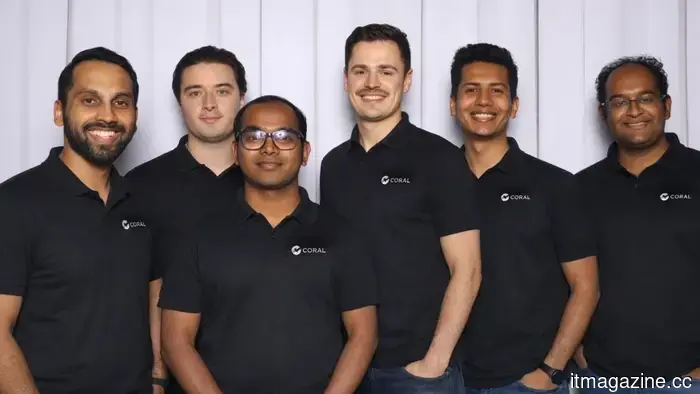 Coral secures $12.5 million to automate the administrative back office in healthcare.
Coral has secured $12.5 million in Series A funding, spearheaded by Lightspeed and Z47, with the aim of automating prior authorizations, patient intake, and fax procedures for specialty healthcare providers.
Coral secures $12.5 million to automate the administrative back office in healthcare.
Coral has secured $12.5 million in Series A funding, spearheaded by Lightspeed and Z47, with the aim of automating prior authorizations, patient intake, and fax procedures for specialty healthcare providers.
 Revolut's initial public offering is set to take place in two years, and it will occur in the United States.
Revolut's CEO Nik Storonsky has stated that the fintech company's IPO is now expected to be two years away and will take place in the US, refining his earlier guidance from December of 'two to three years.'
Revolut's initial public offering is set to take place in two years, and it will occur in the United States.
Revolut's CEO Nik Storonsky has stated that the fintech company's IPO is now expected to be two years away and will take place in the US, refining his earlier guidance from December of 'two to three years.'
 AirTrunk expands into India through the acquisition of Lumina CloudInfra.
AirTrunk has acquired Lumina CloudInfra, which is backed by Blackstone, securing a data center pipeline in India of 600MW valued at up to $5 billion.
AirTrunk expands into India through the acquisition of Lumina CloudInfra.
AirTrunk has acquired Lumina CloudInfra, which is backed by Blackstone, securing a data center pipeline in India of 600MW valued at up to $5 billion.
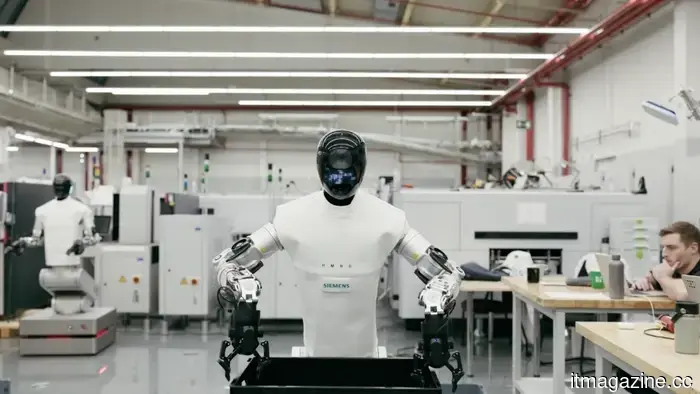
 Siemens and Humanoid launched a humanoid robot powered by Nvidia.
Siemens and UK startup Humanoid have deployed a humanoid robot powered by Nvidia at a German electronics factory, successfully handling totes autonomously for over 8 hours.
Siemens and Humanoid launched a humanoid robot powered by Nvidia.
Siemens and UK startup Humanoid have deployed a humanoid robot powered by Nvidia at a German electronics factory, successfully handling totes autonomously for over 8 hours.
Siemens and Humanoid have launched a humanoid robot that is powered by Nvidia technology.
Siemens and UK-based startup Humanoid launched a humanoid robot powered by Nvidia at a German electronics factory, successfully handling tote operations autonomously for over 8 hours.