
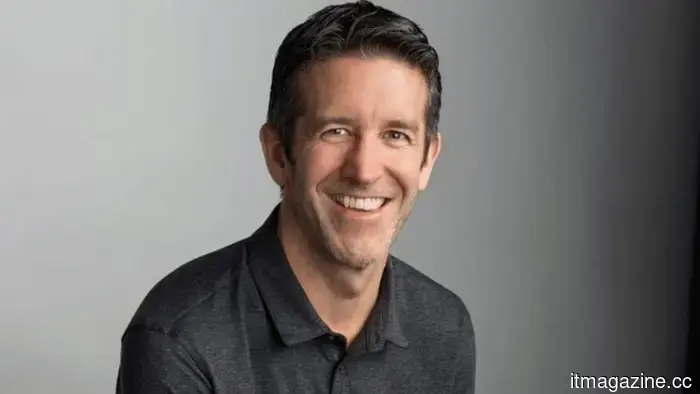
John Ternus profile: the engineer responsible for creating Apple's hardware steps up as CEO, facing the challenge of AI as his primary focus.
Summary: John Ternus, who will assume the role of Apple’s CEO starting 1 September, is a 50-year-old mechanical engineer credited with reversing a decline in product quality, advocating for the development of iPadOS, and overseeing the transition to Apple Silicon. He currently manages products that account for approximately 80% of Apple's revenue. His approach to leadership emphasizes solving systemic issues rather than assigning blame, although critics point out that he has yet to introduce a truly new product category and faces pressing challenges in AI, an area where Apple is lagging behind competitors. His call for a “marathon, not a sprint” mentality urges investors to anticipate that Apple will initially follow in the AI space before it begins to lead.
Ternus earned a degree in mechanical engineering from the University of Pennsylvania in 1997. While at Penn, he was a competitive swimmer, winning both the 50-meter freestyle and the 200-meter individual medley at a university event in 1994. He spent four years designing virtual reality headsets at Virtual Research Systems, a company focused on immersive display technologies during the initial VR wave, before joining Apple's product design team at the age of 26.
His rise through the hardware division was systematic. He played a significant role in the development of the iPad from its inception, managing all iterations. In 2013, he became vice president of hardware engineering under Dan Riccio, taking direct charge of AirPods, Mac, and iPad. In 2020, he took on responsibility for iPhone hardware, followed by the Apple Watch in late 2022, and took over the company’s design teams in late 2025. By the time Tim Cook announced Ternus's succession, he was already overseeing the development of products that produced about 80% of Apple’s revenue.
Bloomberg’s profile characterizes him as “charismatic and well-liked,” noting that he collaborates with teams in open office spaces rather than in isolated executive offices. Current and former employees reported to Bloomberg that he “reversed a trend of declining product quality” that arose as the company prioritized thinness and aesthetics over performance. His response to mistakes is constructive rather than punitive; he views failures as solvable issues that require improved leadership instead of attributing blame to individual engineers, which contrasts with the previously described “cutthroat culture” in hardware engineering before his leadership.
The products that define him
A key decision attributed to Ternus is the development of iPadOS. He identified early on that sharing the iOS platform was limiting the iPad’s hardware capabilities, as the larger screen and more powerful processor were not being fully utilized due to software designed for phones. He personally advocated to Craig Federighi, Apple's software executive, for the creation of a dedicated operating system for the iPad. His ability to persuade a software leader to develop a separate platform highlights his strategic ambition beyond his immediate realm. He also pushed for the Apple Pencil and its magnetic charging system.
The iPhone Air, measuring only 5.6 millimeters, stands as his most recent flagship product. His team devised a “plateau” design that consolidates hardware components at the top of the device to reduce flex points, utilized Grade 5 titanium for its strength-to-weight ratio, and developed manufacturing techniques specifically for the ultra-thin design. “The all-new iPhone Air is so powerful, yet impossibly thin and light, that you really have to hold it to believe it’s real,” Ternus stated during its launch.
Under his leadership, AirPods evolved from basic wireless earbuds to what Apple describes as “the world’s best in-ear headphones,” gaining features like active noise cancellation and, eventually, FDA-certified over-the-counter hearing aid functionality. The Mac lineup was completely redesigned around Apple Silicon under his guidance, achieving performance and battery life enhancements that made the M-series transition one of the most successful platform shifts in computing history.
His views on AI
In an interview with Tom’s Guide in April, Ternus stated that Apple’s approach to artificial intelligence is “a marathon, not a sprint.” He expressed confidence that “Apple Intelligence is going to continue to grow and will just make things you do better and easier. If we’re doing it right, people won’t even really notice or think about it.” This philosophy aligns with Apple’s approach that technology should be unobtrusive, enhancing user experience without drawing attention to itself.
Regarding spatial computing, he was more definitive in his belief, stating: “I can’t give you a timeline for when spatial becomes anything else, but you know it’s an inevitability. Of digital and physical worlds coming together.” Apple is currently testing four frameworks for AI smart glasses, aiming for a 2027 launch, directly linking to Ternus’s previous work in VR headset design.
Ternus’s product philosophy is clear: Apple “never thinks about shipping technology but always thinks about how we can leverage technology to deliver
Other articles
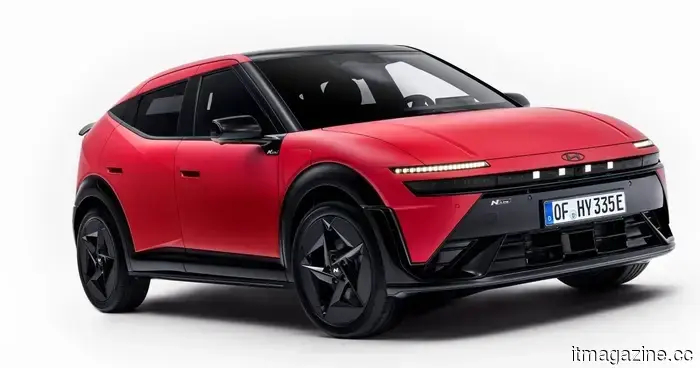 The Hyundai Ioniq 3 boasts impressive range, attractive design, and ample space to impress you.
The new IONIQ 3 from Hyundai is a compact electric hatchback offering a range of up to 496 km, a trunk capacity of 441 liters, and technology aimed at simplifying the experience of owning an electric vehicle.
The Hyundai Ioniq 3 boasts impressive range, attractive design, and ample space to impress you.
The new IONIQ 3 from Hyundai is a compact electric hatchback offering a range of up to 496 km, a trunk capacity of 441 liters, and technology aimed at simplifying the experience of owning an electric vehicle.
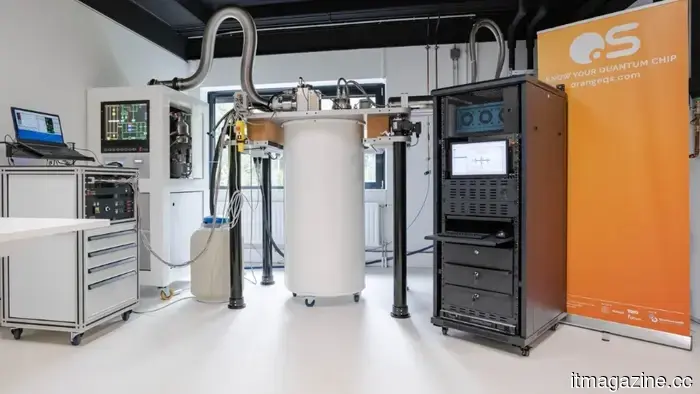 OrangeQS completes a €15 million seed funding round.
OrangeQS secures €15M in seed funding supported by the EIC Fund and initiates the MAX Partnership Programme in collaboration with Rigetti, QuantWare, and Peak Quantum.
OrangeQS completes a €15 million seed funding round.
OrangeQS secures €15M in seed funding supported by the EIC Fund and initiates the MAX Partnership Programme in collaboration with Rigetti, QuantWare, and Peak Quantum.
 OrangeQS secures €15 million in seed funding.
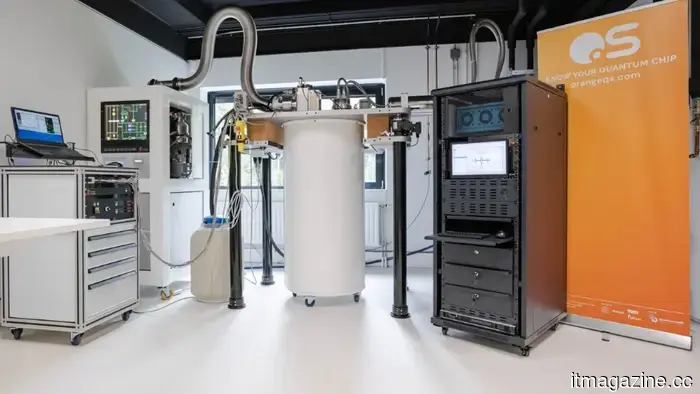
OrangeQS has successfully completed a €15M seed funding round supported by the EIC Fund and has initiated the MAX Partnership Programme in collaboration with Rigetti, QuantWare, and Peak Quantum.
OrangeQS secures €15 million in seed funding.
OrangeQS has successfully completed a €15M seed funding round supported by the EIC Fund and has initiated the MAX Partnership Programme in collaboration with Rigetti, QuantWare, and Peak Quantum.
 Following X and Grok, Ofcom has launched an investigation into child safety on Telegram.
Ofcom has initiated a formal inquiry into Telegram in accordance with the UK Online Safety Act, focusing on the platform's adherence to its responsibilities for safeguarding users against CSAM.
Following X and Grok, Ofcom has launched an investigation into child safety on Telegram.
Ofcom has initiated a formal inquiry into Telegram in accordance with the UK Online Safety Act, focusing on the platform's adherence to its responsibilities for safeguarding users against CSAM.
 DeepWay secures $310 million in pre-IPO funding.
DeepWay secures $310 million in pre-IPO funding in preparation for its listing in Hong Kong, with Australian superannuation fund NGS Super participating as an international investor.
DeepWay secures $310 million in pre-IPO funding.
DeepWay secures $310 million in pre-IPO funding in preparation for its listing in Hong Kong, with Australian superannuation fund NGS Super participating as an international investor.
 Meta has recruited five founders from the Thinking Machines Lab, including an engineer associated with a reported $1.5 billion valuation.
Meta has methodically recruited five original members of Mira Murati's Thinking Machines Lab following her refusal of a $1 billion acquisition offer, altering its AI division.
Meta has recruited five founders from the Thinking Machines Lab, including an engineer associated with a reported $1.5 billion valuation.
Meta has methodically recruited five original members of Mira Murati's Thinking Machines Lab following her refusal of a $1 billion acquisition offer, altering its AI division.
John Ternus profile: the engineer responsible for creating Apple's hardware steps up as CEO, facing the challenge of AI as his primary focus.
John Ternus has turned around Apple's product quality, developed iPadOS, and managed Apple Silicon. He now takes on the responsibility of leading a company that urgently requires an AI strategy.