
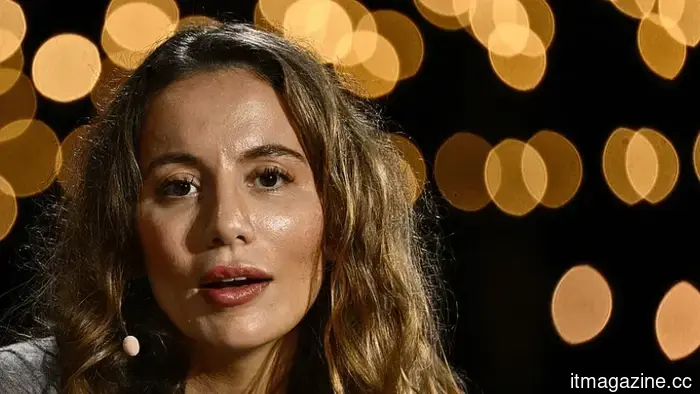
Meta has recruited five founders from the Thinking Machines Lab, including an engineer associated with a reported $1.5 billion valuation.
In summary: Meta has recruited five founding members from Thinking Machines Lab, the AI startup founded by former OpenAI CTO Mira Murati, after she turned down a reported $1 billion buyout offer. The highest-paid individual, co-founder Andrew Tulloch, is said to have a compensation package worth $1.5 billion over six years. This talent acquisition is part of a wider AI overhaul that also involves a $14.3 billion investment in Scale AI, the appointment of Alexandr Wang as chief AI officer, the departure of Yann LeCun after 12 years, the cut of 600 positions in FAIR research, and the establishment of Meta Superintelligence Labs, which launched its first closed-source model, Muse Spark, on April 8.
Meta has successfully hired five founding members of Thinking Machines Lab, an AI startup launched by Mira Murati after her tenure as OpenAI's chief technology officer. The latest exit is founding engineer Joshua Gross, who joined Meta Superintelligence Labs in March after creating Tinker, the startup's primary API product. His departure follows that of co-founder Andrew Tulloch, who moved to Meta in October with a reported compensation package valued at $1.5 billion over six years—making it potentially the highest individual talent acquisition in the tech industry’s history.
The approach has been evident. After Mark Zuckerberg allegedly offered around $1 billion to fully acquire Thinking Machines Lab, a rejected proposal led Meta to recruit the founding team individually. Several media outlets have characterized this as a "full-scale raid." Thus far, five from the startup’s original founding team have transitioned to Meta, three have returned to OpenAI, and one has joined Elon Musk’s xAI. Murati’s company, which raised $2 billion at a $12 billion valuation in a seed round led by Andreessen Horowitz in July 2025 and was reportedly negotiating for a new round at a $50 billion valuation by November, has seen most of its core team leave.
Departures and their new roles
Tulloch and Gross are the two departures with the clearest documented roles. Tulloch, an AI researcher with a background at OpenAI, is now part of Meta Superintelligence Labs, working under Alexandr Wang, who was appointed as Meta's first chief AI officer in June 2025 after previously leading Scale AI. Gross, also a former employee of both OpenAI and Meta, currently heads engineering teams within the same division.
The other departures from Thinking Machines Lab took different routes. Barret Zoph and Luke Metz returned to OpenAI in January 2026, alongside Sam Schoenholz. Zoph was reportedly let go by Murati for "unethical conduct" before promptly rejoining OpenAI. Devendra Chaplot moved to xAI in March. These departures have resulted in a significantly altered leadership for Murati: she remains CEO, with Soumith Chintala, creator of PyTorch, as CTO, and John Schulman continues as chief scientist.
Meta's new AI structure
These talent acquisitions are part of a larger restructuring that has reshaped Meta’s AI organization over the past year. In June 2025, Meta invested $14.3 billion for a 49% non-voting stake in Scale AI and brought Wang in to oversee Meta Superintelligence Labs, alongside Nat Friedman, the former GitHub CEO. Zuckerberg referred to Wang in an internal memo as “the most impressive founder of his generation.”
However, the restructuring has faced challenges. Yann LeCun, Meta’s chief AI scientist for 12 years and a key figure in deep learning, left in November 2025 after being instructed to report to Wang. LeCun expressed in January that you “don’t tell a researcher what to do,” particularly not someone with his background, and referred to Wang as “young and inexperienced,” cautioning that many employees have left and more are likely to do so. LeCun subsequently raised $1 billion to establish AMI Labs in Paris, largely drawing its founding team from Meta's AI research division.
By August 2025, Meta Superintelligence Labs had been divided into four groups: the TBD Lab for large language models, led by Wang; FAIR for fundamental research; a product and applied research sector managed by Friedman; and an infrastructure team overseen by Aparna Ramani. The team responsible for the Llama model family was disbanded following a lukewarm reception to Llama 4. LeCun publicly stated that the AI team had “fudged” some results. In October 2025, approximately 600 positions were eliminated from the FAIR and AI infrastructure units.
The economics of the talent battle
The compensation figures circulating in the AI talent market have reached levels that distort standard recruitment dynamics. OpenAI's CEO, Sam Altman, admitted that signing bonuses have been as high as $100 million to attract top researchers. Mark Chen, OpenAI's chief scientist, compared Meta’s recruiting efforts
Other articles
 DeepWay secures $310 million in pre-IPO funding.
DeepWay secures $310 million in pre-IPO funding in preparation for a listing in Hong Kong, with the Australian superannuation fund NGS Super participating as an international investor.
DeepWay secures $310 million in pre-IPO funding.
DeepWay secures $310 million in pre-IPO funding in preparation for a listing in Hong Kong, with the Australian superannuation fund NGS Super participating as an international investor.
 Following X and Grok, Ofcom has launched an investigation into child safety concerning Telegram.
Ofcom has initiated a formal investigation into Telegram as per the UK Online Safety Act, assessing the platform's adherence to its obligations to safeguard users against CSAM.
Following X and Grok, Ofcom has launched an investigation into child safety concerning Telegram.
Ofcom has initiated a formal investigation into Telegram as per the UK Online Safety Act, assessing the platform's adherence to its obligations to safeguard users against CSAM.
 Former engineers from Stripe and Tide secure €7.5M for a fintech venture.
Dublin and London-based fintech Seapoint has secured €7.5 million in seed funding, led by 13books, and is now available to all startup founders in the UK and Ireland.
Former engineers from Stripe and Tide secure €7.5M for a fintech venture.
Dublin and London-based fintech Seapoint has secured €7.5 million in seed funding, led by 13books, and is now available to all startup founders in the UK and Ireland.
 The Hyundai Ioniq 3 boasts impressive range, attractive design, and ample space to impress you.
The new IONIQ 3 from Hyundai is a compact electric hatchback offering a range of up to 496 km, a trunk capacity of 441 liters, and technology aimed at simplifying the experience of owning an electric vehicle.
The Hyundai Ioniq 3 boasts impressive range, attractive design, and ample space to impress you.
The new IONIQ 3 from Hyundai is a compact electric hatchback offering a range of up to 496 km, a trunk capacity of 441 liters, and technology aimed at simplifying the experience of owning an electric vehicle.
 SpaceX's public IPO submission verifies that Musk and other insiders maintain significant voting control.
SpaceX’s public S-1 filing reveals that Musk holds approximately 79% of the voting power with around 42% equity through a dual-class structure, as the company aims for a $1.75 trillion IPO in June, seeking to raise as much as $75 billion.
SpaceX's public IPO submission verifies that Musk and other insiders maintain significant voting control.
SpaceX’s public S-1 filing reveals that Musk holds approximately 79% of the voting power with around 42% equity through a dual-class structure, as the company aims for a $1.75 trillion IPO in June, seeking to raise as much as $75 billion.
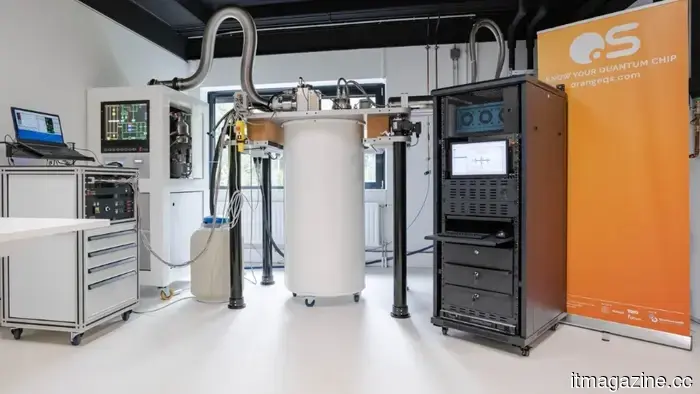 OrangeQS completes a €15 million seed funding round.
OrangeQS secures €15M in seed funding supported by the EIC Fund and initiates the MAX Partnership Programme in collaboration with Rigetti, QuantWare, and Peak Quantum.
OrangeQS completes a €15 million seed funding round.
OrangeQS secures €15M in seed funding supported by the EIC Fund and initiates the MAX Partnership Programme in collaboration with Rigetti, QuantWare, and Peak Quantum.
Meta has recruited five founders from the Thinking Machines Lab, including an engineer associated with a reported $1.5 billion valuation.
Meta has methodically recruited five original members of Mira Murati's Thinking Machines Lab following her refusal of a $1 billion acquisition offer, altering its AI division.