

This beanie translates your thoughts into text, and it’s the least intrusive wearable I’ve encountered in years.
A new wearable gadget resembling a basic beanie could soon transform how individuals engage with computers. Created by the Silicon Valley startup Sabi, the prototype utilizes brain-computer interface (BCI) technology to translate a user’s internal speech into text, essentially enabling them to "type" through their thoughts.
As reported by WIRED, this device is intended to be one of the least intrusive brain-tech wearables available, steering clear of the bulky, futuristic appearance common in many experimental headsets. Instead, it integrates seamlessly into regular attire, making it more suitable for everyday use.
**A Wearable That Attunes to Your Thoughts**
The beanie employs electroencephalography (EEG), a non-invasive technique that detects electrical signals from the brain via the scalp. Unlike implant-based systems being explored by companies such as Neuralink, Sabi’s method doesn’t necessitate surgical procedures.
The objective is to recognize “internal speech” – the words individuals think but do not vocalize – and translate it into text on a connected device. If successful, this could empower users to interact or control devices without the need for speaking or typing.
To enhance accuracy, the beanie reportedly features tens of thousands of miniature sensors, surpassing traditional EEG devices. This dense sensing is crafted to capture more intricate neural signals, aiding the system in better deciphering the user’s thoughts.
**Why This Approach Is Significant**
Brain-computer interfaces are not a new concept, but most current systems fall into two main categories: invasive implants or cumbersome external hardware. Both methods have faced limited mainstream acceptance due to medical risks, expenses, or usability issues.
Sabi’s beanie opts for a different approach by emphasizing comfort and accessibility. The device is designed for immediate use without the need for daily adjustments, which has been a significant drawback for many BCI systems.
Initial estimates suggest typing speeds around 30 words per minute, with potential improvements as users become more accustomed to the system.
This could pave the way for new applications, from accessibility tools for individuals with disabilities to hands-free computing for everyday users.
**The Challenges of Interpreting Thoughts**
Despite its potential, the technology encounters considerable challenges. Brain signals can differ significantly among individuals, and even the same thought may produce varied neural patterns each time.
To tackle this, Sabi is developing a large-scale AI model trained on thousands of hours of brain data gathered from volunteers. The goal is to discern patterns related to internal speech across diverse users.
However, experts warn that “mind-reading” is a complicated and often overstated notion. Current systems can interpret limited patterns or instructions, but the task of converting continuous, natural thought into text remains a developing challenge.
**Concerns Over Privacy and Ethics**
One of the primary concerns associated with this technology is privacy. Neural data is highly personal, potentially disclosing thoughts, intentions, and cognitive patterns.
Sabi claims it is addressing this issue by encrypting data and collaborating with neurosecurity experts to ensure safe handling. Nevertheless, the wider conversation concerning brain data rights and ethical applications is likely to intensify as such devices approach the market.
**What Lies Ahead**
The company plans to launch its initial consumer version of the beanie – along with a cap variant – by late 2026.
If successful, the device could signify a shift towards more subtle, everyday brain-computer interfaces that seamlessly blend into daily life.
For the time being, the concept of typing with one’s thoughts may still seem futuristic. However, with innovations like this beanie, that future appears to be gradually becoming more wearable—and much less intrusive.


Other articles
 The AI mode in Chrome receives a significant enhancement aimed at reducing the need for switching between tabs.
Google's AI Mode enhancement for Chrome enables you to browse websites and conduct searches simultaneously, allowing you to pose follow-up questions without losing your spot or opening an additional tab.
The AI mode in Chrome receives a significant enhancement aimed at reducing the need for switching between tabs.
Google's AI Mode enhancement for Chrome enables you to browse websites and conduct searches simultaneously, allowing you to pose follow-up questions without losing your spot or opening an additional tab.
 The upcoming Pixel phone may feature a luminous back, based on insights from Android 17’s code.
Google is developing a new feature named Pixel Glow that utilizes soft lights on the back of your device to alert you without illuminating the screen.
The upcoming Pixel phone may feature a luminous back, based on insights from Android 17’s code.
Google is developing a new feature named Pixel Glow that utilizes soft lights on the back of your device to alert you without illuminating the screen.
 Ericsson barely falls short of Q1 profit expectations as North America sees a decline.
Ericsson's adjusted EBITA for Q1 2026 decreased by 20% to SEK 5.6 billion due to a downturn in North America and an increase in semiconductor expenses. CEO Ekholm attributes this to the demand for AI impacting chip supply.
Ericsson barely falls short of Q1 profit expectations as North America sees a decline.
Ericsson's adjusted EBITA for Q1 2026 decreased by 20% to SEK 5.6 billion due to a downturn in North America and an increase in semiconductor expenses. CEO Ekholm attributes this to the demand for AI impacting chip supply.
 The AI feature in Chrome receives a significant enhancement to reduce the need for switching between tabs.
The AI Mode upgrade for Google Chrome allows you to browse websites and conduct searches simultaneously, enabling you to ask follow-up questions without having to lose your spot or open an additional tab.
The AI feature in Chrome receives a significant enhancement to reduce the need for switching between tabs.
The AI Mode upgrade for Google Chrome allows you to browse websites and conduct searches simultaneously, enabling you to ask follow-up questions without having to lose your spot or open an additional tab.
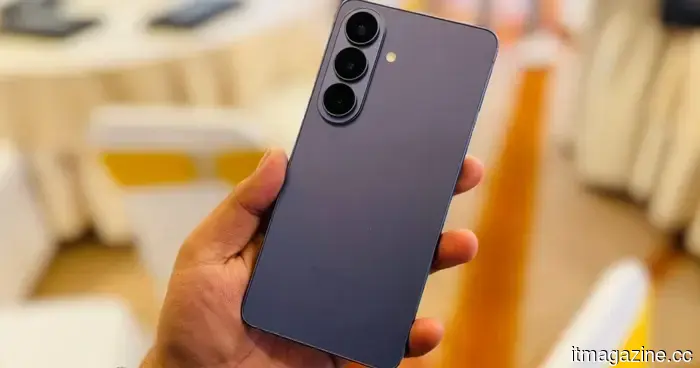 Samsung might enhance the performance of the Galaxy S27 series beyond just the silicon.
Samsung's Galaxy S27 might introduce UFS 5.0 storage, which can achieve read speeds exceeding 10GB/s, but this feature is expected to be available only on certain models. The increasing production costs are likely to prevent this upgrade from being included in the entire lineup.
Samsung might enhance the performance of the Galaxy S27 series beyond just the silicon.
Samsung's Galaxy S27 might introduce UFS 5.0 storage, which can achieve read speeds exceeding 10GB/s, but this feature is expected to be available only on certain models. The increasing production costs are likely to prevent this upgrade from being included in the entire lineup.
 OpenAI introduces GPT-Rosalind, an AI model designed for research in life sciences.
OpenAI has introduced GPT-Rosalind, its inaugural AI model focused on life sciences, aimed at drug discovery and genomics. It is named in honor of Rosalind Franklin.
OpenAI introduces GPT-Rosalind, an AI model designed for research in life sciences.
OpenAI has introduced GPT-Rosalind, its inaugural AI model focused on life sciences, aimed at drug discovery and genomics. It is named in honor of Rosalind Franklin.
This beanie translates your thoughts into text, and it’s the least intrusive wearable I’ve encountered in years.
A groundbreaking AI-enabled beanie is capable of transforming internal speech into text by interpreting brain signals, providing a more subtle method for brain-computer interfaces.