
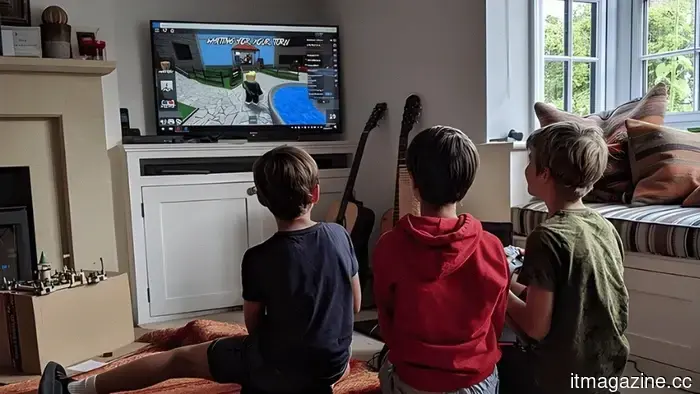
Roblox AI assistant acquires autonomous tools for game planning, building, and self-testing.
In summary, Roblox is enhancing its integrated AI assistant with agentic capabilities, which include a planning mode that evaluates game code before suggesting action plans, procedural 3D model creation, mesh generation, and self-correcting loops to test and refine outputs. This update also introduces MCP client integration with external tools like Claude and Cursor, with plans for multi-agent workflows in the cloud.
Roblox is transforming its built-in AI assistant from simply answering coding questions to a tool that can plan, create, and test games. The new planning mode examines existing game code and data models, requests clarification from developers about their objectives, and converts the discussion into an editable action plan. Developers can review, adjust, and approve the plan before implementation, highlighting the shift from asking an AI for specific functions to seeking broader problem-solving strategies.
The planning mode makes the assistant a collaborative planner. Instead of just providing code snippets in response to prompts, it evaluates a game's current codebase and data model, engages the developer with relevant questions, and proposes a detailed action plan that can be edited and secured before execution.
Upcoming Procedural Models will enable developers to define 3D objects through code rather than relying on static meshes. For example, a developer can request a bookcase and adjust its features—such as shelf count, height, and material—using parameters, eliminating the need for manual modeling. These objects will have an understanding of physical relationships; for instance, a staircase will recognize how its steps correspond to its height, while a table will know that its legs support its surface. This represents parametric design guided by natural language rather than generative art.
Mesh Generation will allow for the direct placement of fully textured 3D objects into a game world via prompts, building on Roblox’s Cube foundation model and introducing 4D generation for interactive elements. This innovation ensures that generated objects behave appropriately within the game instead of being stagnant props. During early access, over 160,000 objects were created, and those utilizing 4D generation experienced an average playtime increase of 64%.
The most significant change comes from the self-correcting system, enabling the assistant to test various game elements, identify issues, suggest solutions, and integrate these findings back into its planning. Roblox refers to this as agentic loops, which involve cycles of planning, execution, testing, and refinement that require less human oversight over time.
The roadmap aims to further this development. Roblox is working on allowing multiple AI agents to collaborate in parallel, managing complex workflows in the cloud rather than being limited to local studio sessions. Additionally, it is establishing integration with third-party tools such as Claude, Cursor, and Codex, and has introduced a built-in MCP client to the assistant, facilitating connections to external AI services using the Model Context Protocol standard.
Roblox envisions a future where developers can describe a game concept in natural language, and AI can generate all necessary assets, environments, code, animations, and interactive behaviors. The newly introduced agentic tools are steps toward fulfilling this vision, marking a shift from AI serving as mere autocomplete to acting as a collaborative partner.
This update coincides with a broader trend in software development known as vibe coding, where developers describe their intentions in natural language for AI to produce code. This has resulted in an 84% increase in App Store submissions recently, prompting Apple to address the proliferation of low-quality AI-generated applications. This trend also applies to game development, as creating playable content becomes increasingly accessible.
For Roblox, this presents both opportunities and challenges. While increased creator engagement on the platform can lead to more games, it hinges on the quality of those games. The planning mode and self-correcting loops are responses to this challenge, designed to yield superior results compared to single-prompt requests by guiding creators through a structured process instead of allowing for the random generation and release of AI outputs.
Third-party AI tools for Roblox game creation have emerged, including Lemonade, SuperbulletAI, and BloxBot. By integrating agentic capabilities within Roblox Studio, the company aims to maintain focus on its platform for creation rather than letting it shift to external, unregulated tools.
Roblox's investment in AI tools is bolstered by substantial commercial growth. Daily active users surged to 144 million in Q4 2025, up from 85 million the previous year, while monthly active users grew from 280 million to 380 million throughout the year. Revenue for 2025 reached $4.9 billion, a 36% increase, with projections for 2026 estimating between $6 billion and $6.2 billion. Robux purchases totaled $6.79 billion in 2025.
These statistics are critical as they impact Roblox's ability to invest in AI infrastructure and the size of the creator ecosystem benefiting from enhanced tools. A platform with 380 million monthly users and nearly $5 billion in revenue can afford to develop foundational models, train agentic systems, and cover the computational costs associated with
Other articles
 Roblox AI assistant receives agentic tools for game planning, building, and self-testing.
Roblox enhances its AI assistant by introducing a planning mode, procedural 3D models, and self-correcting agentic loops, along with MCP integration featuring Claude, Cursor, and Codex.
Roblox AI assistant receives agentic tools for game planning, building, and self-testing.
Roblox enhances its AI assistant by introducing a planning mode, procedural 3D models, and self-correcting agentic loops, along with MCP integration featuring Claude, Cursor, and Codex.
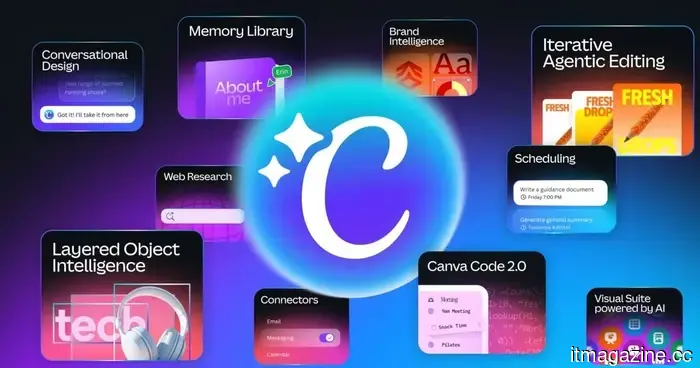 Canva now connects with your work applications, allowing you to accomplish more without having to exit the platform.
Canva is broadening its scope beyond design by introducing new integrations with tools such as Slack, Gmail, and Google Drive, enabling users to gather context from various applications for their projects.
Canva now connects with your work applications, allowing you to accomplish more without having to exit the platform.
Canva is broadening its scope beyond design by introducing new integrations with tools such as Slack, Gmail, and Google Drive, enabling users to gather context from various applications for their projects.
 How EverCognitive assists organizations in transforming their AI aspirations into tangible business results.
Elizabeta Gjorgievska Joshevski describes how EverCognitive assists organizations in navigating AI transformation through strategic planning, preparedness, and tangible business results.
How EverCognitive assists organizations in transforming their AI aspirations into tangible business results.
Elizabeta Gjorgievska Joshevski describes how EverCognitive assists organizations in navigating AI transformation through strategic planning, preparedness, and tangible business results.
 How EverCognitive assists organizations in transforming AI aspirations into tangible business results.
Elizabeta Gjorgievska Joshevski describes how EverCognitive assists companies in navigating AI transformation through strategic planning, preparedness, and quantifiable business results.
How EverCognitive assists organizations in transforming AI aspirations into tangible business results.
Elizabeta Gjorgievska Joshevski describes how EverCognitive assists companies in navigating AI transformation through strategic planning, preparedness, and quantifiable business results.
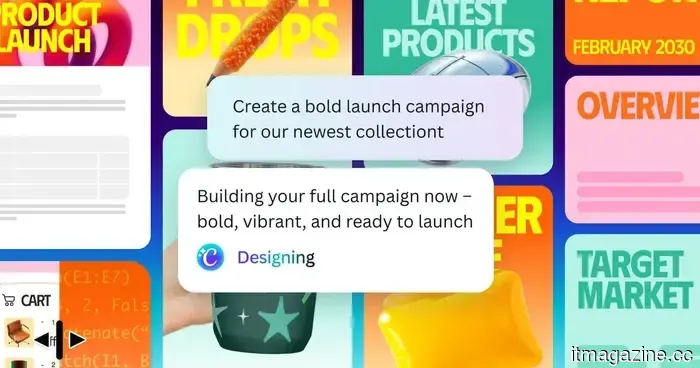 Canva AI 2.0 intends to transform the process of converting your ideas into refined projects.
Canva has introduced its AI 2.0 update, offering a more conversational method for designing and finishing projects. Rather than beginning with templates, users can articulate their requirements to create structured, editable designs.
Canva AI 2.0 intends to transform the process of converting your ideas into refined projects.
Canva has introduced its AI 2.0 update, offering a more conversational method for designing and finishing projects. Rather than beginning with templates, users can articulate their requirements to create structured, editable designs.
 AI-generated images are now being misused to create false evidence for auto insurance fraud.
AI-edited images of vehicles are emerging as a new tool for insurance fraud, with Admiral noting an increase in cases associated with altered crash photos, duplicate claims, and forged documentation that can elevate expenses throughout the entire system.
AI-generated images are now being misused to create false evidence for auto insurance fraud.
AI-edited images of vehicles are emerging as a new tool for insurance fraud, with Admiral noting an increase in cases associated with altered crash photos, duplicate claims, and forged documentation that can elevate expenses throughout the entire system.
Roblox AI assistant acquires autonomous tools for game planning, building, and self-testing.
Roblox enhances its AI assistant by introducing a planning mode, procedural 3D models, and self-correcting agentic loops, along with MCP integration featuring Claude, Cursor, and Codex.