
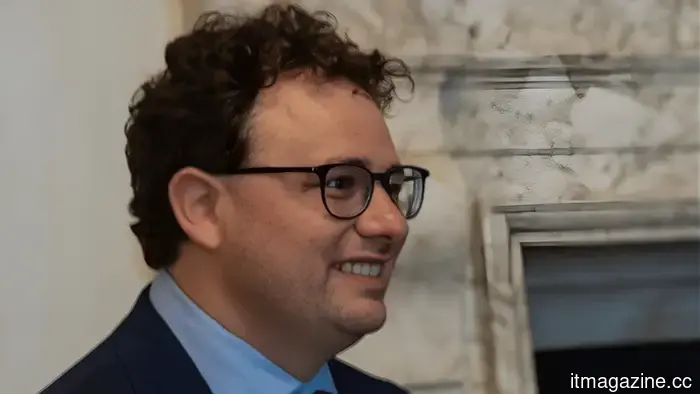
Anthropic's Amodei moves to the White House amid Washington's battle over access to Mythos.
Summary: Anthropic CEO Dario Amodei is set to meet with White House Chief of Staff Susie Wiles on Friday to negotiate access to Mythos, an advanced AI model capable of identifying and exploiting numerous zero-day vulnerabilities across major operating systems and web browsers. This meeting comes after Anthropic was blacklisted by the Pentagon when Amodei declined to lift safety restrictions, as various US agencies including the Treasury, the intelligence community, and CISA are seeking access to the model through Anthropic's controlled Project Glasswing program.
The meeting signifies a crucial step in confronting the ongoing dispute with the Pentagon regarding safety restrictions on Anthropic's AI models. The Treasury Department, along with parts of the intelligence community and CISA, are interested in utilizing the Mythos model—an AI system whose cybersecurity capabilities have prompted emergency briefings from various governmental bodies across multiple countries.
Launched on April 7, Mythos is not specifically a cybersecurity product but a general-purpose AI model that has demonstrated the ability to uncover and exploit thousands of previously unknown vulnerabilities that had eluded human security scrutiny and extensive automated testing. During tests, it achieved a success rate exceeding 83% on its first attempt to develop working exploits, making it the first AI to carry out a complete 32-step corporate network attack simulation successfully.
Instead of making Mythos publicly available, Anthropic established Project Glasswing, providing access to about 40 vetted organizations, including major tech companies like Amazon, Apple, Google, Microsoft, Nvidia, and others, to help identify and patch vulnerabilities in critical software before they can be exploited. The company has also pledged up to $100 million in credits for Mythos usage and $4 million in donations to open-source security groups.
The Pentagon's demand for unrestricted access to Anthropic's models escalated into a conflict that began in February. Secretary of Defense Pete Hegseth insisted that the Pentagon be allowed full access for any lawful purpose, including possible use for autonomous weaponry and surveillance, which Amodei declined. Following this, the Pentagon labeled Anthropic as a national security supply-chain risk, effectively blacklisting the company.
In response, Anthropic filed lawsuits against the Trump administration in early March for illegal retaliation. Although a federal judge initially blocked the blacklisting, this was overturned on April 8, resulting in Anthropic being excluded from Department of Defense contracts while litigation proceeds, although it can still collaborate with other government entities.
The paradox lies in the fact that the same government that blacklisted Anthropic now seeks access to its most advanced model. The Treasury wants to utilize Mythos for vulnerability searches within its systems, while various government sectors are already testing it. The White House's Office of Management and Budget is establishing protections to enable federal agency use of a controlled version. Reports have surfaced that Anthropic has employed consultants from Trumpworld to aid in the negotiations, and the meeting is intended to create a path toward a resolution.
The significance of Mythos is underscored by JPMorgan Chase CEO Jamie Dimon's comments that it “uncovers significantly more vulnerabilities” than previous methods. The UK’s AI Security Institute evaluated an earlier version and determined it to be “far more capable at cyber offense than any previously assessed model,” highlighting its ability to integrate multiple attack steps into complete intrusions. The Council on Foreign Relations has referred to it as a pivotal moment for AI and global security.
From a defensive perspective, if an AI model can detect vulnerabilities overlooked by human security teams and automation for decades, providing access to organizations tasked with safeguarding critical infrastructure enables them to address flaws before they can be exploited. However, the offensive risk posed by such capabilities in the wrong hands is equally significant. Anthropic's choice to limit access instead of making the model public directly stems from the safety principles that have put it at odds with the Pentagon.
Anthropic's business trajectory affords it leverage in these negotiations. The company's annualized revenue has reached $30 billion, with investor interest valuing it at $800 billion as it considers an IPO. The company does not rely on Pentagon contracts for survival but seeks a resolution that allows it to adhere to its safety commitments while restoring its ability to interact broadly with the US government—an outcome the Wiles meeting aims to facilitate.
Concerns regarding Mythos extend beyond the United States. The Governor of the Bank of England, Andrew Bailey, identified it as a cybersecurity risk during a speech at Columbia University on April 15. The Bank’s Cross Market Operational Resilience Group is planning an emergency briefing soon with leaders from the UK’s largest banks and financial infrastructure entities. Anthropic intends to provide Mythos access to selected British banks as part of expanding Project Glasswing and is significantly increasing its London workforce.
The geopolitical implications are significant, as the US government's pursuit of access to Mythos contrasts sharply with its punitive actions against the company. Anthropic's readiness to supply the model to UK institutions while embroiled in litigation with the Pentagon raises concerns that a key national security asset may be
Other articles
 Canva and Anthropic have introduced Claude Design, a tool for AI-driven visual creation.
Canva's Design Engine drives Claude Design, enabling users to generate on-brand visuals from text within Claude, while Canva AI 2.0 launches agentic orchestration and workspace connections.
Canva and Anthropic have introduced Claude Design, a tool for AI-driven visual creation.
Canva's Design Engine drives Claude Design, enabling users to generate on-brand visuals from text within Claude, while Canva AI 2.0 launches agentic orchestration and workspace connections.
 Zoom introduces World ID verification to ensure that meeting attendees are humans and not deepfake representations.
Zoom incorporates World's Deep Face biometric verification to show "Verified Human" badges during meetings, as losses due to deepfake fraud exceed $200 million in just one quarter.
Zoom introduces World ID verification to ensure that meeting attendees are humans and not deepfake representations.
Zoom incorporates World's Deep Face biometric verification to show "Verified Human" badges during meetings, as losses due to deepfake fraud exceed $200 million in just one quarter.
 Intel's Core Series 3 Wildcat Lake is being introduced to compete with Apple's MacBook Neo priced at $599.
Intel's Wildcat Lake processors offer 40 TOPS of AI performance for budget laptops built on the 18A node, yet MacBook Neo benchmarks surpass them by 44% in single-core performance, with over 70 OEM designs coming to market.
Intel's Core Series 3 Wildcat Lake is being introduced to compete with Apple's MacBook Neo priced at $599.
Intel's Wildcat Lake processors offer 40 TOPS of AI performance for budget laptops built on the 18A node, yet MacBook Neo benchmarks surpass them by 44% in single-core performance, with over 70 OEM designs coming to market.
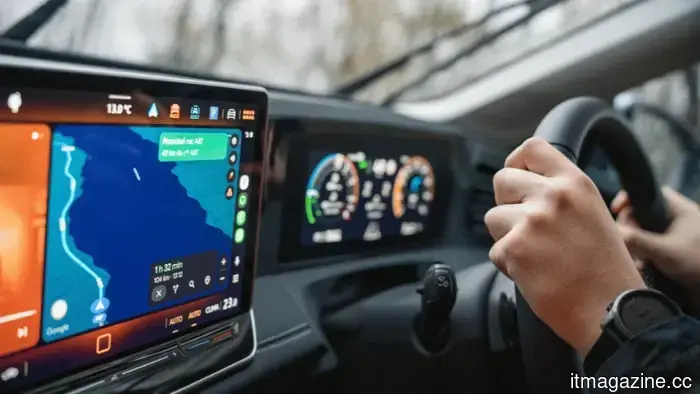 Uber will now dispatch a courier to your location to return your purchases for a fee of $5.
Uber's Return a Package service dispatches a courier to gather items purchased via Uber Eats and return them to retailers such as Target, Best Buy, and seven others for a fee of $5, or $3 for Uber One subscribers.
Uber will now dispatch a courier to your location to return your purchases for a fee of $5.
Uber's Return a Package service dispatches a courier to gather items purchased via Uber Eats and return them to retailers such as Target, Best Buy, and seven others for a fee of $5, or $3 for Uber One subscribers.
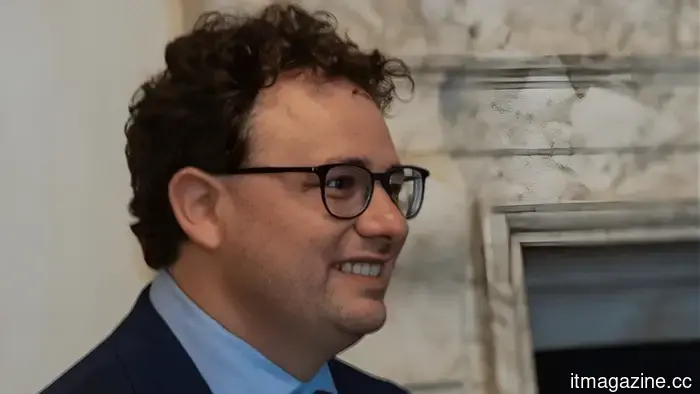 Anthropic's Amodei goes to the White House as Washington debates access to Mythos.
Dario Amodei from Anthropic meets with Susie Wiles at the White House to address the standoff with the Pentagon, as US agencies and UK banks look to gain access to Mythos, its AI model designed for discovering zero-day vulnerabilities.
Anthropic's Amodei goes to the White House as Washington debates access to Mythos.
Dario Amodei from Anthropic meets with Susie Wiles at the White House to address the standoff with the Pentagon, as US agencies and UK banks look to gain access to Mythos, its AI model designed for discovering zero-day vulnerabilities.
 Zoom introduces World ID verification to confirm that meeting participants are real humans and not deepfake representations.
Zoom incorporates World's Deep Face biometric verification to showcase "Verified Human" badges during meetings, amid deepfake fraud losses exceeding $200 million in just one quarter.
Zoom introduces World ID verification to confirm that meeting participants are real humans and not deepfake representations.
Zoom incorporates World's Deep Face biometric verification to showcase "Verified Human" badges during meetings, amid deepfake fraud losses exceeding $200 million in just one quarter.
Anthropic's Amodei moves to the White House amid Washington's battle over access to Mythos.
Dario Amodei from Anthropic meets with Susie Wiles at the White House to address the Pentagon impasse while US agencies and UK banks pursue access to Mythos, its AI model designed for discovering zero-day vulnerabilities.