

Zoom introduces World ID verification to confirm that meeting participants are real humans and not deepfake representations.
Summary: Zoom has teamed up with World, the biometric identity company co-founded by Sam Altman, to enable meeting participants to confirm their humanity using World’s Deep Face technology. This system cross-references iris-scanned biometric profiles with live video to present a “Verified Human” badge. This feature was created in response to the deepfake fraud that resulted in over $200 million in losses for businesses in Q1 2025, including a $25 million hit to engineering firm Arup, despite ongoing regulatory challenges for World’s iris-scanning Orb system in Spain, Germany, the Philippines, and several other nations.
Zoom is collaborating with World to allow meeting attendees to validate their human identity against AI-generated deepfakes. By utilizing World’s Deep Face technology, the system matches a live video feed with an iris-scanned biometric profile while displaying a “Verified Human” badge when a match is confirmed. Hosts can activate a Deep Face waiting area that mandates verification before participants can join, and attendees can ask others to verify their identity during a call.
This feature responds to a real and costly threat. In early 2024, engineering firm Arup suffered a $25 million loss when an employee in Hong Kong authorized wire transfers during a video call that included AI-generated deepfake representations of his colleagues, including the CFO. A similar incident occurred with a multinational company in Singapore in 2025. The total losses from deepfake-related fraud surpassed $200 million in Q1 2025, with the average corporate incident costing over $500,000.
How verification works
World’s Deep Face uses a three-part method for verification. It cross-references a photograph taken during user registration via World’s Orb device, which captures iris patterns, with a real-time face scan from the user’s device alongside a live video frame visible to all participants in the meeting. Verification is only successful if all three inputs correspond. This verification process occurs locally on the participant’s device, and World claims that no personal data leaves the device.
This approach differs architecturally from existing deepfake detection tools offered through Zoom’s marketplace. Solutions from companies like Pindrop, Reality Defender, and Resemble AI analyze video frames for signs of AI manipulation, alerting users to synthetic media in real time. Both Zoom and World noted that as video generation models advance swiftly, these frame-by-frame detection tools are becoming less reliable. Deep Face circumvents the detection issue altogether by confirming a person's identity through biometric records rather than attempting to discern if the pixels presented are generated by software.
The trade-off is that Deep Face necessitates participants to obtain a World ID, meaning they must visit one of World’s physical Orb devices for their iris scans. Currently, about 18 million users have been verified across 160 countries, and there are roughly 1,500 active Orbs available. This represents a small proportion of Zoom’s user base, limiting the feature's immediate applicability. For many meetings, current frame-analysis tools will continue to serve as the practical choice. Deep Face is intended for high-stakes calls where the assurance of identity makes the prerequisite biometric registration worthwhile.
The business case
Zoom’s spokesperson, Travis Isaman, described the integration as part of the company's “open ecosystem approach,” which provides customers various methods to instill trust in their workflows tailored to their needs. This presentation is intentional. Zoom is not promoting World ID as its primary identity solution; rather, it is offering it as one option among several within a marketplace that already features numerous deepfake detection and identity verification solutions.
For Zoom, this partnership is a precautionary measure. The company's revenue reached $4.67 billion in fiscal 2025, growing modestly by 3%, and its strategic challenge is to maintain its status as the primary platform for business communication amidst competitors incorporating AI features. Zoom has countered with AI avatars, an AI-driven office suite, and cross-application AI notetakers. By adding human verification, Zoom aims to become the preferred platform for enterprises handling sensitive discussions. In a market where a single deepfake call can lead to losses of $25 million, establishing such trust carries tangible commercial significance.
For World, collaborating with Zoom represents a distribution victory. The company, which rebranded from Worldcoin in 2024, has encountered difficulties in reaching beyond early adopters in the crypto space. Its associations with Visa, Tinder, Razer, and Coinbase have broadened the applicability of a World ID, but none of these collaborations generate the immediate demand that a corporate security application does. If a company's treasury team mandates World ID verification for any video call involving wire transfer approvals, this would foster organizational adoption that partnerships with individual consumers do not parallel.
The privacy question
World’s identity system utilizing Orb technology has faced ongoing regulatory scrutiny. Spain’s data protection authority issued a warning in February 2026 for GDPR violations and inadequate data protection assessments. In December 2024, Bavaria’s data regulator in Germany ordered the deletion of stored iris data

Otros artículos
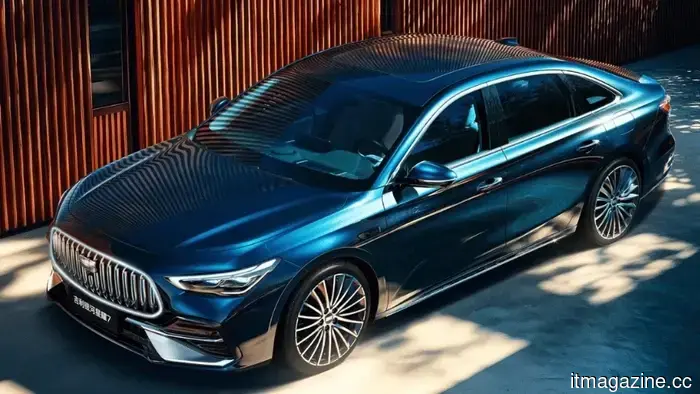 Geely EX5: the electric SUV priced at $15,300 that boasts luxury features and is currently available in 35 countries.
The Geely EX5 has a starting price of $15,300 and features massaging seats, a 1,000W audio system, and a range of 610 km. It is now being exported to 35 countries, offering a price advantage over European electric vehicles by several thousand dollars.
Geely EX5: the electric SUV priced at $15,300 that boasts luxury features and is currently available in 35 countries.
The Geely EX5 has a starting price of $15,300 and features massaging seats, a 1,000W audio system, and a range of 610 km. It is now being exported to 35 countries, offering a price advantage over European electric vehicles by several thousand dollars.
 Uber will now dispatch a courier to your location to return your shopping for a fee of $5.
Uber's Return a Package service dispatches a courier to pick up items purchased via Uber Eats and return them to Target, Best Buy, and seven other retailers for a fee of $5, or $3 for members of Uber One.
Uber will now dispatch a courier to your location to return your shopping for a fee of $5.
Uber's Return a Package service dispatches a courier to pick up items purchased via Uber Eats and return them to Target, Best Buy, and seven other retailers for a fee of $5, or $3 for members of Uber One.
 Zoom introduces World ID verification to ensure that meeting attendees are humans and not deepfake representations.
Zoom incorporates World's Deep Face biometric verification to show "Verified Human" badges during meetings, as losses due to deepfake fraud exceed $200 million in just one quarter.
Zoom introduces World ID verification to ensure that meeting attendees are humans and not deepfake representations.
Zoom incorporates World's Deep Face biometric verification to show "Verified Human" badges during meetings, as losses due to deepfake fraud exceed $200 million in just one quarter.
 Anthropic's Amodei is heading to the White House as Washington debates access to Mythos.
Dario Amodei from Anthropic meets with Susie Wiles at the White House to address the standoff with the Pentagon, while US agencies and UK banks are looking to gain access to Mythos, its AI model for discovering zero-day vulnerabilities.
Anthropic's Amodei is heading to the White House as Washington debates access to Mythos.
Dario Amodei from Anthropic meets with Susie Wiles at the White House to address the standoff with the Pentagon, while US agencies and UK banks are looking to gain access to Mythos, its AI model for discovering zero-day vulnerabilities.
 Intel's Core Series 3 Wildcat Lake is being introduced to compete with Apple's MacBook Neo priced at $599.
Intel's Wildcat Lake processors offer 40 TOPS of AI performance for budget laptops built on the 18A node, yet MacBook Neo benchmarks surpass them by 44% in single-core performance, with over 70 OEM designs coming to market.
Intel's Core Series 3 Wildcat Lake is being introduced to compete with Apple's MacBook Neo priced at $599.
Intel's Wildcat Lake processors offer 40 TOPS of AI performance for budget laptops built on the 18A node, yet MacBook Neo benchmarks surpass them by 44% in single-core performance, with over 70 OEM designs coming to market.
 Zoom introduces World ID verification to ensure that meeting participants are real humans and not deepfakes.
Zoom incorporates World's Deep Face biometric verification to showcase "Verified Human" badges during meetings, as losses from deepfake fraud exceed $200 million in just one quarter.
Zoom introduces World ID verification to ensure that meeting participants are real humans and not deepfakes.
Zoom incorporates World's Deep Face biometric verification to showcase "Verified Human" badges during meetings, as losses from deepfake fraud exceed $200 million in just one quarter.
Zoom introduces World ID verification to confirm that meeting participants are real humans and not deepfake representations.
Zoom incorporates World's Deep Face biometric verification to showcase "Verified Human" badges during meetings, amid deepfake fraud losses exceeding $200 million in just one quarter.