
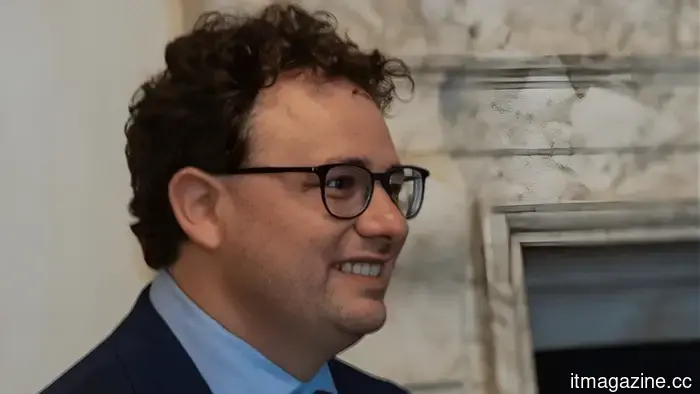
Anthropic's Amodei goes to the White House as Washington debates access to Mythos.
Summary: Anthropic CEO Dario Amodei is set to meet White House Chief of Staff Susie Wiles on Friday to discuss granting access to Mythos, an advanced AI model capable of detecting and exploiting numerous zero-day vulnerabilities across major operating systems and browsers. This meeting follows Anthropic's blacklisting by the Pentagon due to Amodei's refusal to lift safety restrictions on the model, and comes amid requests from various US agencies and UK financial regulators for access to the model through Anthropic’s controlled Project Glasswing program.
Amodei's upcoming meeting with Wiles marks a significant development in Anthropic’s ongoing conflict with the Pentagon. The Pentagon's Defense Secretary Pete Hegseth has sought unrestricted access to Anthropic's AI models for lawful uses, including potential applications in autonomous weapons and surveillance, but Amodei declined. As a result, Anthropic was designated a national security supply-chain risk, effectively blacklisting the company from federal contracts.
In early March, Anthropic initiated legal action against the Trump administration, claiming unlawful retaliation. While a federal judge initially blocked the blacklisting, an appellate court reinstated it on April 8, preventing Anthropic from securing Department of Defense contracts during ongoing litigation, though it can still collaborate with other government agencies.
Interestingly, the same government that blacklisted Anthropic is now pursuing access to its most advanced model. The Treasury Department is looking to Mythos to identify vulnerabilities in its systems, and several intelligence entities are concurrently testing it. The White House Office of Management and Budget is establishing safeguards to enable federal agencies to utilize a controlled version. Reports suggest Anthropic has enlisted consultants from Trumpworld to aid negotiations, with Friday's meeting aimed at reaching an agreement.
Mythos' significance is underscored by comments from JPMorgan Chase CEO Jamie Dimon, who noted the model’s ability to uncover vulnerabilities for cyberattacks. The UK’s AI Security Institute found it to be considerably more adept in offensive cyber capabilities than any previously evaluated model, and the Council on Foreign Relations called it a pivotal moment for AI and global security.
From a defensive perspective, providing Mythos to organizations responsible for safeguarding vital infrastructure could help them rectify vulnerabilities before adversaries exploit them. However, the capacity for misuse in malevolent hands presents a serious threat. Anthropic's choice to limit access rather than release the model publicly stems from its safety principles, contributing to its conflict with the Pentagon.
The company's strong financial position—with annualized revenue reaching $30 billion and valuation offers nearing $800 billion, alongside IPO considerations—affords it leverage in negotiations. While Pentagon contracts are not crucial for its survival, Anthropic seeks a resolution that honors its safety commitments and allows collaboration with broader US government entities, which the Wiles meeting aims to address.
Globally, Mythos has sparked significant concern. The Governor of the Bank of England, Andrew Bailey, identified it as a cybersecurity risk during a speech, prompting the Bank's resilience team to convene an urgent briefing with key UK financial institutions. Anthropic plans to expand Project Glasswing access to select British banks soon and is significantly increasing its workforce in London. Canadian officials have raised concerns about Mythos as an "unknown unknown" in international discussions, leading to increased coordination among global regulators regarding its cybersecurity implications.
The geopolitical landscape is complex, as the Biden administration grapples with the contradiction of penalizing Anthropic while simultaneously seeking access to its powerful model. This creates a scenario where a close ally, the UK, could gain access to this critical national security tool ahead of the US government, incentivizing the White House to resolve the conflict that exceeds the original safety disagreement.
A potential resolution could involve restoring Anthropic’s eligibility for government contracts and granting access to Mythos for defense-related cybersecurity purposes, with the Pentagon retracting its supply-chain risk designation. Anthropic would maintain its restrictions on military applications while possibly negotiating a review process for specific cases. Both parties have incentives to find common ground: Anthropic wishes to resolve its blacklisting for credibility, and the government seeks the technology.
The major takeaway from the upcoming meeting is significant. The creation of a potent cybersecurity tool stemmed from the development of a general AI model, followed by restricted release due to safety concerns, and a subsequent governmental backlash for upholding those principles. Now the same government acknowledges the model's value and seeks access. This narrative highlights the challenges faced in AI governance as technology evolves more rapidly than regulatory entities can adjust, demonstrating the complex interplay between market rewards and state penalties for prioritizing safety. Mythos exemplifies a significant dilemma where both restricting and releasing its capabilities are justifiable, reflecting on a serious debate unfolding not in academic circles or congressional hearings, but in the heart of the executive branch.
Other articles
 Allbirds rebrands itself as NewBird AI, shifting its focus from footwear to GPU cloud computing.
Allbirds sold its footwear brand for $39 million, obtained $50 million in funding, and is rebranding as NewBird AI to lease GPUs; the stock initially soared 600% before decreasing by 35%.
Allbirds rebrands itself as NewBird AI, shifting its focus from footwear to GPU cloud computing.
Allbirds sold its footwear brand for $39 million, obtained $50 million in funding, and is rebranding as NewBird AI to lease GPUs; the stock initially soared 600% before decreasing by 35%.
 Zoom introduces World ID verification to ensure that meeting attendees are humans and not deepfake representations.
Zoom incorporates World's Deep Face biometric verification to show "Verified Human" badges during meetings, as losses due to deepfake fraud exceed $200 million in just one quarter.
Zoom introduces World ID verification to ensure that meeting attendees are humans and not deepfake representations.
Zoom incorporates World's Deep Face biometric verification to show "Verified Human" badges during meetings, as losses due to deepfake fraud exceed $200 million in just one quarter.
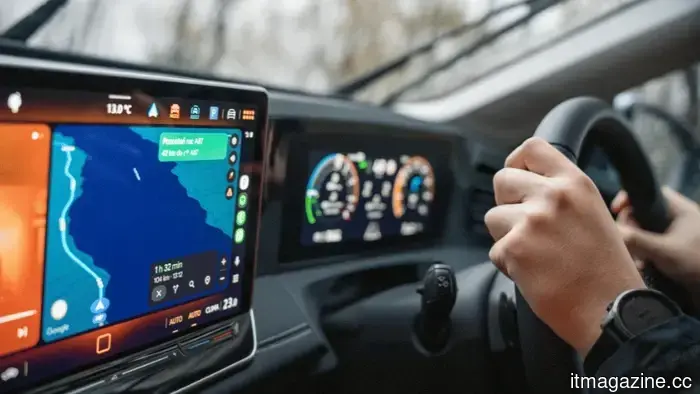 Uber will now dispatch a courier to your location to return your shopping for a fee of $5.
Uber's Return a Package service dispatches a courier to pick up items purchased via Uber Eats and return them to Target, Best Buy, and seven other retailers for a fee of $5, or $3 for members of Uber One.
Uber will now dispatch a courier to your location to return your shopping for a fee of $5.
Uber's Return a Package service dispatches a courier to pick up items purchased via Uber Eats and return them to Target, Best Buy, and seven other retailers for a fee of $5, or $3 for members of Uber One.
 Intel's Core Series 3 Wildcat Lake is being introduced to compete with Apple's MacBook Neo priced at $599.
Intel's Wildcat Lake processors offer 40 TOPS of AI performance for budget laptops built on the 18A node, yet MacBook Neo benchmarks surpass them by 44% in single-core performance, with over 70 OEM designs coming to market.
Intel's Core Series 3 Wildcat Lake is being introduced to compete with Apple's MacBook Neo priced at $599.
Intel's Wildcat Lake processors offer 40 TOPS of AI performance for budget laptops built on the 18A node, yet MacBook Neo benchmarks surpass them by 44% in single-core performance, with over 70 OEM designs coming to market.
 Geely EX5: the $15,300 electric SUV equipped with luxury amenities, now available in 35 nations.
The starting price of Geely's EX5 is $15,300, featuring massaging seats, a 1,000W audio system, and a range of 610 km. It is currently exported to 35 countries, offering a significantly lower price than European electric vehicles by thousands.
Geely EX5: the $15,300 electric SUV equipped with luxury amenities, now available in 35 nations.
The starting price of Geely's EX5 is $15,300, featuring massaging seats, a 1,000W audio system, and a range of 610 km. It is currently exported to 35 countries, offering a significantly lower price than European electric vehicles by thousands.
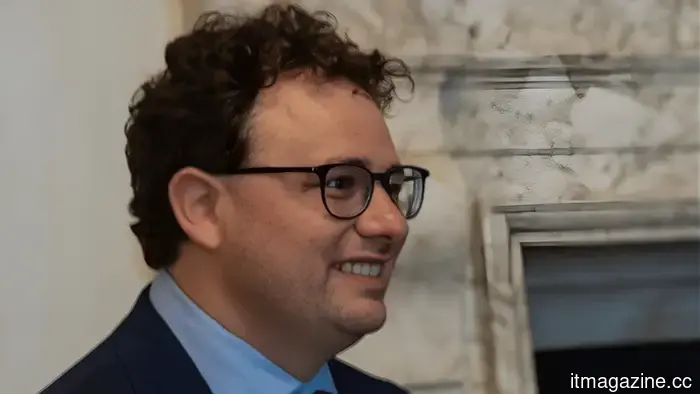 Anthropic's Amodei moves to the White House amid Washington's battle over access to Mythos.
Dario Amodei from Anthropic meets with Susie Wiles at the White House to address the Pentagon impasse while US agencies and UK banks pursue access to Mythos, its AI model designed for discovering zero-day vulnerabilities.
Anthropic's Amodei moves to the White House amid Washington's battle over access to Mythos.
Dario Amodei from Anthropic meets with Susie Wiles at the White House to address the Pentagon impasse while US agencies and UK banks pursue access to Mythos, its AI model designed for discovering zero-day vulnerabilities.
Anthropic's Amodei goes to the White House as Washington debates access to Mythos.
Dario Amodei from Anthropic meets with Susie Wiles at the White House to address the standoff with the Pentagon, as US agencies and UK banks look to gain access to Mythos, its AI model designed for discovering zero-day vulnerabilities.