
Meta and Broadcom have extended their partnership for AI chips until 2029.
The broadened partnership involves multiple generations of Meta’s custom MTIA processors, starting with an over one-gigawatt computing capacity, and is referred to as the 'initial phase of a long-term, multi-gigawatt rollout.' The upcoming chips will mark the industry's first custom AI silicon to utilize a 2-nanometer process.
Meta has deepened its collaboration with chip manufacturer Broadcom to create various generations of tailored artificial intelligence processors, extending their agreement through 2029 with a preliminary commitment exceeding one gigawatt of computing capacity, enough to supply around 750,000 U.S. households.
Additionally, it was disclosed that Broadcom's CEO Hock Tan will depart from Meta’s board of directors once his term concludes at the company's next annual meeting, transitioning to an advisory position specifically emphasizing Meta’s custom chip strategy.
Meta characterized the one-gigawatt commitment as “the first phase of a sustained, multi-gigawatt rollout.” This agreement pertains to Meta’s Training and Inference Accelerator initiative, known as MTIA, where Broadcom is responsible for chip design, packaging, and networking technologies.
The inaugural chip in this initiative, the MTIA 300, is already operational in Meta’s ranking and recommendation systems across platforms like Facebook, Instagram, and others; an additional three generations of chips are scheduled for release by 2027, primarily engineered for inference, the method through which AI models promptly respond to user inquiries.
Broadcom has also confirmed that the new MTIA silicon will be the first custom AI chips in the industry produced using a 2-nanometer manufacturing process. Furthermore, Broadcom’s Ethernet networking technology will be utilized to connect Meta’s expanding arrays of AI computers on a large scale.
Mark Zuckerberg stated that Meta is collaborating with Broadcom “across chip design, packaging, and networking to establish the extensive computing foundation required to provide personal superintelligence to billions of individuals.”
This aligns with Meta’s declared objective, expressed by Zuckerberg in January, to invest as much as $135 billion in capital expenditure by 2026, as it strives to construct AI infrastructure to compete with OpenAI and Google.
The Broadcom agreement represents the latest in a series of substantial chip commitments Meta has publicized this year, which already encompass six gigawatts of AMD GPUs, millions of Nvidia chips, custom processors developed alongside Arm Holdings, and capacity leased from cloud providers like CoreWeave and Nebius.
In contrast to Google’s TPUs or Amazon’s Trainium, which are offered to external cloud customers for revenue generation, Meta’s MTIA chips are designated solely for internal purposes, powering the AI capabilities and recommendation systems that are fundamental to its advertising operations.
The MTIA initiative follows the precedent set by Google, which began creating its first custom accelerators in 2015, and represents Meta’s long-term strategy that specialized silicon tailored for its specific workloads will surpass the cost efficiency of general-purpose GPUs from Nvidia at the scale Meta operates.
Other articles
 Sony's latest gaming monitor features a 720Hz refresh rate and is equipped with an OLED panel.
Developed in collaboration with Fnatic and utilizing LG's state-of-the-art tandem OLED technology, Sony's latest INZONE M10S II sets a new standard for the appearance, experience, and performance of competitive gaming monitors.
Sony's latest gaming monitor features a 720Hz refresh rate and is equipped with an OLED panel.
Developed in collaboration with Fnatic and utilizing LG's state-of-the-art tandem OLED technology, Sony's latest INZONE M10S II sets a new standard for the appearance, experience, and performance of competitive gaming monitors.
 The Batman Part II: Release date, cast, storyline, and all the information we have at this point.
What’s the most recent update on The Batman Part II? Here’s all the information we have on the sequel to The Batman, including the release date, storyline, and cast.
The Batman Part II: Release date, cast, storyline, and all the information we have at this point.
What’s the most recent update on The Batman Part II? Here’s all the information we have on the sequel to The Batman, including the release date, storyline, and cast.
 Google is broadening its Personal Intelligence feature to include Gemini users worldwide, marking a significant change.
Google is broadening the reach of Personal Intelligence for Gemini users worldwide, linking Gmail, Photos, YouTube, Maps, and other services to provide more intelligent, tailored responses without requiring additional prompts from you.
Google is broadening its Personal Intelligence feature to include Gemini users worldwide, marking a significant change.
Google is broadening the reach of Personal Intelligence for Gemini users worldwide, linking Gmail, Photos, YouTube, Maps, and other services to provide more intelligent, tailored responses without requiring additional prompts from you.
 Apple TV and Peacock Premium Plus have both become more affordable, thanks to Amazon's intervention.
That's a great offer!
Apple TV and Peacock Premium Plus have both become more affordable, thanks to Amazon's intervention.
That's a great offer!
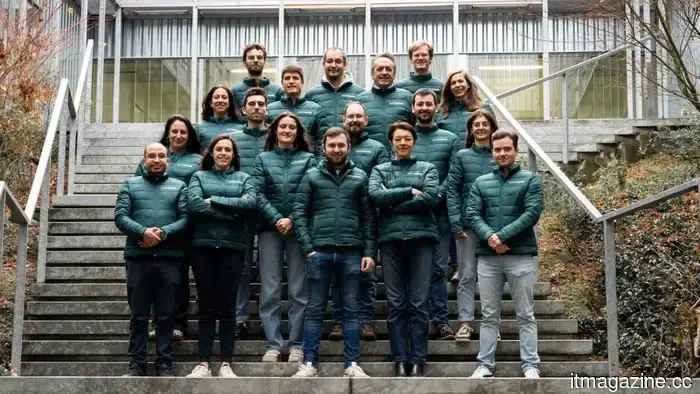 Agriodor secures €15M funding round led by Crédit Mutuel Impact.
French deeptech company Agriodor has secured €15M in funding, with Crédit Mutuel Impact leading the investment, to expand its olfactory biocontrol platform.
Agriodor secures €15M funding round led by Crédit Mutuel Impact.
French deeptech company Agriodor has secured €15M in funding, with Crédit Mutuel Impact leading the investment, to expand its olfactory biocontrol platform.
 Samsung has discreetly increased the prices of its Galaxy tablets in the United States.
Wake up and get ready, Samsung has increased its prices once more.
Samsung has discreetly increased the prices of its Galaxy tablets in the United States.
Wake up and get ready, Samsung has increased its prices once more.
Meta and Broadcom have extended their partnership for AI chips until 2029.
Meta and Broadcom have prolonged their AI chip agreement until 2029, beginning with over 1GW of MTIA processors. The latest chips are manufactured using a 2-nanometer process.