
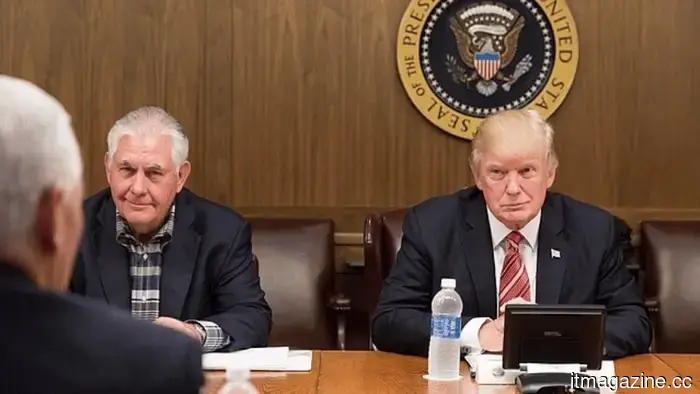
The Trump administration placed Anthropic on a blacklist - and now it is instructing banks to utilize its AI.
In summary: Treasury Secretary Scott Bessent and Fed Chair Jerome Powell are encouraging major Wall Street banks to evaluate Anthropic’s Mythos AI model for cybersecurity weaknesses, despite the Pentagon’s ongoing legal battle with Anthropic, labeling it as a supply chain risk for declining to remove safety barriers on autonomous weapons and mass surveillance. JPMorgan Chase, Goldman Sachs, Citigroup, Bank of America, and Morgan Stanley are reportedly assessing the model. Mythos, which uncovered thousands of zero-day vulnerabilities across leading operating systems and browsers, is being disseminated through a limited programme named Project Glasswing to about 50 organizations. UK regulators are also working to evaluate the associated risks.
The Trump administration is subtly persuading America's top banks to test the technology from a company it has been attempting to discredit for the past two months. Treasury Secretary Scott Bessent and Federal Reserve Chair Jerome Powell met with leaders from JPMorgan Chase, Goldman Sachs, Citigroup, Bank of America, and Morgan Stanley this week, encouraging them to utilize Anthropic’s newly developed Mythos model to identify cybersecurity vulnerabilities in their systems, according to Bloomberg.
This recommendation is notably contradictory. Anthropic is currently embroiled in a legal dispute with the Department of Defense after Defense Secretary Pete Hegseth categorized the company as a “supply chain risk,” a designation that prohibits it from military contracts and instructs defense contractors to cease using its technology. This classification was made after Anthropic declined to remove two safety limitations from its AI models: one prohibiting use in fully autonomous weapons and another against deployment for mass surveillance of American citizens.
Now, two of the administration's top economic officials are urging Wall Street to adopt the very product that the Pentagon seeks to blacklist.
What Mythos actually entails
Claude Mythos Preview is an advanced model that Anthropic did not specifically develop for cybersecurity. The capability to identify vulnerabilities surfaced as a downstream effect of general advancements in code reasoning and autonomous operations. During evaluation, Mythos detected thousands of zero-day vulnerabilities—defects previously unknown to software developers—across all major operating systems and web browsers.
The significance of these capabilities led Anthropic to refrain from releasing the model to the public. Instead, it introduced Project Glasswing, a controlled programme granting access to around 50 organizations, including Amazon Web Services, Apple, Google, Microsoft, Nvidia, Cisco, CrowdStrike, Palo Alto Networks, and JPMorgan Chase. Anthropic pledged up to $100 million in usage credits and $4 million in direct support to open-source security organizations as part of this initiative.
The characterization of the model as “too dangerous to release” has faced skepticism. Tom's Hardware pointed out that the claims of “thousands” of severe zero-day discoveries were based on only 198 manual reviews, with many flagged vulnerabilities linked to older software or being impractical to exploit. Others in the security community suggested that the limited release resembled less a responsible AI governance approach and more a clever sales strategy: create scarcity, instill fear, and allow customers to seek it out.
The Pentagon dilemma
The clash between the recommendation from Bessent and Powell and the designation from Hegseth is not simply mixed signals; it represents two branches of the same administration pursuing clearly contradictory approaches towards Anthropic.
The Pentagon controversy began in February, when Hegseth gave Anthropic CEO Dario Amodei a deadline to eliminate the company’s safety restrictions or risk losing its $200 million defense contract. Amodei declined to comply. In response, Hegseth labeled Anthropic a supply chain risk, prompting President Trump to instruct federal agencies to discontinue using its technology. A Pentagon official accused Amodei of possessing a “God complex,” while Trump described Anthropic as a “radical left, woke company.”
Since then, judicial opinions have diverged. A federal judge in California granted a preliminary injunction against the supply chain designation, stating, “nothing in the governing statute supports the Orwellian notion that an American company may be branded a potential adversary and saboteur of the US for expressing disagreement with the government.” Conversely, an appeals court in Washington, D.C., denied Anthropic’s request for a temporary halt on the blacklisting as the case develops. The overall result is that Anthropic is barred from DoD contracts but may continue collaboration with other federal agencies.
It is into this void—excluded from the Pentagon but not from the Treasury or the Fed—that Bessent and Powell intervened this week.
What the banks are actually doing
JPMorgan Chase is the only bank officially recognized as a Project Glasswing partner, yet reports indicate that Goldman Sachs, Citigroup, Bank of America, and Morgan Stanley are all internally testing Mythos. The applications are said to include vulnerability detection, fraud-risk identification, and compliance workflow automation across financial systems.
The rapid adoption reflects a genuine concern. If Mythos can identify zero-day vulnerabilities in operating systems and browsers, it likely can do the same within banking
Other articles
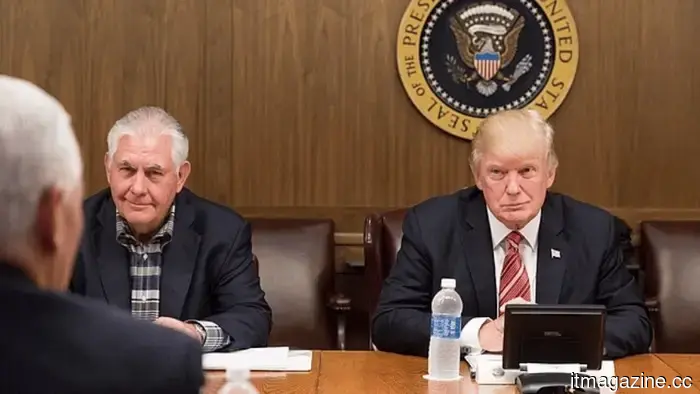 The Trump administration placed Anthropic on a blacklist, but now it is encouraging banks to utilize its AI technology.
Treasury Secretary Bessent and Federal Reserve Chair Powell encouraged Wall Street banks to evaluate Anthropic's Mythos model for potential vulnerabilities, despite the Pentagon's ongoing legal battle against the company regarding a supply chain risk classification.
The Trump administration placed Anthropic on a blacklist, but now it is encouraging banks to utilize its AI technology.
Treasury Secretary Bessent and Federal Reserve Chair Powell encouraged Wall Street banks to evaluate Anthropic's Mythos model for potential vulnerabilities, despite the Pentagon's ongoing legal battle against the company regarding a supply chain risk classification.
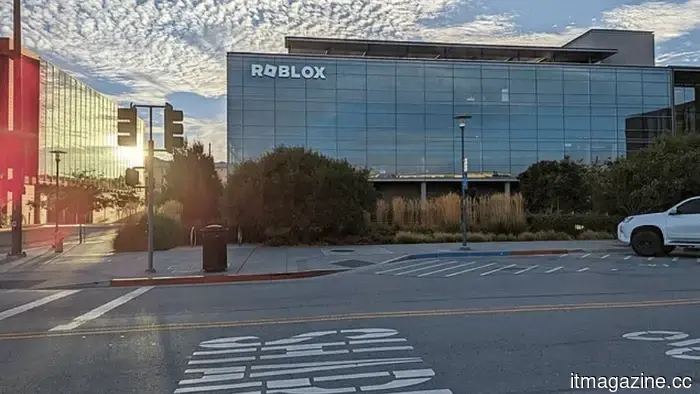 Roblox implements required age-restricted account levels in response to child safety legal actions.
Roblox will categorize users into three tiers: Kids (ages 5-8), Select (ages 9-15), and Standard (ages 16 and up) beginning in mid-May. This will restrict content and chat features based on age, as eight US states file lawsuits over issues related to child safety.
Roblox implements required age-restricted account levels in response to child safety legal actions.
Roblox will categorize users into three tiers: Kids (ages 5-8), Select (ages 9-15), and Standard (ages 16 and up) beginning in mid-May. This will restrict content and chat features based on age, as eight US states file lawsuits over issues related to child safety.
 How Scorpion Scan streamlines window film installation for small enterprises.
Scorpion Scan introduces a mobile-centric workflow for window film installation, enabling small businesses to enhance efficiency, minimize manual tasks, and manage projects more effectively.
How Scorpion Scan streamlines window film installation for small enterprises.
Scorpion Scan introduces a mobile-centric workflow for window film installation, enabling small businesses to enhance efficiency, minimize manual tasks, and manage projects more effectively.
 Roblox implements required age-segregated account levels in response to lawsuits concerning child safety.
Starting in mid-May, Roblox will categorize users into three tiers: Kids (ages 5-8), Select (ages 9-15), and Standard (ages 16+), restricting access to content and chat based on age, as eight U.S. states file lawsuits over failures in child safety.
Roblox implements required age-segregated account levels in response to lawsuits concerning child safety.
Starting in mid-May, Roblox will categorize users into three tiers: Kids (ages 5-8), Select (ages 9-15), and Standard (ages 16+), restricting access to content and chat based on age, as eight U.S. states file lawsuits over failures in child safety.
 OnePlus' compact flagship might be exiting China, and I really hope it becomes available in the US.
A recent report indicates that OnePlus might soon expand its compact flagship approach outside of China, with the OnePlus 15s expected to launch in India by the end of Q2 or the beginning of Q3.
OnePlus' compact flagship might be exiting China, and I really hope it becomes available in the US.
A recent report indicates that OnePlus might soon expand its compact flagship approach outside of China, with the OnePlus 15s expected to launch in India by the end of Q2 or the beginning of Q3.
 The eufy C10 robot vacuum is currently discounted by 54%, making the home deal of the moment 8 weeks of hands-free cleaning for $219.
The eufy C10 is currently available for $219.99 in a limited-time offer, representing a $260 discount from its regular price of $479.99, making it more than half-off for a self-emptying robot vacuum featuring LiDAR navigation and eight weeks of hands-free use. For a vacuum that truly takes itself off your to-do list, the pricing and timing are […]
The eufy C10 robot vacuum is currently discounted by 54%, making the home deal of the moment 8 weeks of hands-free cleaning for $219.
The eufy C10 is currently available for $219.99 in a limited-time offer, representing a $260 discount from its regular price of $479.99, making it more than half-off for a self-emptying robot vacuum featuring LiDAR navigation and eight weeks of hands-free use. For a vacuum that truly takes itself off your to-do list, the pricing and timing are […]
The Trump administration placed Anthropic on a blacklist - and now it is instructing banks to utilize its AI.
Treasury Secretary Bessent and Fed Chair Powell encouraged Wall Street banks to evaluate Anthropic's Mythos model for potential vulnerabilities, despite the Pentagon's ongoing legal battle with the same company regarding a supply chain risk designation.