

Roblox implements required age-segregated account levels in response to lawsuits concerning child safety.
In summary, Roblox is set to implement three compulsory age-restricted account tiers - Kids (ages 5-8), Select (ages 9-15), and Standard (ages 16 and older) - starting in mid-May. This strategy will categorize content and chat functionality according to age groups. The decision comes in response to lawsuits from eight U.S. state attorneys general regarding child safety concerns and follows the introduction of a facial age verification system in January. Developers must now pay a monthly fee of $5 and verify their identities for their content to be shown in the younger tiers. However, the reliability of this system is being questioned, especially after reports surfaced of age-verified accounts being sold on eBay for $4 shortly after the verification mandate was enforced, and there are concerns that toddlers may be able to circumvent the facial recognition checks.
Roblox plans to divide its daily active user base of over 85 million into three age-specific tiers: Kids (5-8), Select (9-15), and Standard (16+). This marks the platform's most significant structural update since the introduction of facial age verification in January, driven by legal challenges from several state attorneys general over child safety. Nevertheless, there is significant skepticism about the effectiveness of the age-checking technology that underpins this new system.
The three account types correspond with Roblox’s existing content maturity labels: Minimal, Mild, Moderate, and Restricted. Kids accounts will have the strictest limitations, with chat functionality disabled by default, allowing access only to Minimal and Mild experiences. Select accounts for those aged 9 to 15 will unlock Moderate content and allow chat with peers within a similar age range and "trusted friends" approved by parents. At age 16, users will automatically transition to a full Roblox account, but access to Restricted content will still be limited until they turn 18.
Roblox anticipates the global rollout to be completed by June. Users who fail to complete an age check by that time will be directed to a Kids-like experience, which comes with no chat access and restrictions on games rated above Mild, essentially making age verification a requirement for anyone wishing to utilize the platform as intended.
Implementing age restrictions introduces a challenge in content labeling on a large scale. Roblox features millions of user-generated experiences, and it is essential to ensure each one has the correct maturity rating for the tiered system to work properly. To maintain this, developers must fulfill three criteria: identity verification, two-step authentication, and a subscription to Roblox Plus at $5 per month. Roblox states that these requirements demonstrate “a long-term commitment to the platform” and will encourage accurate self-labeling.
When self-labeling fails, AI moderation is intended to fill the gaps. Roblox claims it will monitor game instances in real time, ensuring that the activities displayed on-screen and in chat correspond with the stated maturity label. Additionally, the platform asserts that users aged 16 and older will get to try new games first, offering a buffer before younger audiences engage with new content. However, critics like Engadget’s Jessica Conditt have pointed out that this claim is overly broad and cannot guarantee that children won't encounter inaccurately labeled experiences before AI moderation intervenes.
The effectiveness of the tiered system relies heavily on users genuinely reporting their age. By January 2026, Roblox will require all global users to undergo a facial age estimation scan, provided by an external vendor named Persona, to access chat features. This technology classifies users into one of six age brackets (under 9, 9-12, 13-15, 16-17, 18-20, 21+) and deletes the biometric data right after it’s processed. Testing validated by the UK’s Age Check Certification Scheme indicated that Persona’s age estimation models had a mean absolute error of 1.4 years for users under 18.
However, a margin of error of 1.4 years in a system with narrow age brackets, like three years apart, is significant. Reports from Wired highlighted that the checks could be evaded by younger children, and shortly after the implementation, age-verified Roblox accounts were finding their way onto eBay for as low as $4, allowing anyone, including adults looking to access children’s chat areas, to bypass the system entirely. Social media has also been filled with videos of users demonstrating how to beat the facial recognition system using photos of celebrities or avatars, and even by drawing facial hair.
Roblox’s Chief Safety Officer, Matt Kaufman, acknowledged the difficulties during a press briefing prior to the announcement, stating, "If we get it wrong, we offer users multiple ways to correct that." He added that the platform continuously monitors user behavior against age-check data and will prompt verification again if discrepancies arise.
The legal context surrounding these changes is significant, with attorneys general from Texas, Louisiana, Florida, Kentucky, Iowa, Tennessee, Nebraska, and Arkansas filing lawsuits against Roblox due to alleged safety failures. Texas AG Ken Pa

Other articles
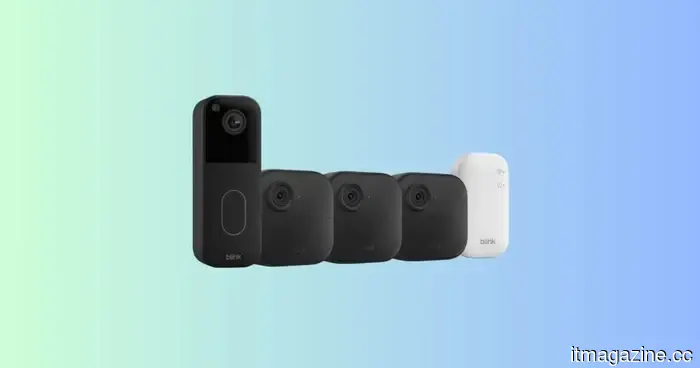 This Blink bundle includes a video doorbell and three outdoor cameras for $103, and it requires no wiring.
A wireless home security system comprising four devices for $103.99 is rare. The Blink Video Doorbell and Outdoor 4 bundle is currently available at this price, offering a savings of $146 off its original $249.98 list price. It secures your front entrance and three extra outdoor viewpoints, all without requiring any wiring.
This Blink bundle includes a video doorbell and three outdoor cameras for $103, and it requires no wiring.
A wireless home security system comprising four devices for $103.99 is rare. The Blink Video Doorbell and Outdoor 4 bundle is currently available at this price, offering a savings of $146 off its original $249.98 list price. It secures your front entrance and three extra outdoor viewpoints, all without requiring any wiring.
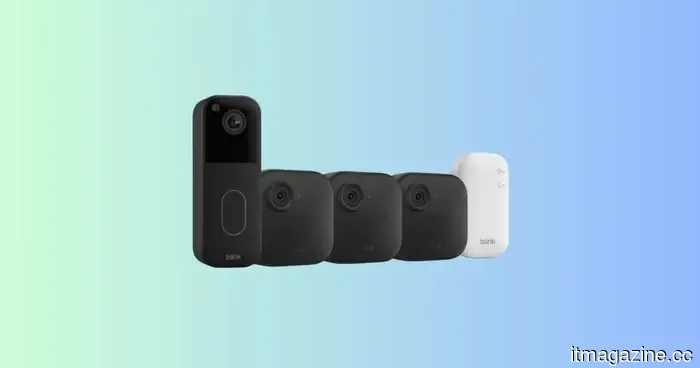 This Blink bundle includes a video doorbell and three outdoor cameras for $103, and no wiring is required.
A wireless home security system consisting of four devices for $103.99 is a rare find. The Blink Video Doorbell and Outdoor 4 bundle is now available for that price, reflecting a $146 discount from its original list price of $249.98, and it secures your front entrance along with three extra outdoor perspectives without requiring any wiring.
This Blink bundle includes a video doorbell and three outdoor cameras for $103, and no wiring is required.
A wireless home security system consisting of four devices for $103.99 is a rare find. The Blink Video Doorbell and Outdoor 4 bundle is now available for that price, reflecting a $146 discount from its original list price of $249.98, and it secures your front entrance along with three extra outdoor perspectives without requiring any wiring.
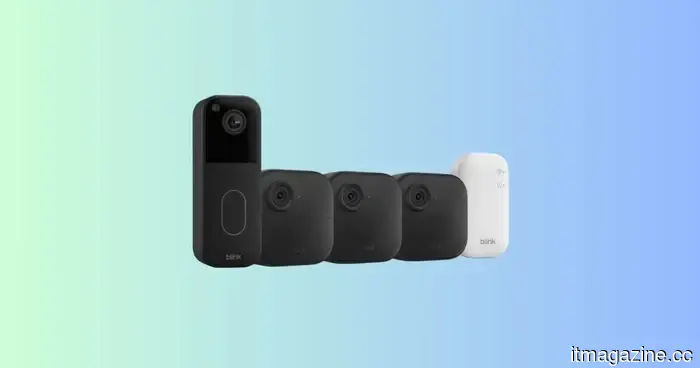 This Blink bundle includes a video doorbell and three outdoor cameras for $103, and no wiring is required.
A wireless home security system for four devices priced at $103.99 is a rare find. The Blink Video Doorbell and Outdoor 4 bundle is now available for precisely that amount, which reflects a $146 discount from its original price of $249.98. This system protects your front door and offers coverage from three more outdoor perspectives without requiring any wiring.
This Blink bundle includes a video doorbell and three outdoor cameras for $103, and no wiring is required.
A wireless home security system for four devices priced at $103.99 is a rare find. The Blink Video Doorbell and Outdoor 4 bundle is now available for precisely that amount, which reflects a $146 discount from its original price of $249.98. This system protects your front door and offers coverage from three more outdoor perspectives without requiring any wiring.
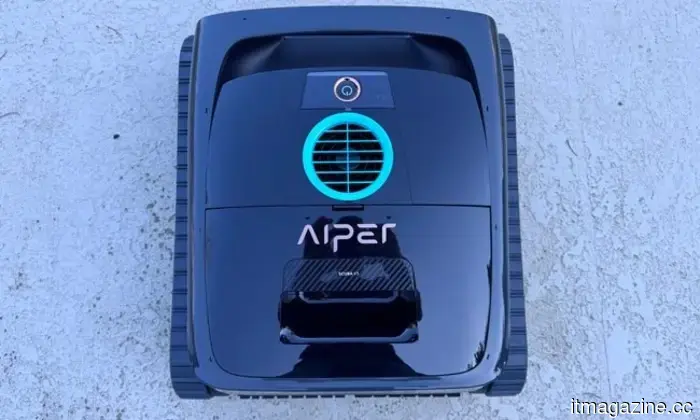 The eufy C10 robot vacuum is currently discounted by 54%, making the home deal of the moment 8 weeks of hands-free cleaning for $219.
The eufy C10 is currently available for $219.99 in a limited-time offer, representing a $260 discount from its regular price of $479.99, making it more than half-off for a self-emptying robot vacuum featuring LiDAR navigation and eight weeks of hands-free use. For a vacuum that truly takes itself off your to-do list, the pricing and timing are […]
The eufy C10 robot vacuum is currently discounted by 54%, making the home deal of the moment 8 weeks of hands-free cleaning for $219.
The eufy C10 is currently available for $219.99 in a limited-time offer, representing a $260 discount from its regular price of $479.99, making it more than half-off for a self-emptying robot vacuum featuring LiDAR navigation and eight weeks of hands-free use. For a vacuum that truly takes itself off your to-do list, the pricing and timing are […]
 The MacBook Neo is reportedly selling very quickly, and Apple is looking to increase production to meet demand.
A recent supply-chain report indicates that Apple has boosted its orders for MacBook Neo laptops and adjusted its shipment forecasts upward due to stronger-than-anticipated demand.
The MacBook Neo is reportedly selling very quickly, and Apple is looking to increase production to meet demand.
A recent supply-chain report indicates that Apple has boosted its orders for MacBook Neo laptops and adjusted its shipment forecasts upward due to stronger-than-anticipated demand.
 Roblox implements required age-restricted account levels in response to child safety legal actions.
Roblox will categorize users into three tiers: Kids (ages 5-8), Select (ages 9-15), and Standard (ages 16 and up) beginning in mid-May. This will restrict content and chat features based on age, as eight US states file lawsuits over issues related to child safety.
Roblox implements required age-restricted account levels in response to child safety legal actions.
Roblox will categorize users into three tiers: Kids (ages 5-8), Select (ages 9-15), and Standard (ages 16 and up) beginning in mid-May. This will restrict content and chat features based on age, as eight US states file lawsuits over issues related to child safety.
Roblox implements required age-segregated account levels in response to lawsuits concerning child safety.
Starting in mid-May, Roblox will categorize users into three tiers: Kids (ages 5-8), Select (ages 9-15), and Standard (ages 16+), restricting access to content and chat based on age, as eight U.S. states file lawsuits over failures in child safety.