

Social media is stealing your time, even during the golden years of retirement.
Retirement is commonly envisioned as a time of freedom, offering opportunities to indulge in hobbies, nurture relationships, and pursue personal development. However, an increasing number of retirees are discovering that a significant portion of their newfound leisure time is quietly consumed by smartphones and social media, presenting a different kind of challenge in their post-work lives.
A recent article in The Wall Street Journal sheds light on how retirees, despite their best intentions, are having difficulty managing their screen time. Without the framework of a job or set responsibilities, many are falling into the trap of excessive scrolling, often losing track of hours without even realizing it.
When Free Time Becomes Screen Time
Transitioning into retirement removes external constraints such as deadlines, meetings, and workplace expectations. While this allows for flexibility, it also eliminates the natural boundaries that once kept digital distractions in check.
In many instances, retirees start using their phones for practical purposes, like searching for information or staying in touch with family. However, these activities often escalate into extended periods spent watching videos, browsing social media, or interacting with endless content feeds.
This experience can feel almost automatic, where a quick check evolves into hours of passive consumption, leaving users questioning where their time has gone.
Why Retirees Are Especially Susceptible
Although discussions about social media addiction frequently target younger individuals, retirees encounter their own set of challenges. The lack of structured routines means fewer interruptions to draw their focus away from their devices.
Previously, work schedules or daily commitments provided natural breaks that limited prolonged screen usage. In retirement, the onus of managing their usage rests entirely on the individual.
Consequently, it becomes easier for smartphones to fill the void during moments of boredom or idleness. Over time, this can establish a pattern where digital engagement substitutes for more meaningful pursuits.
The concern isn’t necessarily about constant use, but rather the ease with which phones become the default behavior during unstructured time.
The Psychological Effects of Continuous Scrolling
Aside from time management issues, the habit of excessive scrolling can lead to psychological consequences. Users often report feelings of dissatisfaction after long periods online, akin to the effects of overeating junk food.
The content itself is crafted to be engaging and hard to resist, with short videos, algorithm-driven suggestions, and social updates forming a constant stream of stimulation that keeps users engaged longer than intended.
This can result in feelings of guilt or frustration, particularly when time is spent on content that lacks lasting value or fulfillment. At the same time, smartphones remain crucial tools for communication and information, complicating the decision to completely disconnect.
The Importance for Daily Life
For retirees, time is an invaluable resource. How it is allocated can greatly influence both mental health and overall life quality.
When substantial portions of the day are occupied by passive screen use, it can diminish opportunities for physical activity, social engagement, and personal growth. This shift can impact physical health and emotional well-being over time. The challenge lies in balancing the advantages of technology with the necessity to spend time purposefully.
What Lies Ahead
Tackling this issue demands more than merely willpower. Experts recommend that developing structured habits and systems is more effective than simply attempting to resist temptation.
Some retirees are already trying out strategies like confining phone usage to certain times, keeping devices away during particular activities, or substituting screen time with hobbies such as cycling, crafting, or volunteering. The broader dialogue surrounding digital well-being is also advancing, with a growing recognition that smartphone overuse affects all age groups.
As retirement lifestyles increasingly adapt to a digital landscape, finding ways to manage screen time may become as critical as planning for finances or health management.


Other articles
 OnePlus' small flagship might be exiting China, and I'm really hoping to see it in the US.
A recent report indicates that OnePlus could soon extend its compact flagship strategy beyond China, with the OnePlus 15s expected to launch in India by the end of Q2 or the beginning of Q3.
OnePlus' small flagship might be exiting China, and I'm really hoping to see it in the US.
A recent report indicates that OnePlus could soon extend its compact flagship strategy beyond China, with the OnePlus 15s expected to launch in India by the end of Q2 or the beginning of Q3.
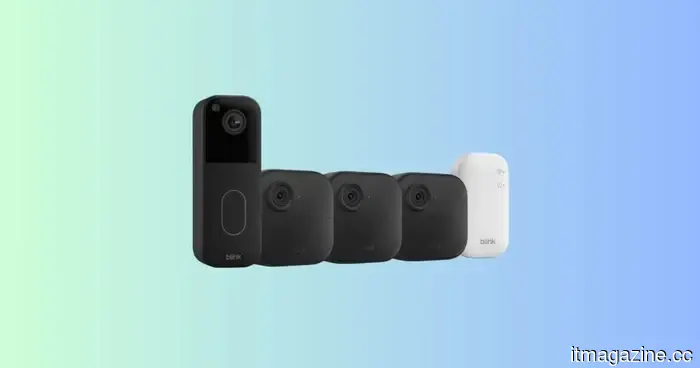 This Blink bundle includes a video doorbell and three outdoor cameras for $103, and it requires no wiring.
A wireless home security system comprising four devices for $103.99 is rare. The Blink Video Doorbell and Outdoor 4 bundle is currently available at this price, offering a savings of $146 off its original $249.98 list price. It secures your front entrance and three extra outdoor viewpoints, all without requiring any wiring.
This Blink bundle includes a video doorbell and three outdoor cameras for $103, and it requires no wiring.
A wireless home security system comprising four devices for $103.99 is rare. The Blink Video Doorbell and Outdoor 4 bundle is currently available at this price, offering a savings of $146 off its original $249.98 list price. It secures your front entrance and three extra outdoor viewpoints, all without requiring any wiring.
 The eufy C10 robot vacuum is currently discounted by 54%, offering 8 weeks of hands-free cleaning for $219, making it the top home deal right now.
The eufy C10 is currently available for $219.99 in a limited-time offer, which provides a savings of $260 from its original price of $479.99, making it over half off for a self-emptying robot vacuum that features LiDAR navigation and allows for 8 weeks of hands-free use. For a vacuum that truly takes itself off your list of tasks, both the timing and the price are [...]
The eufy C10 robot vacuum is currently discounted by 54%, offering 8 weeks of hands-free cleaning for $219, making it the top home deal right now.
The eufy C10 is currently available for $219.99 in a limited-time offer, which provides a savings of $260 from its original price of $479.99, making it over half off for a self-emptying robot vacuum that features LiDAR navigation and allows for 8 weeks of hands-free use. For a vacuum that truly takes itself off your list of tasks, both the timing and the price are [...]
 OnePlus' compact flagship might be exiting China, and I really hope it becomes available in the US.
A recent report indicates that OnePlus might soon expand its compact flagship approach outside of China, with the OnePlus 15s expected to launch in India by the end of Q2 or the beginning of Q3.
OnePlus' compact flagship might be exiting China, and I really hope it becomes available in the US.
A recent report indicates that OnePlus might soon expand its compact flagship approach outside of China, with the OnePlus 15s expected to launch in India by the end of Q2 or the beginning of Q3.
 The eufy C10 robot vacuum is currently discounted by 54%, making the home deal of the moment 8 weeks of hands-free cleaning for $219.
The eufy C10 is currently available for $219.99 in a limited-time offer, representing a $260 discount from its regular price of $479.99, making it more than half-off for a self-emptying robot vacuum featuring LiDAR navigation and eight weeks of hands-free use. For a vacuum that truly takes itself off your to-do list, the pricing and timing are […]
The eufy C10 robot vacuum is currently discounted by 54%, making the home deal of the moment 8 weeks of hands-free cleaning for $219.
The eufy C10 is currently available for $219.99 in a limited-time offer, representing a $260 discount from its regular price of $479.99, making it more than half-off for a self-emptying robot vacuum featuring LiDAR navigation and eight weeks of hands-free use. For a vacuum that truly takes itself off your to-do list, the pricing and timing are […]
 Recent heart studies offer yet another convincing reason to regard smartwatches with significance.
If your smartwatch alerts you to atrial fibrillation, it's important to see a doctor. Recent research indicates that individuals with AF identified during screenings are at three times greater risk for heart failure, with the majority of cases emerging within six months.
Recent heart studies offer yet another convincing reason to regard smartwatches with significance.
If your smartwatch alerts you to atrial fibrillation, it's important to see a doctor. Recent research indicates that individuals with AF identified during screenings are at three times greater risk for heart failure, with the majority of cases emerging within six months.
Social media is stealing your time, even during the golden years of retirement.
Retirees are devoting more and more of their leisure time to smartphones and social media.