
Recent heart studies offer yet another convincing reason to regard smartwatches with significance.
Your smartwatch notifying you of an irregular heartbeat may carry more significance than you realize.
Smartwatches have become quite effective at identifying atrial fibrillation, the most prevalent heart rhythm disorder globally, which impacts nearly 38 million individuals. However, many people tend to dismiss this alert, thinking that feeling well means there’s no cause for concern. Recent research presented at EHRA 2026 in Paris indicates that this attitude should be reassessed.
The study is a post-hoc analysis of two major Swedish programs, STROKESTOP and STROKESTOP II, that screened adults aged 75 to 76 for atrial fibrillation using ECGs. Researchers monitored participants for several years to determine who went on to develop heart failure.
The statistics are striking. In STROKESTOP, roughly 23% of individuals whose atrial fibrillation was detected through screening later developed heart failure. STROKESTOP II yielded a similar result of about 20%.
What relevance does this have for your smartwatch?
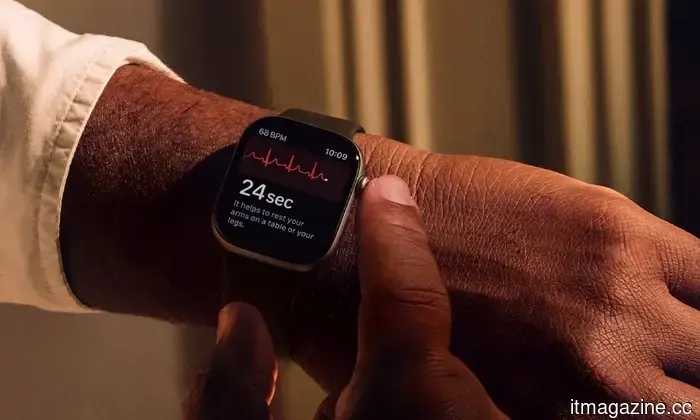
If you’ve watched any keynote presentations from Apple regarding the Apple Watch, you're likely aware that the company highlights how its smartwatch aids in preventing heart attacks via its atrial fibrillation detection feature.
However, the Apple Watch is not the only smartwatch capable of this function. Most modern smartwatches can detect atrial fibrillation quietly in individuals who feel completely healthy and exhibit no noticeable symptoms. This research indicates that being asymptomatic does not equate to being without risk.
Individuals with atrial fibrillation detected through screening have approximately three times the risk of developing heart failure compared to those without the condition.
Why is it important to respond quickly?
Both studies found that heart failure can manifest within six months of detecting atrial fibrillation, which is a brief timeframe. This underscores the importance of viewing a smartwatch alert as a prompt to consult a doctor sooner rather than later.
Dr. Gina Sado from Danderyd Hospital in Stockholm, who led the study, emphasized that atrial fibrillation and heart failure can exacerbate each other, and identifying both conditions early offers patients the best chance of managing their health effectively.
Therefore, if your smartwatch alerts you to AF, it’s advisable to reach out to your doctor. At worst, the appointment may confirm that everything is fine, but in many cases, it could prevent a serious health issue.



Other articles
 From Microsoft to "microslop": The AI backlash that necessitated a reset.
Microsoft's aggressive advancement in AI has led to backlash and the emergence of the "microslop" trend. Now, the company is discreetly reducing its efforts, moving towards more understated and beneficial AI features in Windows and its applications.
From Microsoft to "microslop": The AI backlash that necessitated a reset.
Microsoft's aggressive advancement in AI has led to backlash and the emergence of the "microslop" trend. Now, the company is discreetly reducing its efforts, moving towards more understated and beneficial AI features in Windows and its applications.
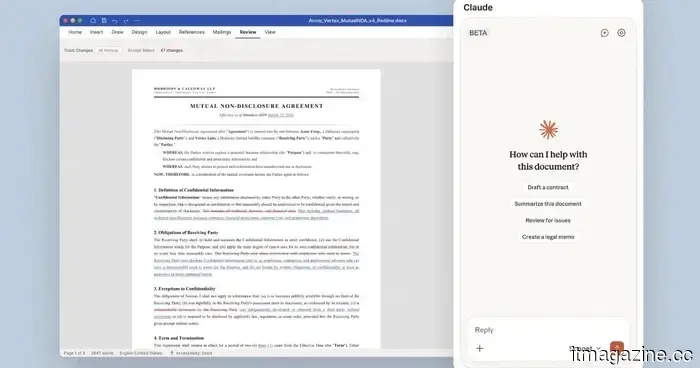 Claude has just arrived in Microsoft Word, and it seems to be a real enhancement for document tasks.
The new Claude for Word extension by Anthropic can read your documents, modify chosen text, address comments, and monitor all changes, ensuring you maintain control.
Claude has just arrived in Microsoft Word, and it seems to be a real enhancement for document tasks.
The new Claude for Word extension by Anthropic can read your documents, modify chosen text, address comments, and monitor all changes, ensuring you maintain control.
 Social media is stealing your time, even during the golden years of retirement.
Retirees are devoting more and more of their leisure time to smartphones and social media.
Social media is stealing your time, even during the golden years of retirement.
Retirees are devoting more and more of their leisure time to smartphones and social media.
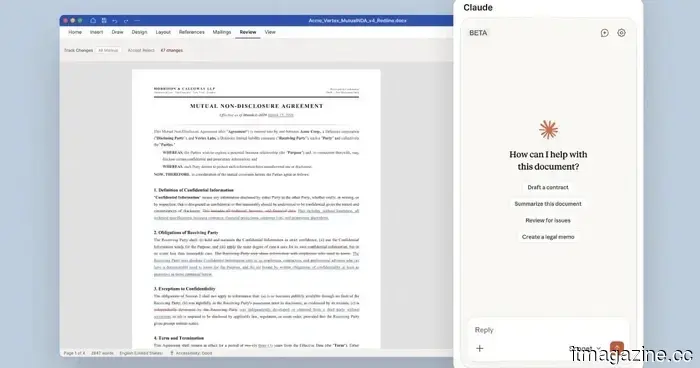 Claude has just arrived in Microsoft Word, and it appears to be a true enhancement for document tasks.
Anthropic's latest Claude for Word extension is capable of reading your documents, editing chosen text, addressing comments, and monitoring all changes, ensuring you maintain control.
Claude has just arrived in Microsoft Word, and it appears to be a true enhancement for document tasks.
Anthropic's latest Claude for Word extension is capable of reading your documents, editing chosen text, addressing comments, and monitoring all changes, ensuring you maintain control.
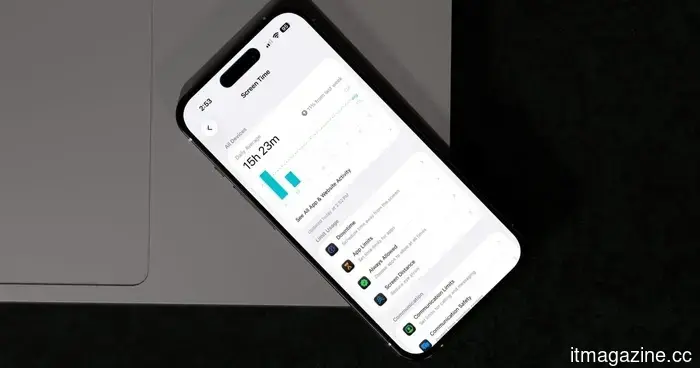 While the world navigates the concept of digital detox, there's a trend of screenmaxxing emerging in the background.
Certain individuals spend almost 19 hours a day online. They are aware of the cautions regarding screen time, but it doesn’t bother them at all.
While the world navigates the concept of digital detox, there's a trend of screenmaxxing emerging in the background.
Certain individuals spend almost 19 hours a day online. They are aware of the cautions regarding screen time, but it doesn’t bother them at all.
 From Microsoft to "microslop": The AI backlash that necessitated a reset.
Microsoft's bold move into AI has led to some criticism and the "microslop" phenomenon. Now, the company is discreetly easing back, focusing on more understated and practical AI enhancements throughout Windows and its applications.
From Microsoft to "microslop": The AI backlash that necessitated a reset.
Microsoft's bold move into AI has led to some criticism and the "microslop" phenomenon. Now, the company is discreetly easing back, focusing on more understated and practical AI enhancements throughout Windows and its applications.
Recent heart studies offer yet another convincing reason to regard smartwatches with significance.
If your smartwatch alerts you to atrial fibrillation, it's important to see a doctor. Recent research indicates that individuals with AF identified during screenings are at three times greater risk for heart failure, with the majority of cases emerging within six months.