
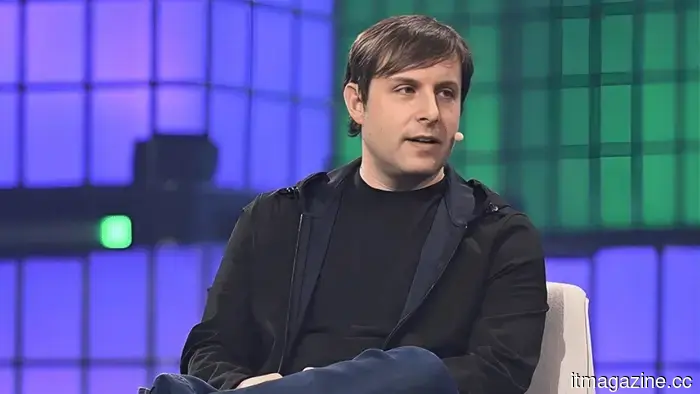
Science Corp is getting ready for the initial placement of a human brain sensor in collaboration with a neurosurgeon from Yale.
Science Corporation, a brain-computer interface company established by former Neuralink president Max Hodak, is set to place a pea-sized, 520-electrode sensor on the surface of a human brain during an already scheduled surgery. The program will be led by Murat Günel, chair of neurosurgery at Yale, with trials anticipated to commence in 2027. The company has also developed PRIMA, a retinal implant that has successfully restored vision in 38 patients, as documented in the New England Journal of Medicine, and expects to receive CE mark approval by mid-2026. Science Corp recently raised $230 million in a Series C funding round, achieving a valuation of $1.5 billion, along with a total funding amount of $490 million, and currently employs 150 people.
Science Corporation is preparing to implant its first sensor in a human skull. This device, a small chip containing 520 recording electrodes, will sit on top of the cortex and capture neural activity from the brain’s surface while a neurosurgeon conducts surgery for an unrelated issue. If successful, this first placement could occur in a patient undergoing surgery for a stroke.
Murat Günel, who chairs the Department of Neurosurgery at Yale School of Medicine and serves as neurosurgeon-in-chief for Yale New Haven Health, will perform the surgery. Science Corp appointed him as medical director for brain-computer interfaces at the end of March after two years of discussions with Hodak. His role involves developing the clinical and surgical framework for the company's biohybrid BCI project, beginning with the initial placement of the human sensor.
Günel’s strategy is intentionally opportunistic. Rather than seeking patients exclusively for a brain-computer interface trial, the plan is to find individuals who already need significant cranial surgery, such as stroke patients requiring a craniectomy to relieve pressure. With the skull opened and the brain exposed, adding a small sensor on the cortical surface poses very little additional risk or time. Günel aims to assess the safety of the device and its capability to record brain activity in these initial scenarios.
The biohybrid approach
What sets Science Corp’s technology apart in a field filled with electrode arrays is the development that follows the sensor installation. The company envisions a biohybrid neural interface: a device imbued with lab-grown neurons that have been genetically modified with light-sensitive proteins. Micro-LEDs on the chip will stimulate these neurons to fire, while adjacent recording electrodes will capture the resulting activity. The lab-grown neurons are designed to gradually integrate with the patient’s existing brain cells, creating a biological link between electronics and neural tissue.
The initial human sensor placement will not contain the biohybrid components. It is purely a recording device meant to demonstrate that the sensor can safely rest on the brain’s surface and gather meaningful data. However, the framework is designed to incorporate the biological layer later, which is what sets Science Corp apart from other companies in the BCI field. While Neuralink, Paradromics, and Synchron focus on refining electrode interactions with neurons, Science Corp intends to cultivate new neurons that can communicate with both biological and electronic signals naturally.
Science Corp states it does not plan to seek FDA approval for these initial sensor placements, claiming that the small device presents no significant risk to patients already undergoing major brain surgery. Instead, the company will engage with institutional review boards, which are ethical committees overseeing human research at academic medical centers. Günel is already in discussions with the relevant boards, although he describes the timeline for beginning trials in 2027 as “optimistic.”
From eyes to brains
The brain sensor marks Science Corp’s second area of focus. The company’s more established program is PRIMA, a retinal implant aimed at restoring vision in patients suffering from geographic atrophy due to age-related macular degeneration, a major cause of blindness. Results published in the New England Journal of Medicine in October 2025 indicated that 38 patients across 17 clinical sites in five countries experienced, on average, an improvement of 25.5 letters, which corresponds to more than five lines on a standard eye chart, after 12 months. Eighty-four percent of the patients were able to read letters, numbers, and words. An editorial in NEJM described PRIMA as “the first treatment to restore vision” for patients with advanced geographic atrophy.
The PRIMA implant is a 2mm-by-2mm photovoltaic chip, about 30 micrometers thick—half the width of a human hair—that is placed beneath the retina and powered wirelessly by specialized glasses projecting near-infrared light. It holds FDA breakthrough device designation, and Science Corp has applied for CE mark approval within the European Union, anticipating approval by mid-2026.
In March 2026, the company successfully raised $230 million in a Series C funding round, led by Lightspeed, with participation from Khosla Ventures, Y Combinator, Quiet Capital, and IQT, the
Other articles
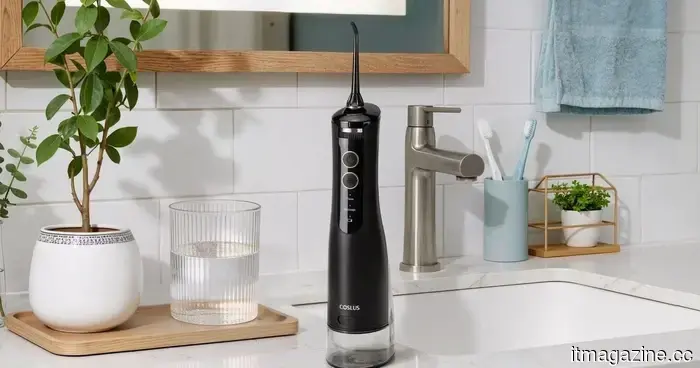 COSLUS E40 seeks to address the most significant issue associated with water flossers.
The realm of water flossing has been trapped in a pattern of "satisfactory" engineering for years. If you’ve ever tried one, you’re familiar with the routine: fill the tank, place the nozzle in your mouth, and prepare yourself. You press the power button and often have to select between a "Gentle" mode [...]
COSLUS E40 seeks to address the most significant issue associated with water flossers.
The realm of water flossing has been trapped in a pattern of "satisfactory" engineering for years. If you’ve ever tried one, you’re familiar with the routine: fill the tank, place the nozzle in your mouth, and prepare yourself. You press the power button and often have to select between a "Gentle" mode [...]
 Here are five of the top Mac utilities I discovered in 2026, and you should definitely check them out as well.
macOS is fantastic, but it does have its shortcomings. These five utilities address those issues, and I find their absence noticeable every time I use a Mac without them.
Here are five of the top Mac utilities I discovered in 2026, and you should definitely check them out as well.
macOS is fantastic, but it does have its shortcomings. These five utilities address those issues, and I find their absence noticeable every time I use a Mac without them.
 Here are the five top Mac utilities I discovered in 2026, and you should consider trying them as well.
macOS is wonderful, but it has its shortcomings. These five tools address those gaps, and I find myself missing them every time I use a Mac without them.
Here are the five top Mac utilities I discovered in 2026, and you should consider trying them as well.
macOS is wonderful, but it has its shortcomings. These five tools address those gaps, and I find myself missing them every time I use a Mac without them.
 Here are the five top Mac utilities I discovered in 2026, and you should definitely check them out as well.
macOS is fantastic, but it has its shortcomings. These five utilities address those gaps, and I find myself missing them every time I use a Mac without them.
Here are the five top Mac utilities I discovered in 2026, and you should definitely check them out as well.
macOS is fantastic, but it has its shortcomings. These five utilities address those gaps, and I find myself missing them every time I use a Mac without them.
 YouTube temporarily halts livestream advertisements during times of high engagement to maintain the atmosphere.
YouTube will automatically pause ads during livestreams when there is a surge in chat interactions and will offer Super Chat purchasers exclusive ad-free moments. Additionally, gifts are being introduced in six new markets.
YouTube temporarily halts livestream advertisements during times of high engagement to maintain the atmosphere.
YouTube will automatically pause ads during livestreams when there is a surge in chat interactions and will offer Super Chat purchasers exclusive ad-free moments. Additionally, gifts are being introduced in six new markets.
 AppDirect purchases PartnerStack in its sixth acquisition within a year.
AppDirect has purchased PartnerStack, based in Toronto, merging its marketplace infrastructure with 138,000 B2B partners in an effort to consolidate enterprise software distribution on a single platform.
AppDirect purchases PartnerStack in its sixth acquisition within a year.
AppDirect has purchased PartnerStack, based in Toronto, merging its marketplace infrastructure with 138,000 B2B partners in an effort to consolidate enterprise software distribution on a single platform.
Science Corp is getting ready for the initial placement of a human brain sensor in collaboration with a neurosurgeon from Yale.
The Science Corp, founded by former Neuralink president Max Hodak, plans to implant a 520-electrode sensor onto a human cortex during ongoing brain surgeries, under the direction of Yale's Murat Günel. Trials are anticipated to commence in 2027.