
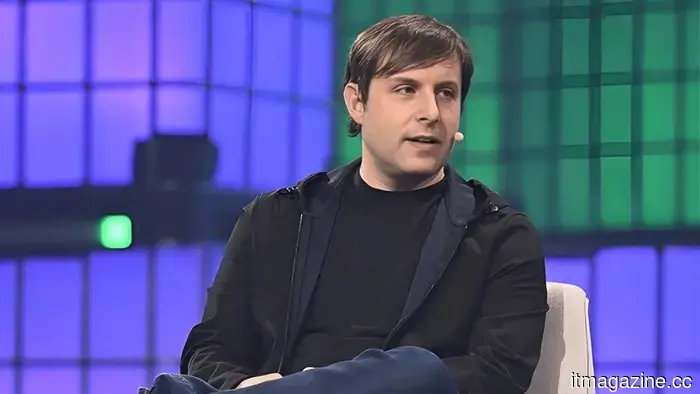
Science Corp is getting ready for the initial placement of a brain sensor in humans, collaborating with a neurosurgeon from Yale.
Science Corporation, the brain-computer interface firm established by former Neuralink president Max Hodak, is set to place a pea-sized sensor with 520 electrodes on the surface of a human brain during a pre-scheduled surgery. The program will be led by Murat Günel, chair of Yale's neurosurgery department, with trials anticipated to commence in 2027. The company also has PRIMA, a retinal implant that has restored vision for 38 patients (as reported in the NEJM), and is awaiting CE mark approval expected by mid-2026. Science Corp has raised $230 million in a Series C funding round, valuing the company at $1.5 billion, for a total funding of $490 million, and currently employs 150 staff members.
Science Corporation is gearing up to insert its first sensor into a human skull as part of its brain-computer interface initiative. The device is a small chip containing 520 recording electrodes that will rest atop the cortex instead of being embedded into brain tissue, unlike Neuralink's implant. It will capture neural activity during surgery for an unrelated issue. If all goes according to plan, the initial placement may occur in a patient undergoing surgery for a stroke.
Murat Günel, who will conduct the surgery, is the chair of the Neurosurgery Department at Yale School of Medicine and serves as the neurosurgeon-in-chief at Yale New Haven Health. He was appointed as Science Corp's medical director for brain-computer interfaces at the end of March after two years of discussions with Hodak. His role involves developing the clinical and surgical program for the company’s biohybrid BCI initiative, starting with the first human sensor placement.
Günel's strategy is intentionally opportunistic. Rather than specifically enrolling patients for a brain-computer interface trial, the plan is to target individuals who already need significant cranial surgery, such as stroke patients who require craniectomy to manage swelling. With the skull open and the brain exposed, adding a small sensor on the cortical surface introduces minimal additional risk and time. Günel aims to assess the device's safety and its capability to record neural activity in these initial cases.
What sets Science Corp apart in a competitive landscape of electrode arrays is what follows the sensor deployment. The company's overarching goal is to create a biohybrid neural interface: a device containing lab-grown neurons modified with light-sensitive proteins. Micro-LEDs on the chip will activate these neurons, while nearby recording electrodes will pick up the signals. The lab-grown neurons are intended to integrate naturally with the patient’s own brain cells over time, forming a biological connection between electronic and neural tissues.
The initial human placement will solely involve the recording device without the biohybrid components. It aims to demonstrate that the sensor can safely rest on the brain's surface and capture significant signals. However, the design accommodates later addition of the biological layer, which differentiates Science Corp from its competitors. While companies like Neuralink, Paradromics, and Synchron focus on enhancing electrode interactions with neurons, Science Corp aims to cultivate new neurons that can communicate fluently in both biological and electronic terms.
Science Corp has stated that it does not intend to seek FDA approval for the early sensor placements, arguing that the small device presents no substantial risk to patients undergoing major brain operations. The company will instead collaborate with institutional review boards overseeing human research at academic medical centers. Günel is already engaging with the relevant boards, though he describes the target of starting trials in 2027 as "optimistic."
The brain sensor is part of Science Corp's two-pronged approach. The company's more advanced program, PRIMA, is a retinal implant designed to restore vision for patients suffering from geographic atrophy due to age-related macular degeneration, a leading cause of blindness. Results published in the New England Journal of Medicine in October 2025 indicated that 38 patients across 17 clinical sites in five countries experienced an average improvement of 25.5 letters, more than five lines on a standard eye chart, after one year. Eighty-four percent of patients were able to read letters, numbers, and words. An editorial in NEJM referred to PRIMA as "the first treatment to restore vision" in patients with advanced geographic atrophy.
The PRIMA implant is a 2mm-by-2mm photovoltaic chip, approximately 30 micrometers thick—half the width of a human hair—situated beneath the retina and powered wirelessly by specialized glasses emitting near-infrared light. It has received FDA breakthrough device designation, and Science Corp has submitted its CE mark application to the European Union, expecting approval by mid-2026.
In March 2026, the company secured $230 million in a Series C funding round led by Lightspeed, with contributions from Khosla Ventures, Y Combinator, Quiet Capital, and IQT, the strategic investment arm of the intelligence community. This funding round valued Science Corp at $1.5 billion, increasing
Other articles
 AppDirect purchases PartnerStack in its sixth acquisition within a year.
AppDirect has purchased PartnerStack, based in Toronto, merging its marketplace infrastructure with 138,000 B2B partners in an effort to consolidate enterprise software distribution on a single platform.
AppDirect purchases PartnerStack in its sixth acquisition within a year.
AppDirect has purchased PartnerStack, based in Toronto, merging its marketplace infrastructure with 138,000 B2B partners in an effort to consolidate enterprise software distribution on a single platform.
 Here are the five top Mac utilities I discovered in 2026, and you should definitely check them out as well.
macOS is fantastic, but it has its shortcomings. These five utilities address those gaps, and I find myself missing them every time I use a Mac without them.
Here are the five top Mac utilities I discovered in 2026, and you should definitely check them out as well.
macOS is fantastic, but it has its shortcomings. These five utilities address those gaps, and I find myself missing them every time I use a Mac without them.
 Here are the five best Mac utilities I discovered in 2026, and you should consider trying them as well.
macOS is excellent, but it does have its shortcomings. These five utilities address those gaps, and I find myself missing them every time I use a Mac without them.
Here are the five best Mac utilities I discovered in 2026, and you should consider trying them as well.
macOS is excellent, but it does have its shortcomings. These five utilities address those gaps, and I find myself missing them every time I use a Mac without them.
 Sony is developing an animated film adaptation of Bloodborne.
Sony Pictures announced an animated film adaptation of Bloodborne at CinemaCon 2026, with JackSepticEye as a co-producer, ensuring that the movie will reflect the game's gruesome essence.
Sony is developing an animated film adaptation of Bloodborne.
Sony Pictures announced an animated film adaptation of Bloodborne at CinemaCon 2026, with JackSepticEye as a co-producer, ensuring that the movie will reflect the game's gruesome essence.
 Sony is developing an animated film based on Bloodborne.
Sony Pictures announced a Bloodborne animated film at CinemaCon 2026, with JackSepticEye attached as a co-producer, assuring that the movie will faithfully capture the game's gruesome essence.
Sony is developing an animated film based on Bloodborne.
Sony Pictures announced a Bloodborne animated film at CinemaCon 2026, with JackSepticEye attached as a co-producer, assuring that the movie will faithfully capture the game's gruesome essence.
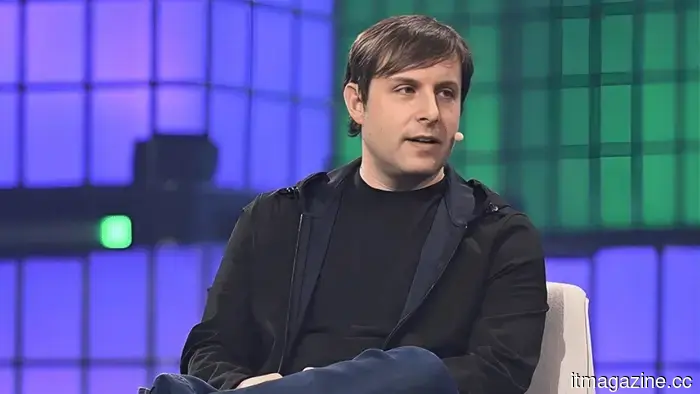 Science Corp is getting ready for the initial placement of a human brain sensor in collaboration with a neurosurgeon from Yale.
The Science Corp, founded by former Neuralink president Max Hodak, plans to implant a 520-electrode sensor onto a human cortex during ongoing brain surgeries, under the direction of Yale's Murat Günel. Trials are anticipated to commence in 2027.
Science Corp is getting ready for the initial placement of a human brain sensor in collaboration with a neurosurgeon from Yale.
The Science Corp, founded by former Neuralink president Max Hodak, plans to implant a 520-electrode sensor onto a human cortex during ongoing brain surgeries, under the direction of Yale's Murat Günel. Trials are anticipated to commence in 2027.
Science Corp is getting ready for the initial placement of a brain sensor in humans, collaborating with a neurosurgeon from Yale.
Science Corp, founded by former Neuralink president Max Hodak, plans to implant a 520-electrode sensor into a human cortex during ongoing brain surgery, overseen by Yale's Murat Günel. The trials are expected to commence in 2027.