
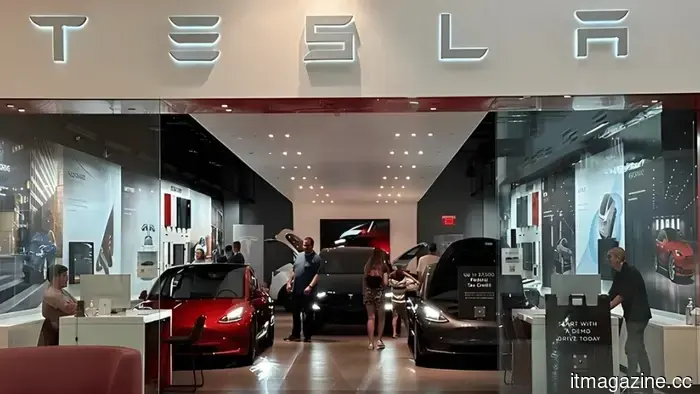
The Netherlands is the first country in Europe to give the green light to Tesla's FSD Supervised.
In summary: On April 10, 2026, the Dutch vehicle authority RDW authorized Tesla’s Full Self-Driving (Supervised) software, making the Netherlands the first European nation to approve this system under UN Regulation 171, the EU standard for driver control assistance systems. The approval is the result of 18 months of testing, involving 1.6 million kilometers of driving data from Europe and more than 400 compliance requirements, paving the way for potential approvals in Germany, France, and Italy within weeks, with a goal for EU-wide recognition by summer 2026.
Details on the Netherlands' approval and FSD Supervised operation
The RDW approved version 2026.3.6 of Tesla's Full Self-Driving (Supervised) software on April 10, 2026, under UN Regulation 171, which regulates Driver Control Assistance Systems, a Level 2 automation category. This approval allows drivers of compatible Tesla vehicles in the Netherlands to remove their hands from the steering wheel under suitable driving conditions, while remaining legally accountable for the vehicle and required to keep continuous awareness of the road. The system enforces this requirement through eye-tracking cameras that monitor driver attention, prompting a combination of visual, audio, and haptic alerts if the driver becomes distracted. If the driver fails to respond to these alerts, the FSD Supervised system will deactivate and return control of the steering to the driver; should there still be no response, the system is programmed to bring the vehicle to a controlled stop. Before activating FSD Supervised for the first time, drivers must complete a mandatory tutorial and quiz. The RDW emphasized: “A vehicle with FSD Supervised is not self-driving. It is a driver assistance system, and the driver remains responsible and must always maintain control.”
The RDW characterized the approval process as one of the most comprehensive it has undertaken for a driver assistance system. Over 18 months, Tesla submitted 1.6 million kilometers of EU road test data, conducted 4,500 closed-track tests, and performed 13,000 ride-along evaluations, meeting over 400 individual regulatory requirements. The RDW’s approval is provisionally valid for at least 36 months. Elon Musk noted on X that “RDW was extremely rigorous in their review,” and Tesla’s official account announced: “FSD Supervised has been approved in the Netherlands and will start rolling out shortly. No other vehicle can do this. We’re excited to bring FSD Supervised to more European countries soon.”
The regulatory pathway from Amsterdam to other parts of Europe
The approval in the Netherlands does not automatically extend FSD Supervised to other EU member states, but it establishes a compliance record under a shared EU regulation that other national vehicle authorities can reference. Each member state's approval body can independently recognize the RDW's decision without requiring a vote from the European Commission; Tesla anticipates that Germany, France, and Italy will grant national recognitions within four to eight weeks of the Netherlands’ approval based on this. For full EU-wide recognition, which would apply the approval simultaneously across all member states, a formal Commission vote is required and is expected to take two to four months. Tesla aims for EU-wide availability by summer 2026.
The significance of the European timeline extends beyond Tesla’s market position. In March 2026, Uber, Wayve, and Nissan launched a robotaxi pilot in Tokyo, demonstrating how rapidly commercial autonomous vehicle services are expanding in markets with existing regulatory frameworks. Europe has been slower to establish such frameworks, and the RDW's process, being the first application of UN R-171 to a major consumer driver assistance system in the EU, creates a procedural precedent that other manufacturers and national regulators may follow. In the Netherlands, FSD Supervised is priced at €99 per month for standard subscribers, with a discounted rate of €49 per month for owners of Enhanced Autopilot, and a purchase option at €7,500.
Reasons for Tesla's need for this approval
Tesla’s European operations entered 2026 facing significant pressure. Sales in Europe dropped by 27.8% in 2025, a decline attributed to heightened competition in the mid-market electric vehicle sector, the political visibility of Elon Musk, and a model lineup that had not been significantly updated in key categories. BYD began to outsell Tesla in several European markets in early 2026, further intensifying competitive dynamics already present in China. Tesla did manage to reclaim the title of the top EV seller in Q1 2026, delivering 358,023 vehicles to BYD’s 310,389, but this resurgence occurred alongside reports of over 50,000 vehicles in inventory, indicating that the recovery might have been supported more by pricing strategies and inventory management than by genuine demand growth.
FSD Supervised represents the most crucial software product in Tesla's long-term commercial narrative: that Tesla vehicles increase in capability over time via software updates,
Other articles
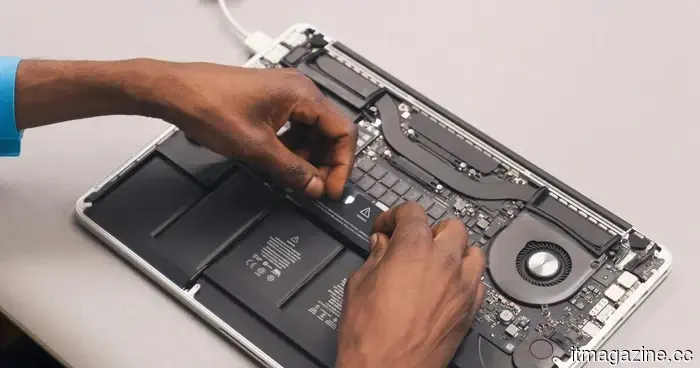 I'm impressed by what Framework is offering, but it needs to fulfill its promises.
Framework hints at an upcoming hardware event centered on open computing and user autonomy.
I'm impressed by what Framework is offering, but it needs to fulfill its promises.
Framework hints at an upcoming hardware event centered on open computing and user autonomy.
 Microsoft Teams is set to address an incredibly frustrating daily issue in meetings.
Microsoft is introducing a pre-join microphone test for Teams, along with the launch of privacy-focused Copilot recaps. This update will provide regular users with a more seamless beginning to their calls and offer businesses enhanced oversight over AI-generated meeting summaries.
Microsoft Teams is set to address an incredibly frustrating daily issue in meetings.
Microsoft is introducing a pre-join microphone test for Teams, along with the launch of privacy-focused Copilot recaps. This update will provide regular users with a more seamless beginning to their calls and offer businesses enhanced oversight over AI-generated meeting summaries.
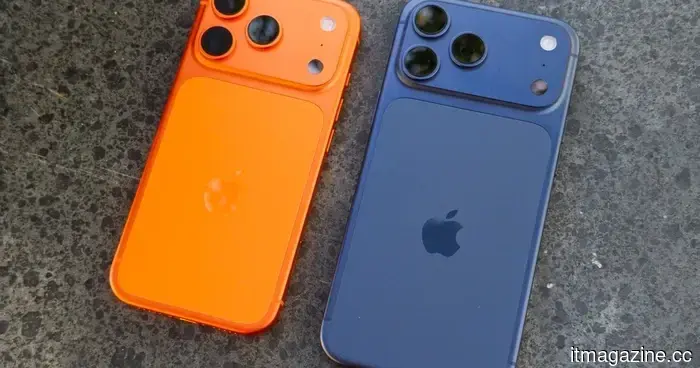 iPhone 18 series: All the information available to date
For the first time, Apple might unveil its iPhone 18 series through two distinct events, altering the entire approach to planning your next upgrade.
iPhone 18 series: All the information available to date
For the first time, Apple might unveil its iPhone 18 series through two distinct events, altering the entire approach to planning your next upgrade.
 The smart home was intended to be accessible, but it is turning into a toll gate.
The smart home was intended to offer effortless convenience. Instead, it is increasingly providing a refined system of control, where displays, speakers, and control panels dictate what information is accessible, what features are utilized, and which devices continue to require payment even after the initial hardware cost is settled.
The smart home was intended to be accessible, but it is turning into a toll gate.
The smart home was intended to offer effortless convenience. Instead, it is increasingly providing a refined system of control, where displays, speakers, and control panels dictate what information is accessible, what features are utilized, and which devices continue to require payment even after the initial hardware cost is settled.
 You Inquired: Sony's major decision has left fans concerned, along with anti-glare performance in a dimly lit room.
Sony's recent collaboration with TCL has raised concerns among viewers regarding quality, pricing, and privacy. We analyze the upcoming changes, discuss the potential release of a new QD-OLED this year, and evaluate the performance of anti-glare screens in a dimly lit environment.
You Inquired: Sony's major decision has left fans concerned, along with anti-glare performance in a dimly lit room.
Sony's recent collaboration with TCL has raised concerns among viewers regarding quality, pricing, and privacy. We analyze the upcoming changes, discuss the potential release of a new QD-OLED this year, and evaluate the performance of anti-glare screens in a dimly lit environment.
 You Inquired: Sony's significant decision has raised concerns among fans, in addition to anti-glare in dim lighting.
Sony's recent collaboration with TCL has raised concerns among viewers regarding the implications for quality, pricing, and privacy. We analyze the actual changes taking place, whether a new QD-OLED model is expected this year, and evaluate anti-glare screens in a dark environment.
You Inquired: Sony's significant decision has raised concerns among fans, in addition to anti-glare in dim lighting.
Sony's recent collaboration with TCL has raised concerns among viewers regarding the implications for quality, pricing, and privacy. We analyze the actual changes taking place, whether a new QD-OLED model is expected this year, and evaluate anti-glare screens in a dark environment.
The Netherlands is the first country in Europe to give the green light to Tesla's FSD Supervised.
On April 10, 2026, RDW granted approval for Tesla's Full Self-Driving Supervised, paving the way for access to Germany, France, Italy, and broader EU approval by the summer of 2026.