

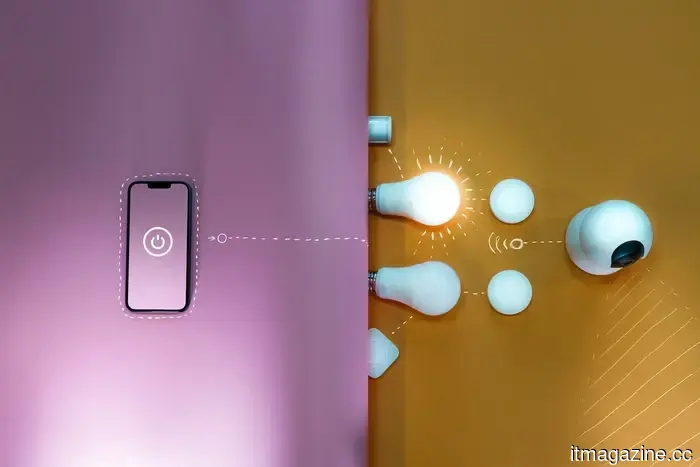
The smart home was intended to be accessible, but it is turning into a toll gate.
I was raised with the belief that purchasing a product meant acquiring its complete functionality. A laptop came with its built-in features, a car included its hardware, and even though printers could be quite troublesome, they were at least a one-time issue.
The change became evident when my subscriptions transitioned from being primarily media-focused to encompassing physical products. Paying monthly for movies, music, or cloud storage felt one way, but witnessing that same pattern extend to gadgets, cars, fitness equipment, and smart home devices—which already had a set price—felt different.
Then, there were instances like the smart bed that lost parts of its functionality during an AWS outage. At that point, the entire model shifted from seeming innovative to feeling absurd. Increasingly, products arrived with an asterisk: buy the hardware, then pay again for features, remote access, cloud backups, AI tools, or premium controls that made them feel complete.
The AWS outage has affected some users since last night, disrupting their sleep. We apologize for this experience and are taking two significant steps: 1) We are restoring the features as AWS comes back online. All devices are currently…— Matteo Franceschetti (@m_franceschetti) October 20, 2025
This is what ownership looks like today.
The smart home was meant to blend into the background, but it’s starting to resemble an outdated media business, albeit with improved hardware and sleeker branding. The wall-mounted screen, the counter speaker, and the dashboard connecting everything are no longer just hardware; they determine what appears first, what seems effortless, and what fades from view.
Jakub Zerdzicki / Unsplash
Once a screen is foregrounded, it ceases to be a neutral space. According to Parks Associates, 61% of U.S. internet households use a smart TV as their main streaming device. Roku announced in January 2025 that it had surpassed 90 million streaming households and was present in nearly half of all U.S. broadband homes. Google revealed in late 2024 that Google TV and Android TV together had 270 million monthly active devices.
The interface is now the gatekeeper.
The real battle in the smart home landscape is no longer about the physical gadgets on shelves; it’s about the software layer that dictates visibility, recommendations, and which services are allowed to feel integral. This is also where much of the ongoing monetization occurs. The hardware can be sold once, but access, visibility, and premium features can be monetized repeatedly.
European broadcasters clearly highlighted this in March, urging regulators to view smart TV platforms and virtual assistants from Google, Amazon, Apple, and Samsung as potential gatekeepers under the EU's strictest tech regulations. Their concern wasn’t merely about shiny hardware; it was centered around access, discovery, and whether users could navigate between services without being drawn back into a single company's ecosystem.
Jakub Zerdzicki / Unsplash
Cable didn’t succeed because of magical boxes; it won by controlling the entry point.
Convenience plays a significant role here.
The smart home continues to market itself with the same old promise: reduced friction, minimized clutter, and less effort. Simply say a word, tap a screen, and let the system handle the rest. That sounds appealing until convenience begins to resemble soft coercion. The most convenient option often aligns with the platform owner’s services, defaults, recommendations, or paid features.
That’s the catch. A system doesn’t have to lock every door to limit choices; it merely needs to make one path feel effortless while the alternatives seem slightly bothersome. It can maintain a basic version while subtly nudging consumers towards the subscription, add-on, or enhanced integration. Over time, individuals may stop actively choosing and simply drift along. What initially appears neutral can quickly shift to anything but.
Soon, there will be soft fees.
Cable perfected a simple model: control the central box, package convenience as a service, and subtly guide what viewers discover, pay for, and engage with. The smart home is reviving this logic with neater hardware and improved designs. The box has transformed into a TV operating system, a voice assistant, or a home dashboard, and the middleman has just learned to smile.
Jonas Leupe / Unsplash
I can understand the need to pay for software, cloud storage, or services that involve real ongoing costs. However, I’m less inclined to accept the notion that hardware I’ve already purchased should continuously ask for permission, upgrades, and recurring payments. The smart home was marketed as seamless; increasingly, it feels like a very courteous method of charging twice.
When all major players move in unison, convenience can act like blinders on a horse. It keeps my focus ahead, locked on simplicity and speed, while the creeping subscriptions, reduced agency, and constant extraction of my data and attention slip out of sight. Regulators can decide later how much of this should be permissible. In the meantime, I


Other articles
 Apple's foldable iPhone may avoid a postponement, after all.
A launch that Apple would prefer not to overlook.
Apple's foldable iPhone may avoid a postponement, after all.
A launch that Apple would prefer not to overlook.
 OpenAI's newly launched $100 ChatGPT Pro plan aims to compete with Claude Max by offering five times more access to Codex.
On April 9, 2026, OpenAI introduced a $100/month ChatGPT Pro tier, aligning its pricing with Claude Max, offering five times more Codex than the Plus version and a tenfold launch promotion running until May.
OpenAI's newly launched $100 ChatGPT Pro plan aims to compete with Claude Max by offering five times more access to Codex.
On April 9, 2026, OpenAI introduced a $100/month ChatGPT Pro tier, aligning its pricing with Claude Max, offering five times more Codex than the Plus version and a tenfold launch promotion running until May.
 Dune 3 is arriving earlier than the director initially intended.
Director Denis Villeneuve mentions that he plans to create Dune 3 much earlier than he initially expected.
Dune 3 is arriving earlier than the director initially intended.
Director Denis Villeneuve mentions that he plans to create Dune 3 much earlier than he initially expected.
 Apple's AI glasses will explore a variety of designs and colors.
It's all about appearances.
Apple's AI glasses will explore a variety of designs and colors.
It's all about appearances.
 I'm impressed by what Framework is offering, but it needs to fulfill its promises.
Framework hints at an upcoming hardware event centered on open computing and user autonomy.
I'm impressed by what Framework is offering, but it needs to fulfill its promises.
Framework hints at an upcoming hardware event centered on open computing and user autonomy.
 Mac mini and Mac Studio are currently out of stock – is this due to the RAM shortage or an upcoming M5 update?
The high-RAM configurations of the Mac mini and Mac Studio were removed from Apple's store on April 11, 2026. Could this be due to the worldwide DRAM shortage or a forthcoming refresh of the M5?
Mac mini and Mac Studio are currently out of stock – is this due to the RAM shortage or an upcoming M5 update?
The high-RAM configurations of the Mac mini and Mac Studio were removed from Apple's store on April 11, 2026. Could this be due to the worldwide DRAM shortage or a forthcoming refresh of the M5?
The smart home was intended to be accessible, but it is turning into a toll gate.
The smart home was intended to offer effortless convenience. Instead, it is increasingly providing a refined system of control, where displays, speakers, and control panels dictate what information is accessible, what features are utilized, and which devices continue to require payment even after the initial hardware cost is settled.