
You Inquired: Sony's major decision has left fans concerned, along with anti-glare performance in a dimly lit room.
In today's episode of You Asked: Sony's new Bravia collaboration with TCL brings forth significant queries regarding pricing, quality, and data privacy. We explore the implications, the likelihood of a new QD-OLED model being released this year, and how anti-glare screens hold up in low-light conditions.
Regarding Sony and the new Bravia Inc
Sony Bravia 8 Digital Trends
@charltonium4083 raises a point that's not touched upon in the video or comments: Which country will primarily govern the new Bravia Inc? Will it be China (TCL) or Japan (Sony)? Back in 2020, Homeland Security uncovered potential ties between TCL and the CCP, indicating that their TVs might contain backdoors that could compromise customer data for governmental surveillance. This issue has also been associated with other companies like TikTok and DJI, which has faced threats of a US ban. If TCL holds 51% of the new Bravia Inc, especially in manufacturing and business operations, does that imply they secure all customer data, thus enabling the CCP to monitor users via the new Bravia TVs? I'd feel a lot better if Sony were managing the customer data under Japan’s jurisdiction.
That’s quite a loaded question, to say the least, with some underlying bias. But let’s unpack it.
Firstly, Bravia Inc will be based in Tokyo, Japan, at Sony’s headquarters, which is where the company will operate. Manufacturing is expected to occur where TCL has larger facilities, such as in China, Mexico, and Vietnam. Their significant advantage lies in their extensive production capabilities that ensure high efficiency and reduced costs.
Regarding your concerns about surveillance, you might be surprised to learn that just last month, in March 2026, a Texas judge dismissed a lawsuit by the Texas Attorney General accusing TCL of tracking users without consent and selling that data to advertisers. So while internet privacy is still a valid concern, TCL and Sony may not be major issues in that regard. Personally, I’m more worried about companies like Meta, Google, Amazon, and countless mobile apps that have more access than a smart TV.
Regardless, always practice safe internet habits. Be sure to read user agreements when signing up, understand where your data goes, who it can be sold to, and explore ways to limit tracking using VPNs, ad blockers, and other resources.
Manufacturing and pricing strategy
Sony A95L Zeke Jones / Digital Trends
@theGovnr1 observes: It seems the new products will retain Sony's technology and design but be produced by TCL.
I share your perspective. I believe the aim is to make manufacturing more cost-efficient. There are several excellent Bravia-branded TVs currently available, and many will attest to their exceptional picture quality. However, they tend to lag behind competitors like Samsung, LG, TCL, and Hisense in terms of overall sales, likely due to pricing. If collaborating with TCL lowers manufacturing costs while keeping the image processing that defines Sony, that’s a win in my opinion.
Time will tell. Until we have a TCL-manufactured Bravia TV to evaluate, there isn't much anyone can do to sway opinions. Based on the comments, many of you appear to believe this collaboration is detrimental and that the Bravia brand is suffering. I hope you’re mistaken, as this could allow us to access Sony-quality TVs at lower prices.
Sony OLED lineup outlook
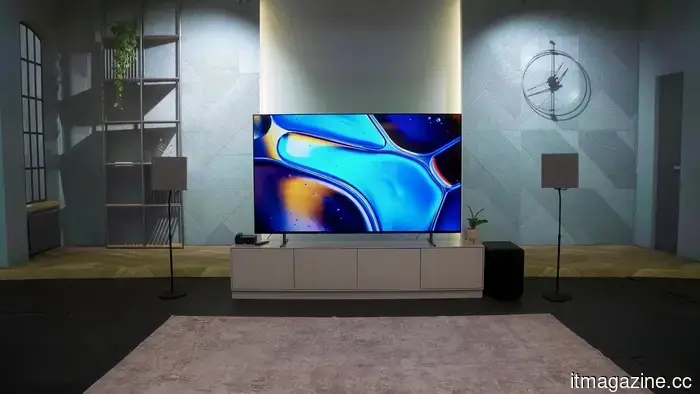
Bravia 9 and Bravia 8 Mk II Digital Trends
@1.doubleyou inquires: Will a new QD-OLED TV from Sony be released this year?
I’m leaning towards no, for a couple of reasons. Firstly, they are dedicating substantial resources and marketing efforts to the launch of their True RGB Mini LED TV. Secondly, they have been updating their major TV models on alternating years.
In 2023, we saw the A95L QD-OLED. In 2024, the Bravia 9 debuted as their flagship Mini LED TV. In 2025, the Bravia 8 Mark II will succeed the A95L in the QD-OLED line. This year, likely soon, we will get additional information about the True RGB TV, which will take over the flagship Mini LED position from the Bravia 9.
Additionally, the merger with TCL may prompt some changes in the manufacturing processes of Sony's OLEDs before a new model is introduced.
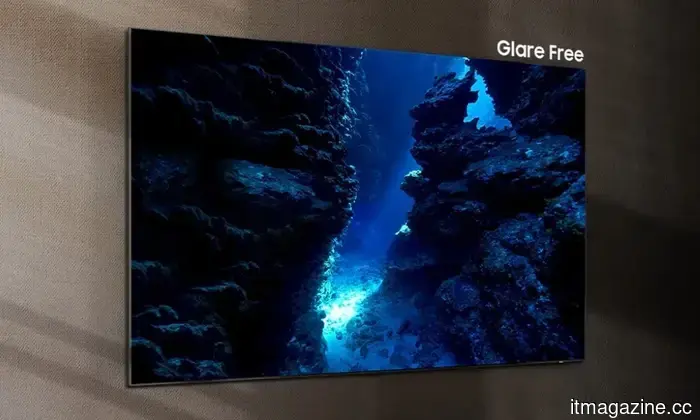
Do anti-glare TVs perform poorly in dark settings?
Samsung
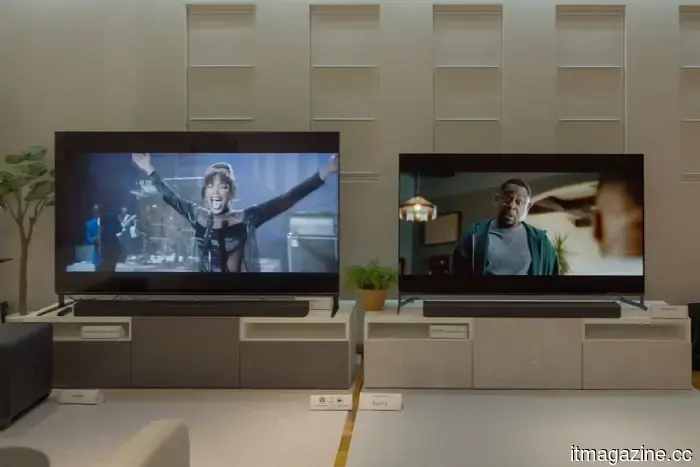
@CoolVibe-w5f brings up a question about Samsung’s anti-glare screens: How do the blacks appear in a dark room compared to a glossy screen? From what I’ve seen, the blacks aren’t quite 100 percent, especially when compared to a glossy screen.
A wise person once said: You can’t trust everything you read on the internet. From what I've observed, there is very little to no observable difference in a dark room. If the only light in the room
Otros artículos
 Dune 3 is arriving earlier than the director initially intended.
Director Denis Villeneuve mentions that he plans to create Dune 3 much earlier than he initially expected.
Dune 3 is arriving earlier than the director initially intended.
Director Denis Villeneuve mentions that he plans to create Dune 3 much earlier than he initially expected.
 Apple's AI glasses will explore a variety of designs and colors.
It's all about appearances.
Apple's AI glasses will explore a variety of designs and colors.
It's all about appearances.
 iPhone 18 series: All the details we have at this point.
For the first time, Apple might hold two distinct events to launch its iPhone 18 series, altering your approach to planning your next upgrade.
iPhone 18 series: All the details we have at this point.
For the first time, Apple might hold two distinct events to launch its iPhone 18 series, altering your approach to planning your next upgrade.
 The smart home was intended to be accessible, but it is turning into a toll gate.
The smart home was intended to offer effortless convenience. Instead, it is increasingly providing a refined system of control, where displays, speakers, and control panels dictate what information is accessible, what features are utilized, and which devices continue to require payment even after the initial hardware cost is settled.
The smart home was intended to be accessible, but it is turning into a toll gate.
The smart home was intended to offer effortless convenience. Instead, it is increasingly providing a refined system of control, where displays, speakers, and control panels dictate what information is accessible, what features are utilized, and which devices continue to require payment even after the initial hardware cost is settled.
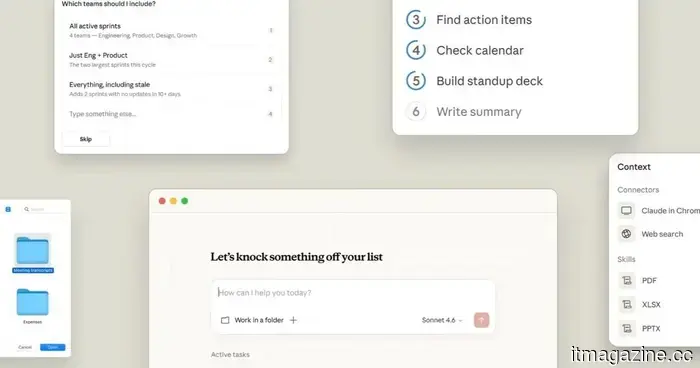 Claude Cowork is evolving into a shared workspace infrastructure.
Anthropic is advancing Claude Cowork beyond its preview stage by introducing enterprise controls, analytics, and connector governance, indicating its intention for the product to be utilized across various departments such as operations, finance, marketing, and legal, rather than being confined to technical teams.
Claude Cowork is evolving into a shared workspace infrastructure.
Anthropic is advancing Claude Cowork beyond its preview stage by introducing enterprise controls, analytics, and connector governance, indicating its intention for the product to be utilized across various departments such as operations, finance, marketing, and legal, rather than being confined to technical teams.
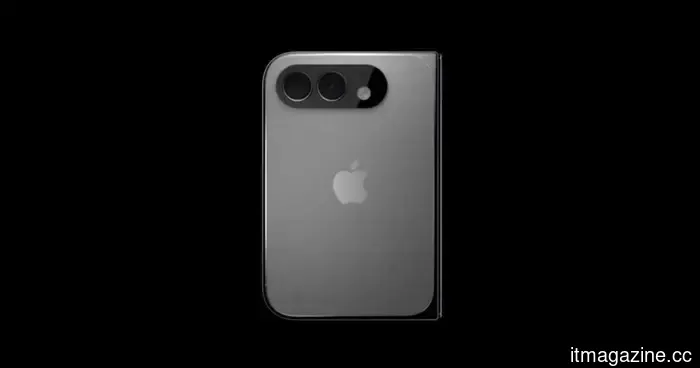 It seems that Apple’s foldable iPhone may not face a delay after all.
A launch that Apple would prefer to avoid overlooking.
It seems that Apple’s foldable iPhone may not face a delay after all.
A launch that Apple would prefer to avoid overlooking.
You Inquired: Sony's major decision has left fans concerned, along with anti-glare performance in a dimly lit room.
Sony's recent collaboration with TCL has raised concerns among viewers regarding quality, pricing, and privacy. We analyze the upcoming changes, discuss the potential release of a new QD-OLED this year, and evaluate the performance of anti-glare screens in a dimly lit environment.