
You Inquired: Sony's significant decision has raised concerns among fans, in addition to anti-glare in dim lighting.
In today’s episode of You Asked, we examine Sony’s new partnership with TCL in Bravia Inc, which brings up significant issues regarding pricing, quality, and data privacy. We discuss its implications, the potential arrival of a new QD-OLED this year, and the actual performance of anti-glare screens in dark environments.
**Sony and the New Bravia Inc**
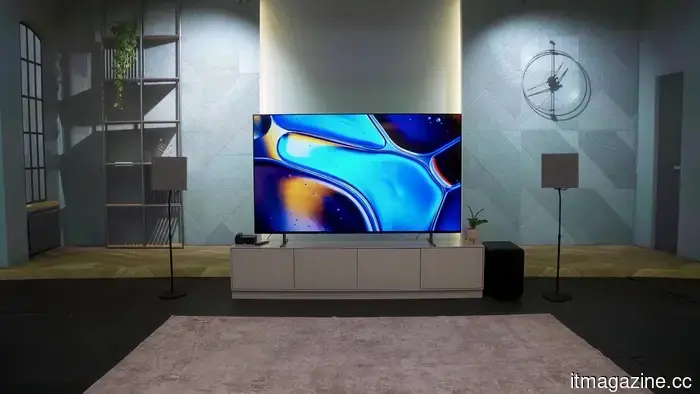
**Sony Bravia 8 Digital Trends**
@charltonium4083 raises an important point that hasn't been addressed in the video or comments: Which country will have the primary authority over the new Bravia inc? Will it be China (TCL) or Japan (Sony)? Back in 2020, the Department of Homeland Security found that TCL might be directly linked to the Chinese Communist Party, indicating that their TVs could potentially have backdoors allowing government access to user data (thus allowing surveillance of customers). Similar concerns have been noted with other companies like TikTok and DJI, although these issues have received more public scrutiny, leading the USA to threaten a ban on all DJI products. If TCL owns 51% of the new Bravia inc, particularly in manufacturing and business operations, does this imply they control customer data, increasing the CCP's capability to monitor users through the new Bravia TVs in the future? I would be significantly less worried if Sony managed customer data under Japan’s jurisdiction.
That’s quite a loaded question with some inherent bias, to put it mildly. But let’s unpack it.
Bravia Inc will be established in Tokyo, Japan, at Sony’s headquarters, which will be the headquarters for the business. Manufacturing is expected to occur in locations where TCL has larger facilities, such as China, Mexico, and Vietnam. Their significant advantage lies in having large-scale production capabilities that enhance efficiency and reduce costs.
Regarding your privacy concerns, you might find it interesting that a Texas judge dismissed a lawsuit in March 2026 filed by the Texas Attorney General against TCL for allegedly tracking user behavior without consent and selling that information to advertisers. So, while internet privacy continues to be a pressing issue, TCL and Sony likely shouldn’t be your main focus. Personally, I am more apprehensive about companies like Meta, Google, Amazon, and the multitude of phone apps that have broader access than a smart TV.
Regardless, it’s vital to practice safe internet habits. Read user agreements during registration, be aware of where your data goes, who it may be sold to, and learn how to minimize what can track you using tools like VPNs and ad blockers.
**Manufacturing and Pricing Strategy**
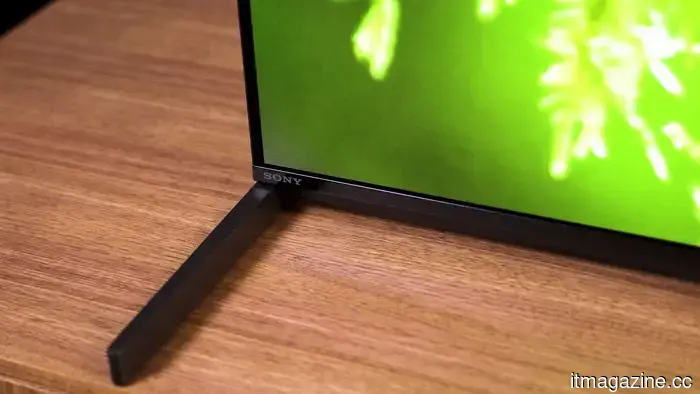
**Sony A95L Zeke Jones / Digital Trends**
@theGovnr1 observes: It looks to me like the new products will incorporate Sony technology and design but will be manufactured by TCL.
I share that perspective as well. The aim seems to be to reduce manufacturing costs. There are already several remarkable Bravia-branded TVs available, and most people would agree their picture quality is top-notch. However, if I’m correct, they lag behind companies like Samsung, LG, TCL, and Hisense in total sales, likely due to pricing. Hence, if TCL can manage manufacturing to lower costs while preserving the image processing technology that distinguishes Sony, that’s an advantage.
Only time will tell, and until we get our hands on a TCL-manufactured Bravia TV to evaluate, there’s little anyone can do to influence opinions. Based on feedback, many of you seem to believe this partnership won’t yield positive outcomes and that the Bravia brand may be in jeopardy. I hope you’re mistaken, as then we could all access Sony-quality TVs at a lower price point.
**Sony OLED Lineup Forecast**
**Bravia 9 and Bravia 8 Mk II Digital Trends**
@1.doubleyou queries: Will there be a new QD-OLED TV from Sony this year?
I’m inclined to say no, and for a couple of reasons. Firstly, they are investing a substantial amount of resources and marketing into launching their True RGB Mini LED TV. Secondly, they have been rolling out their major TV updates on an alternate year basis.
In 2023, we had the A95L QD-OLED. In 2024, the Bravia 9 debuted as their flagship Mini LED TV. Following that, in 2025, we anticipate the Bravia 8 Mark II to succeed the A95L in the QD-OLED category. This year, likely soon, we will get more information about the True RGB TV that will assume the flagship Mini LED position from the Bravia 9.
Additionally, with the TCL merger, some adjustments might be necessary in the manufacturing process of Sony's OLEDs before we see a new release.
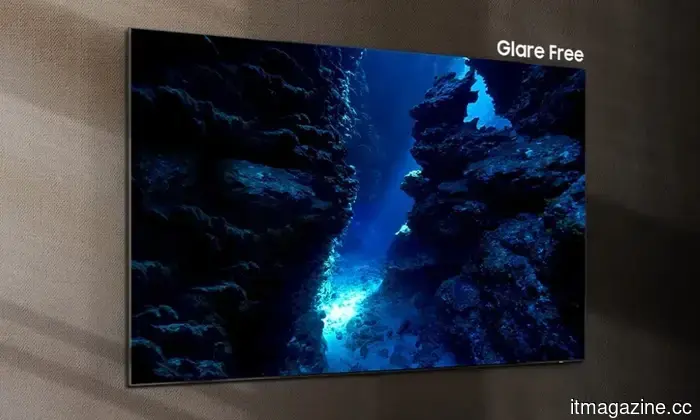
**Do Anti-Glare TVs Underperform in Dark Rooms?**
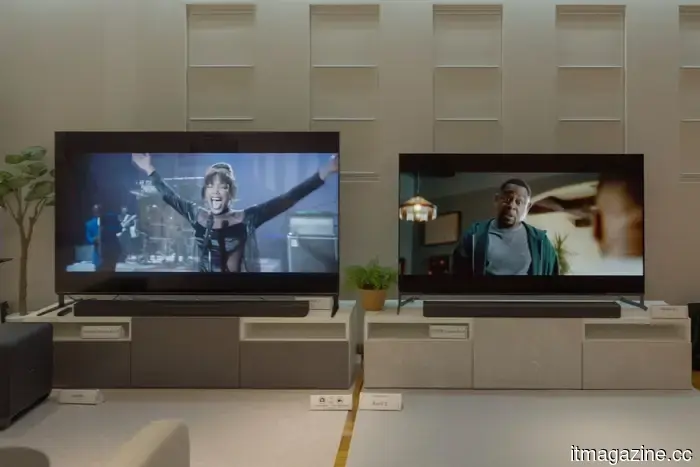
**Samsung**
@CoolVibe-w5f poses a question regarding Samsung's anti-glare screens: How do blacks appear in a dark room in comparison to
Other articles
 Dune 3 is arriving earlier than the director initially intended.
Director Denis Villeneuve mentions that he plans to create Dune 3 much earlier than he initially expected.
Dune 3 is arriving earlier than the director initially intended.
Director Denis Villeneuve mentions that he plans to create Dune 3 much earlier than he initially expected.
 OpenAI's new $100 ChatGPT Pro plan aims to compete with Claude Max by providing five times more access to Codex.
On April 9, 2026, OpenAI introduced a ChatGPT Pro subscription at $100 per month, aligning its price with Claude Max. The Pro tier offers five times more Codex compared to the Plus version and includes a promotion that provides ten times the usual features until the end of May.
OpenAI's new $100 ChatGPT Pro plan aims to compete with Claude Max by providing five times more access to Codex.
On April 9, 2026, OpenAI introduced a ChatGPT Pro subscription at $100 per month, aligning its price with Claude Max. The Pro tier offers five times more Codex compared to the Plus version and includes a promotion that provides ten times the usual features until the end of May.
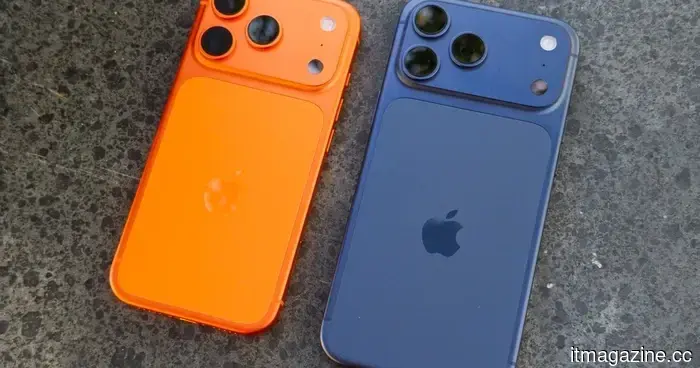 iPhone 18 series: All the information available to date
For the first time, Apple might unveil its iPhone 18 series through two distinct events, altering the entire approach to planning your next upgrade.
iPhone 18 series: All the information available to date
For the first time, Apple might unveil its iPhone 18 series through two distinct events, altering the entire approach to planning your next upgrade.
 OpenAI's newly launched $100 ChatGPT Pro plan aims to compete with Claude Max by offering five times more access to Codex.
On April 9, 2026, OpenAI introduced a $100/month ChatGPT Pro tier, aligning its pricing with Claude Max, offering five times more Codex than the Plus version and a tenfold launch promotion running until May.
OpenAI's newly launched $100 ChatGPT Pro plan aims to compete with Claude Max by offering five times more access to Codex.
On April 9, 2026, OpenAI introduced a $100/month ChatGPT Pro tier, aligning its pricing with Claude Max, offering five times more Codex than the Plus version and a tenfold launch promotion running until May.
 iPhone 18 series: All the details we have at this point.
For the first time, Apple might hold two distinct events to launch its iPhone 18 series, altering your approach to planning your next upgrade.
iPhone 18 series: All the details we have at this point.
For the first time, Apple might hold two distinct events to launch its iPhone 18 series, altering your approach to planning your next upgrade.
 I appreciate what Framework is offering, but it needs to follow through.
Framework hints at an upcoming hardware event concentrating on open computing and user empowerment.
I appreciate what Framework is offering, but it needs to follow through.
Framework hints at an upcoming hardware event concentrating on open computing and user empowerment.
You Inquired: Sony's significant decision has raised concerns among fans, in addition to anti-glare in dim lighting.
Sony's recent collaboration with TCL has raised concerns among viewers regarding the implications for quality, pricing, and privacy. We analyze the actual changes taking place, whether a new QD-OLED model is expected this year, and evaluate anti-glare screens in a dark environment.