
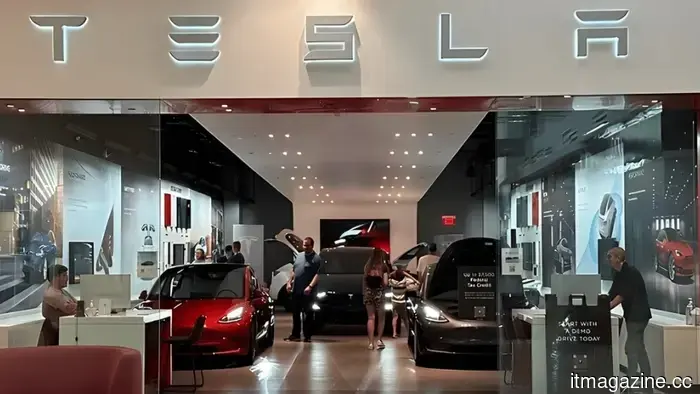
The Netherlands is the first European nation to sanction Tesla’s FSD Supervised.
In summary: On April 10, 2026, the Dutch vehicle authority RDW approved Tesla's Full Self-Driving (Supervised) software, making the Netherlands the first European nation to authorize the system in accordance with UN Regulation 171, which sets the EU standards for driver control assistance systems. This approval follows a rigorously conducted 18-month testing phase, involving 1.6 million kilometers of European road data and over 400 individual compliance requirements. It paves the way for potential approvals in Germany, France, and Italy in the upcoming weeks, with full EU recognition aimed for summer 2026.
Details on the approval and functioning of FSD Supervised
The RDW approved version 2026.3.6 of Tesla's Full Self-Driving (Supervised) software on April 10, 2026, under UN Regulation 171, which oversees Driver Control Assistance Systems, a Level 2 vehicle automation category. The approval permits drivers of compatible Tesla vehicles in the Netherlands to remove their hands from the steering wheel under suitable driving conditions, while they remain legally accountable for the vehicle and must maintain continual awareness of the surroundings. The system enforces this requirement through eye-tracking cameras that monitor driver attentiveness, activating a series of visual, audio, and haptic alerts if the driver looks away or becomes distracted. Should the driver fail to respond to these alerts, FSD Supervised will deactivate, returning steering control to the driver; if there is still no response, the system is designed to safely halt the vehicle. Before initiating FSD Supervised for the first time, drivers are required to complete a mandatory tutorial and quiz. The RDW emphasized that “a vehicle with FSD Supervised is not self-driving. It serves as a driver assistance system, with the driver remaining responsible and in control at all times.”
The approval came after what RDW characterizes as one of the most extensive evaluations for a driver assistance system. Over 18 months, Tesla provided 1.6 million kilometers of EU road test data, completed 4,500 closed-track assessments, and conducted 13,000 ride-along evaluations, fulfilling more than 400 regulatory compliance criteria. The RDW's approval has a provisional validity period of at least 36 months. Elon Musk stated on X that “RDW was extremely rigorous in their review,” while Tesla’s official account announced, “FSD Supervised has been approved in the Netherlands and will soon begin rolling out in the country. No other vehicle has this capability. We are excited to introduce FSD Supervised to more European nations shortly.”
The regulatory implications for Europe
The approval in the Netherlands does not automatically allow FSD Supervised to be used in other EU member states, but it establishes a compliance record under a common EU regulation that other national vehicle authorities can reference. Each member state can individually choose to acknowledge the RDW decision without needing a European Commission vote; Tesla anticipates that Germany, France, and Italy will grant national recognitions within four to eight weeks based on this approval. Complete EU-wide application, which would permit simultaneous approval across all member states, requires a formal Commission vote, expected to take two to four months. Tesla has indicated that it aims for EU-wide availability by summer 2026.
The competitive implications of this European timeline extend beyond Tesla's market positioning. In March 2026, Uber, Wayve, and Nissan launched a robotaxi pilot in Tokyo, showcasing the rapid growth of commercial autonomous vehicle services in regions with established regulatory frameworks. Europe has been slower to develop such frameworks, and the RDW process—being the first substantial application of UN R-171 for a consumer driver assistance system in the EU—sets a procedural example for other manufacturers and national regulators. The pricing for FSD Supervised in the Netherlands is established at €99 per month for standard subscribers, €49 per month for owners who previously purchased Enhanced Autopilot, and an outright purchase option priced at €7,500.
Why Tesla required this approval
Tesla's operations in Europe faced notable challenges entering 2026. Sales across Europe declined by 27.8% in 2025, a drop viewed across the industry as a result of intensified competition in the mid-market electric vehicle sector, heightened scrutiny on Elon Musk, and an aging model lineup lacking significant refreshment in key segments. BYD surpassed Tesla in sales in several European markets by early 2026, intensifying ongoing competitive pressures that originated in China. Although Tesla reclaimed its position as the leading EV manufacturer from BYD in Q1 2026 by delivering 358,023 vehicles compared to BYD’s 310,389, this recovery occurred alongside reports of over 50,000 vehicles in inventory, indicating that the rebound relied on pricing strategies and inventory management rather than merely underlying demand growth.
FSD Supervised represents the primary software product crucial to Tesla’s long-term commercial narrative: that Tesla vehicles improve their capabilities over time through software updates
Other articles
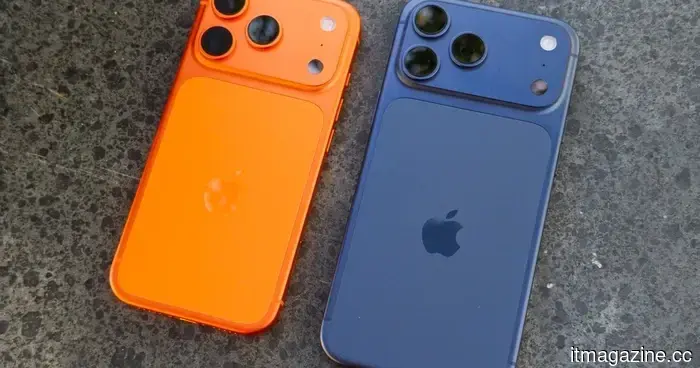 iPhone 18 series: All the information available to date
For the first time, Apple might unveil its iPhone 18 series through two distinct events, altering the entire approach to planning your next upgrade.
iPhone 18 series: All the information available to date
For the first time, Apple might unveil its iPhone 18 series through two distinct events, altering the entire approach to planning your next upgrade.
 Microsoft Teams is set to resolve a completely awkward daily issue encountered during meetings.
Microsoft is introducing a pre-join microphone test to Teams, along with privacy-focused Copilot recaps. This will provide regular users with a more seamless call initiation and give businesses better control over AI-generated meeting summaries.
Microsoft Teams is set to resolve a completely awkward daily issue encountered during meetings.
Microsoft is introducing a pre-join microphone test to Teams, along with privacy-focused Copilot recaps. This will provide regular users with a more seamless call initiation and give businesses better control over AI-generated meeting summaries.
 I appreciate what Framework is offering, but it needs to follow through.
Framework hints at an upcoming hardware event concentrating on open computing and user empowerment.
I appreciate what Framework is offering, but it needs to follow through.
Framework hints at an upcoming hardware event concentrating on open computing and user empowerment.
 OpenAI's newly launched $100 ChatGPT Pro plan aims to compete with Claude Max by offering five times more access to Codex.
On April 9, 2026, OpenAI introduced a $100/month ChatGPT Pro tier, aligning its pricing with Claude Max, offering five times more Codex than the Plus version and a tenfold launch promotion running until May.
OpenAI's newly launched $100 ChatGPT Pro plan aims to compete with Claude Max by offering five times more access to Codex.
On April 9, 2026, OpenAI introduced a $100/month ChatGPT Pro tier, aligning its pricing with Claude Max, offering five times more Codex than the Plus version and a tenfold launch promotion running until May.
 Apple's AI glasses will explore a variety of designs and colors.
It's all about appearances.
Apple's AI glasses will explore a variety of designs and colors.
It's all about appearances.
 Microsoft Teams is set to address an incredibly frustrating daily issue in meetings.
Microsoft is introducing a pre-join microphone test for Teams, along with the launch of privacy-focused Copilot recaps. This update will provide regular users with a more seamless beginning to their calls and offer businesses enhanced oversight over AI-generated meeting summaries.
Microsoft Teams is set to address an incredibly frustrating daily issue in meetings.
Microsoft is introducing a pre-join microphone test for Teams, along with the launch of privacy-focused Copilot recaps. This update will provide regular users with a more seamless beginning to their calls and offer businesses enhanced oversight over AI-generated meeting summaries.
The Netherlands is the first European nation to sanction Tesla’s FSD Supervised.
On April 10, 2026, RDW granted approval for Tesla's Full Self-Driving Supervised, paving the way for access to Germany, France, Italy, and EU-wide approval by the summer of 2026.