
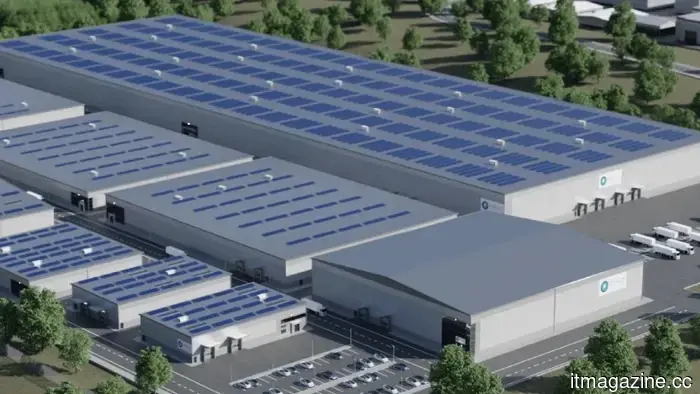
UK startup Altilium secures £18.5 million to establish the country's first commercial EV battery recycling facility.
In summary: Altilium, a clean technology firm based in the UK, has received £18.5 million in grant funding from the government's DRIVE35 Scale-Up Fund to construct ACT3, the nation's first commercial refinery dedicated to recovering critical minerals from end-of-life electric vehicle batteries. Situated in Plymouth, Devon, this facility will handle 24,000 EV batteries annually using Altilium's proprietary EcoCathode™ process, resulting in battery-grade materials with carbon emissions up to 74% lower than those from mined sources and creating 70 new jobs. A separate grant from DRIVE35 supports a collaborative research project with luxury automotive manufacturer JLR and the Warwick Manufacturing Group to produce EV battery cells featuring both recycled cathode and anode materials for the first time in the UK.
About the fund and its implications
The £18.5 million funding is part of the DRIVE35 Scale-Up Fund, a programme run by the Department for Business and Trade in collaboration with the Advanced Propulsion Centre UK and Innovate UK. DRIVE35 is part of the UK government's broader £2.5 billion investment aimed at boosting domestic electric vehicle supply chains and battery manufacturing capabilities. At a time when private investment in European climate technology hit a five-year low in early 2025, government-backed industrial grants have increasingly become a vital source of funding for businesses developing the necessary infrastructure for the energy transition.
Altilium, which previously secured over £17 million in private investment from strategic partners such as Marubeni Corporation and Mizuho Bank, has characterized this announcement as a crucial milestone. “This funding marks a pivotal moment for Altilium and for the UK’s battery ecosystem,” stated Dr. Christian Marston, COO and co-founder. “By scaling our recycling technology and establishing the UK’s first commercial facility of this kind, we are closing the loop on battery materials and bolstering the growth, productivity, and competitiveness of the UK automotive supply chain.” The grant is also anticipated to attract additional private investments from both new and existing investors.
What the ACT3 facility will produce
The ACT3 facility is set to be located in Plymouth, Devon, where Altilium already runs the only hydrometallurgical pilot plant in the UK for EV battery recycling. The construction of the facility is complete, and installation of equipment is planned to begin in the summer of 2026, with commissioning expected by the end of 2027. Once operational, ACT3 will process 24,000 end-of-life EV batteries annually using Altilium’s EcoCathode™ hydrometallurgical approach, which retrieves over 95% of cathode metals and more than 99% of graphite from battery waste. The outputs will be crucial intermediate materials for battery cell manufacturing: nickel mixed hydroxide precipitate, lithium sulphate, and graphite, all vital components for next-generation cathode and anode production. An independent lifecycle assessment indicates that these recycled materials produce up to 74% lower carbon emissions than their mined counterparts.
The plant will generate 70 new jobs in Plymouth. Altilium is not the only company advancing this model towards commercial scale; in March 2026, Tozero launched Europe’s first industrial battery recycling facility in Germany, signifying that the continent's recovery capabilities are evolving alongside the increasing volume of batteries reaching the end of their life cycle.
The urgency behind supply chain considerations
The strategic reasoning behind ACT3 is clear. Indonesia holds a dominant position as the global supplier of nickel mixed hydroxide precipitate, while China processes the majority of the world's lithium and graphite used in battery production. British car manufacturers creating EV supply chains face compounded risks including geopolitical disruptions, price fluctuations, and the export controls China introduced on graphite in late 2024, which were further extended to various lithium battery inputs through 2025. Trade tariffs heightened existing concerns regarding the security of hardware and material supply chains across European industries in 2025, reinforcing the political and commercial argument for domestic alternatives. Altilium’s recycling facilities provide a means to reduce this dependency. European battery manufacturers can set themselves apart from Asian producers by focusing on sustainability, recyclability, and compliance with regulations, rather than just on unit costs; the provenance and carbon credentials of recycled British battery materials offer significant value in this context. The recycled materials produced by Altilium have verified lifecycle assessment data demonstrating a 74% reduction in emissions, a figure that becomes increasingly relevant as automotive clients confront their own pressures to decarbonize supply chains.
The development plan and partnerships
ACT3 is positioned as the initial step in a two-phase domestic expansion project. Altilium's future ACT4 facility in Teesside, located in north-east England, is intended to process 150,000 end-of-life EV batteries annually and produce 30,000 tonnes of cathode active materials each year, projected to satisfy roughly 20% of the UK's battery materials demand by 2030. Together, the Plymouth and Teesside facilities would
Other articles
 AI is enhancing our speed and productivity, but it is diminishing our critical thinking skills.
AI is ubiquitous, yet the proof of its worth is scant, the fatigue is palpable, and the term “intelligence” is serving more as a marketing tool than a scientific concept.
AI is enhancing our speed and productivity, but it is diminishing our critical thinking skills.
AI is ubiquitous, yet the proof of its worth is scant, the fatigue is palpable, and the term “intelligence” is serving more as a marketing tool than a scientific concept.
 UK startup Altilium secures £18.5 million to establish the first commercial EV battery refinery in Britain.
Altilium has obtained £18.5 million in grants from the UK government to construct ACT3, a refinery in Plymouth that will extract essential minerals from 24,000 electric vehicle batteries annually.
UK startup Altilium secures £18.5 million to establish the first commercial EV battery refinery in Britain.
Altilium has obtained £18.5 million in grants from the UK government to construct ACT3, a refinery in Plymouth that will extract essential minerals from 24,000 electric vehicle batteries annually.
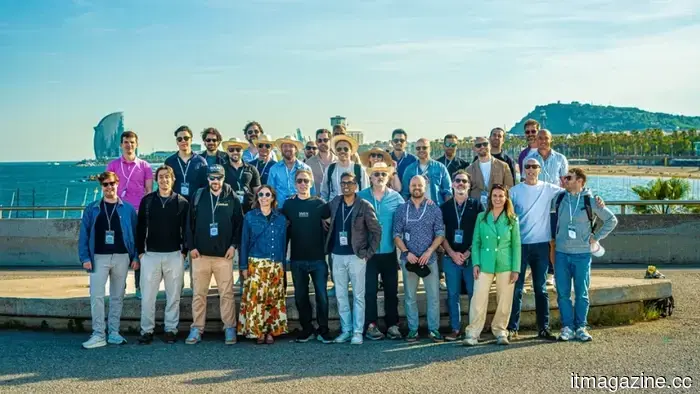 SaaS on the Beach is making a comeback in Barcelona.
SaaS on the Beach makes its comeback to Barcelona this May, featuring 60 SaaS founders, organized discussions, and a no-pitch format designed for peer-to-peer exchange.
SaaS on the Beach is making a comeback in Barcelona.
SaaS on the Beach makes its comeback to Barcelona this May, featuring 60 SaaS founders, organized discussions, and a no-pitch format designed for peer-to-peer exchange.
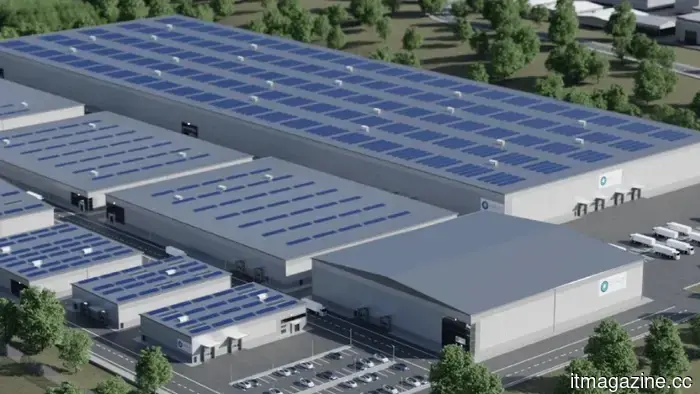 UK startup Altilium secures £18.5 million to establish the first commercial EV battery refinery in Britain.
Altilium has obtained £18.5 million in grants from the UK government to establish ACT3, a refinery in Plymouth that will recycle critical minerals from 24,000 electric vehicle batteries annually.
UK startup Altilium secures £18.5 million to establish the first commercial EV battery refinery in Britain.
Altilium has obtained £18.5 million in grants from the UK government to establish ACT3, a refinery in Plymouth that will recycle critical minerals from 24,000 electric vehicle batteries annually.
 SaaS on the Beach is back in Barcelona.
SaaS on the Beach is coming back to Barcelona this May, featuring 60 SaaS founders, carefully curated discussions, and a pitch-free environment designed for peer interaction.
SaaS on the Beach is back in Barcelona.
SaaS on the Beach is coming back to Barcelona this May, featuring 60 SaaS founders, carefully curated discussions, and a pitch-free environment designed for peer interaction.
 AI is increasing our speed and productivity, but it's also diminishing our critical thinking skills.
AI is ubiquitous, yet the proof of its worth is scarce, the fatigue is genuine, and the term “intelligence” serves more as a marketing tool than a scientific term.
AI is increasing our speed and productivity, but it's also diminishing our critical thinking skills.
AI is ubiquitous, yet the proof of its worth is scarce, the fatigue is genuine, and the term “intelligence” serves more as a marketing tool than a scientific term.
UK startup Altilium secures £18.5 million to establish the country's first commercial EV battery recycling facility.
Altilium has obtained £18.5 million in grants from the UK government to establish ACT3, a refinery in Plymouth that will extract essential minerals from 24,000 electric vehicle batteries annually.