
AI is advancing beyond just conversation and venturing into creativity and play.
AI hasn't merely shown up — it has subtly integrated itself into the standard online experience.
What began as a curiosity has swiftly become a routine. In educational settings, students now use LLM tools to draft essays alongside traditional note-taking, revisions, and late-night writing sessions.
Even dating applications—previously regarded as deeply human aspects of the internet—are increasingly fueled by AI, from generating profile prompts to enhancing match algorithms. Gradually, AI is influencing not only what people do online but also how they engage with one another.
AI is not only becoming more useful, but it's also turning into an enjoyable experience.
Initially designed for obtaining answers, it is evolving into a more interactive platform where users are not just posing questions, but also creating, experimenting, and engaging with the AI.
This is not limited to isolated instances but is becoming a continuous interaction. Rather than being a system that is simply opened, utilized, and closed, it’s beginning to take on a more ongoing role—responding, adapting, and remaining present as users navigate various contexts.
What is evolving is not just the output of AI but also the way individuals interact with it.
Rather than single, isolated exchanges, interactions are developing into ongoing dialogues. Users no longer just ask a single question and move on; they are returning, modifying, and expanding upon previous interactions—establishing a sense of continuity that was previously absent.
This change is particularly noticeable when examining how digital content itself is transforming.
For years, most online experiences have revolved around passive consumption. Users scroll, watch, listen, and then move on. Even when there is interaction, it remains limited—pressing a button, leaving a comment, or engaging from a set of predetermined options.
However, this model is beginning to change.
Users can now engage with content in more direct ways instead of just viewing it from beginning to end. What used to involve watching or listening can now include speaking, moving, or utilizing the camera for responses.
Picture blowing out a digital candle through your phone's speaker, or directing your camera at a sunset while the system identifies and reacts to the changing colors in real-time. The experience shifts from mere observation to active participation—not just consuming what others have created, but actively influencing its evolution.
Former GitHub CEO Thomas Dohmke mentioned in a TED talk that creating software is becoming as easy as building with LEGO. The divide between creator and consumer is becoming less clear. Creation may start to feel like a natural extension of interaction rather than a distinct task.
In this new landscape, interaction and participation become central elements of the experience.
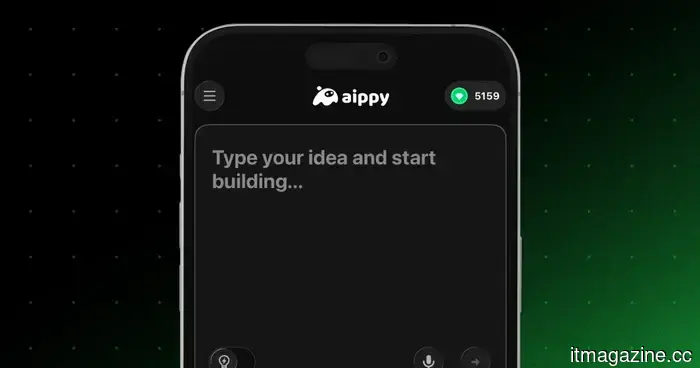
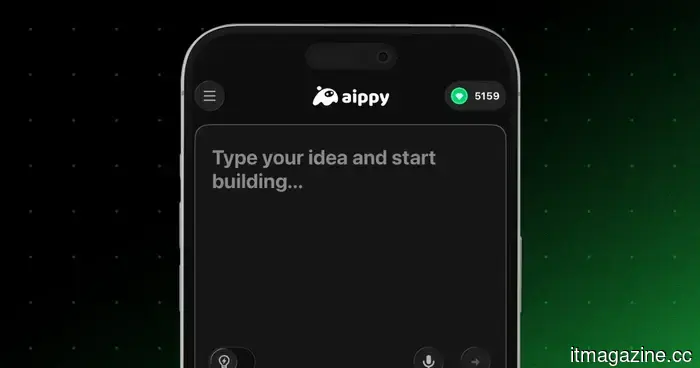
A prime example is Aippy, where users navigate a feed of playable mini-games instead of conventional videos. Each post encourages interaction—inviting users to tap in to play, respond to gameplay mechanics, or try variations on a concept.
Rather than sticking to traditional coding, users articulate their desires in natural language, and the system transforms it into something interactive. A simple idea, a game concept, or a prompt can swiftly evolve into something others can engage with, adapt, and reinterpret.
Over time, this fosters a cycle. One person's idea serves as the starting point for another. Interaction sparks creation, and creation, in turn, enriches interaction.
Platforms like this suggest a broader transition. AI is not just facilitating conversation; it is also removing barriers to participation, empowering more individuals to shape digital experiences instead of merely consuming them.
Although it remains early days and these experiences are not yet entirely consistent, the trajectory is becoming more evident.
While the initial phase of AI focused on simplifying access to information, the forthcoming phase may concentrate on making interactions more fluid, continuous, and responsive.
As individuals spend more time engaging with AI—beyond just asking questions to include playing, experimenting, and responding—the experience starts to shift.
What we might witness isn't simply a more advanced chatbot, but something akin to a new layer of the internet. A space where content isn't just delivered but is continuously molded by the individuals interacting with it.
Other articles
 Gmail on mobile now features end-to-end encryption to protect your emails from prying eyes.
Google's Gmail application on Android and iOS now offers end-to-end encryption for Workspace Enterprise Plus users, marking a substantial enhancement in mobile privacy by ensuring that encrypted email content is not stored on Google's servers.
Gmail on mobile now features end-to-end encryption to protect your emails from prying eyes.
Google's Gmail application on Android and iOS now offers end-to-end encryption for Workspace Enterprise Plus users, marking a substantial enhancement in mobile privacy by ensuring that encrypted email content is not stored on Google's servers.
 It's best not to rely on Meta's new Muse Spark AI for health-related guidance.
Meta's latest Muse Spark AI prompts users to share their health data, yet it still generates unreliable and possibly harmful recommendations.
It's best not to rely on Meta's new Muse Spark AI for health-related guidance.
Meta's latest Muse Spark AI prompts users to share their health data, yet it still generates unreliable and possibly harmful recommendations.
 The Emergence of Secure Hardened Container Images
The software development life cycle is greatly dependent on the reliability of containerized environments. As secure software delivery becomes the norm in development processes, an increasing number of teams are looking for fortified container images and similar hardened container solutions that provide security without hindering build times. This shift indicates that container security has evolved into a fundamental requirement rather than merely an additional feature.
The Emergence of Secure Hardened Container Images
The software development life cycle is greatly dependent on the reliability of containerized environments. As secure software delivery becomes the norm in development processes, an increasing number of teams are looking for fortified container images and similar hardened container solutions that provide security without hindering build times. This shift indicates that container security has evolved into a fundamental requirement rather than merely an additional feature.
 Authorities apprehend a 20-year-old following the throwing of a Molotov cocktail at Sam Altman’s residence in San Francisco.
A 20-year-old was apprehended after launching a Molotov cocktail at Sam Altman's residence in San Francisco and making threats against the company's offices. There were no reported injuries.
Authorities apprehend a 20-year-old following the throwing of a Molotov cocktail at Sam Altman’s residence in San Francisco.
A 20-year-old was apprehended after launching a Molotov cocktail at Sam Altman's residence in San Francisco and making threats against the company's offices. There were no reported injuries.
 It's best not to rely on Meta’s new Muse Spark AI for health-related guidance.
Meta's latest Muse Spark AI prompts users to share their health data, yet it still generates unreliable and possibly harmful recommendations.
It's best not to rely on Meta’s new Muse Spark AI for health-related guidance.
Meta's latest Muse Spark AI prompts users to share their health data, yet it still generates unreliable and possibly harmful recommendations.
 AI is progressing past conversation and venturing into realms of creativity and play.
AI has not merely arrived; it has subtly integrated itself into the standard online experience. What began as a mere curiosity has rapidly evolved into a routine. In educational settings, students now compose essays using LLM tools alongside them, substituting the traditional process of taking notes, making revisions, and late-night writing marathons. Even dating apps — which have traditionally […]
AI is progressing past conversation and venturing into realms of creativity and play.
AI has not merely arrived; it has subtly integrated itself into the standard online experience. What began as a mere curiosity has rapidly evolved into a routine. In educational settings, students now compose essays using LLM tools alongside them, substituting the traditional process of taking notes, making revisions, and late-night writing marathons. Even dating apps — which have traditionally […]
AI is advancing beyond just conversation and venturing into creativity and play.
AI hasn't simply shown up — it has seamlessly integrated into the standard online experience. What began as a fascination has rapidly evolved into a routine. In educational settings, students now compose essays using LLM tools, moving away from the traditional process of taking notes, revising, and writing late into the night. Even dating apps — which for a long time [...]