

The Emergence of Secure Hardened Container Images
The software development life cycle greatly depends on the reliability of containerized environments. With secure software delivery becoming a standard practice in development, many teams are now looking for hardened container images and similar secure solutions that provide safety without delaying build times. This shift highlights that container security has transitioned into a universal requirement, no longer just an optional feature for select sectors. It has now become a fundamental standard for security teams aiming for quicker deployments, reduced attack surfaces, and cleaner production environments right from the outset of the coding process.
**The Emergence of Hardened Image Standards**
For a long time, container hardening was perceived by many developers as a necessity only for large enterprises, particularly after a product reached maturity. However, this perception is changing as organizations become more aware of the multitude of threats in the current digital landscape. Nowadays, smaller teams, maintainers of open source projects, and evolving SaaS companies face pressure to deliver secure software right from the initial commit.
This trend accounts for the growing interest in the creation and distribution of hardened images. Developers are increasingly inquiring not only about the security of images but also about their compatibility with the tools they already utilize. A secure image is beneficial only if it integrates seamlessly into actual development workflows, including local testing and continuous integration (CI) pipelines. Security tools gain traction when developers do not feel like they are constantly resisting them during sprints.
Ultimately, adoption is driven by practicality and the need for stronger default settings. Teams aim to lower their vulnerability risks while ensuring that operations remain swift and flexible. They prefer to maintain their existing workflows rather than overhaul them entirely just to secure a base image. Consequently, the industry has turned its focus towards specialized, lightweight container solutions that strike the right balance.
**The Practical Benefits of Minimal Images**
Minimal container images are appealing due to their inherent simplicity. Utilizing fewer packages generally means fewer components to update within libraries, lowering the chances of overlooking hidden vulnerabilities in production. By eliminating unnecessary binaries and shells, developers can decrease the attack surface, making successful exploits more challenging.
The technical community highlights that the composition of the image is crucial for overall system safety. Research from the National Institute of Standards and Technology (NIST) points out that "Containers provide a portable, reusable, and automatable way to package and run applications." However, they also caution that the image itself can present risks if organizations do not carefully manage trusted content and configurations.
Many developers prioritize image size and composition as their first line of defense. While a smaller image is not automatically more secure, it is frequently much simpler to audit and maintain over time. For example, an independent developer using a lightweight API might not need a comprehensive base image with numerous features. They can sustain a rapid runtime and minimize the number of products requiring security vulnerability assessments by utilizing a compact, secure image.
In practice, this approach includes revising outdated workflows.
Consider a scenario where a group of developers needs to update an old container configuration for a financial services application. Many terminals, debugging tools, and package managers that were beneficial during the initial development with older images likely remain even after the app is in production, creating potential risks.
By adopting a more effective strategy with minimal images, the team can remove unnecessary elements, expediting the security review process for compliance. Additionally, this approach ensures consistency across various environments, guaranteeing that the software on a developer’s device matches what is running in the cloud. This example illustrates that it is often more advantageous to eliminate superfluous components than to add more security features to an already complex system.
**Emphasizing Developer Workflow Efficiency**
The introduction of new security tools frequently falters when it introduces excessive friction into daily routines. Teams seek methods that enhance security without necessitating a complete overhaul of their build, test, and scanning processes. For developers, the central question becomes whether the image will integrate with the registry and scanner they already rely upon.
If a security solution mandates proprietary tools or distinct commands, justifying the migration efforts becomes difficult. This concern is especially relevant for open-source contributors and smaller teams lacking a dedicated security department. They require secure solutions that do not entail weeks of additional migration work or disrupt existing automation scripts.
A project maintainer updating a public service may prefer a hardened image approach that aligns with widely used container tools. If a strategy can provide security-first images while respecting developers’ time, it will experience significantly higher adoption rates. The objective is to make the secure option the easiest path for code writers.
**Ecosystem Compatibility and Long-Term Stability**
Compatibility with the wider technical ecosystem is increasingly becoming a key factor in how teams choose their base images. Organizations do not procure or implement image security in isolation; instead, they need it to align with internal policies, software bill of materials (SBOM) workflows, and deployment automation processes.
When a hardened image operates optimally only within a limited ecosystem, some teams are hesitant to adopt it for fear of vendor lock-in, particularly if their underlying infrastructure is still evolving. Companies with mixed
Other articles
 Gmail on mobile now includes end-to-end encryption to protect your emails from prying eyes.
The Gmail app by Google for Android and iOS now offers end-to-end encryption for Workspace Enterprise Plus users, marking an important enhancement in mobile privacy by ensuring that encrypted email content remains inaccessible to Google's servers.
Gmail on mobile now includes end-to-end encryption to protect your emails from prying eyes.
The Gmail app by Google for Android and iOS now offers end-to-end encryption for Workspace Enterprise Plus users, marking an important enhancement in mobile privacy by ensuring that encrypted email content remains inaccessible to Google's servers.
 AI is advancing beyond just conversation and venturing into creativity and play.
AI hasn't simply shown up — it has seamlessly integrated into the standard online experience. What began as a fascination has rapidly evolved into a routine. In educational settings, students now compose essays using LLM tools, moving away from the traditional process of taking notes, revising, and writing late into the night. Even dating apps — which for a long time [...]
AI is advancing beyond just conversation and venturing into creativity and play.
AI hasn't simply shown up — it has seamlessly integrated into the standard online experience. What began as a fascination has rapidly evolved into a routine. In educational settings, students now compose essays using LLM tools, moving away from the traditional process of taking notes, revising, and writing late into the night. Even dating apps — which for a long time [...]
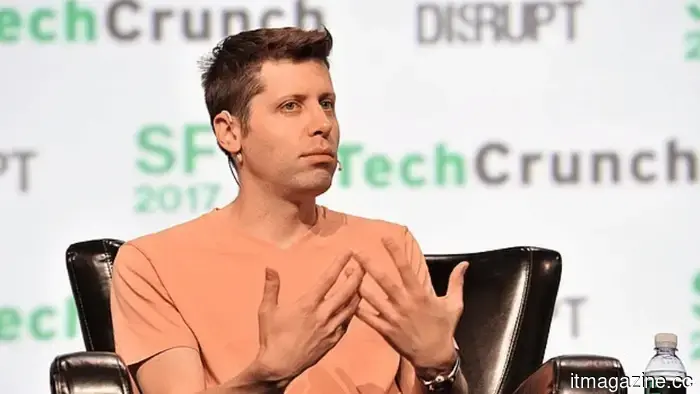 Authorities apprehend a 20-year-old following the throwing of a Molotov cocktail at Sam Altman’s residence in San Francisco.
A 20-year-old was apprehended after launching a Molotov cocktail at Sam Altman's residence in San Francisco and making threats against the company's offices. There were no reported injuries.
Authorities apprehend a 20-year-old following the throwing of a Molotov cocktail at Sam Altman’s residence in San Francisco.
A 20-year-old was apprehended after launching a Molotov cocktail at Sam Altman's residence in San Francisco and making threats against the company's offices. There were no reported injuries.
 AI is progressing past conversation and venturing into realms of creativity and play.
AI has not merely arrived; it has subtly integrated itself into the standard online experience. What began as a mere curiosity has rapidly evolved into a routine. In educational settings, students now compose essays using LLM tools alongside them, substituting the traditional process of taking notes, making revisions, and late-night writing marathons. Even dating apps — which have traditionally […]
AI is progressing past conversation and venturing into realms of creativity and play.
AI has not merely arrived; it has subtly integrated itself into the standard online experience. What began as a mere curiosity has rapidly evolved into a routine. In educational settings, students now compose essays using LLM tools alongside them, substituting the traditional process of taking notes, making revisions, and late-night writing marathons. Even dating apps — which have traditionally […]
 The Emergence of Secure Hardened Container Images
The software development life cycle places significant importance on the reliability of containerized environments. With secure software delivery increasingly becoming the norm in the development process, a growing number of teams are pursuing hardened container images and comparable hardened container solutions that ensure security without delaying build times. This evolution indicates that container security has transitioned into a fundamental requirement rather than merely an added feature.
The Emergence of Secure Hardened Container Images
The software development life cycle places significant importance on the reliability of containerized environments. With secure software delivery increasingly becoming the norm in the development process, a growing number of teams are pursuing hardened container images and comparable hardened container solutions that ensure security without delaying build times. This evolution indicates that container security has transitioned into a fundamental requirement rather than merely an added feature.
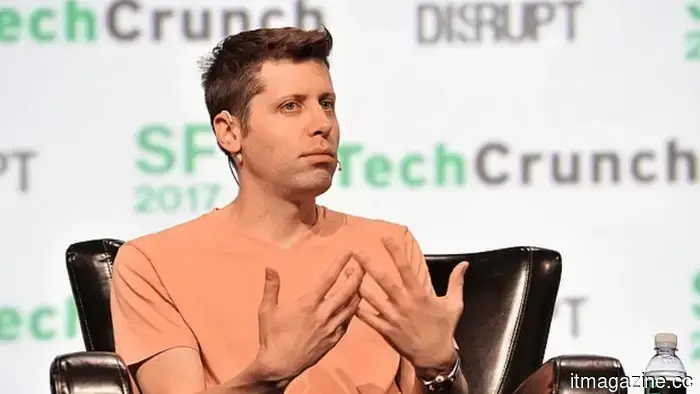 Police apprehend a 20-year-old following the throwing of a Molotov cocktail at Sam Altman's residence in San Francisco.
A 20-year-old was apprehended for hurling a Molotov cocktail at the San Francisco residence of OpenAI CEO Sam Altman and for making threats against the company's offices. There were no reported injuries.
Police apprehend a 20-year-old following the throwing of a Molotov cocktail at Sam Altman's residence in San Francisco.
A 20-year-old was apprehended for hurling a Molotov cocktail at the San Francisco residence of OpenAI CEO Sam Altman and for making threats against the company's offices. There were no reported injuries.
The Emergence of Secure Hardened Container Images
The software development life cycle is greatly dependent on the reliability of containerized environments. As secure software delivery becomes the norm in development processes, an increasing number of teams are looking for fortified container images and similar hardened container solutions that provide security without hindering build times. This shift indicates that container security has evolved into a fundamental requirement rather than merely an additional feature.