
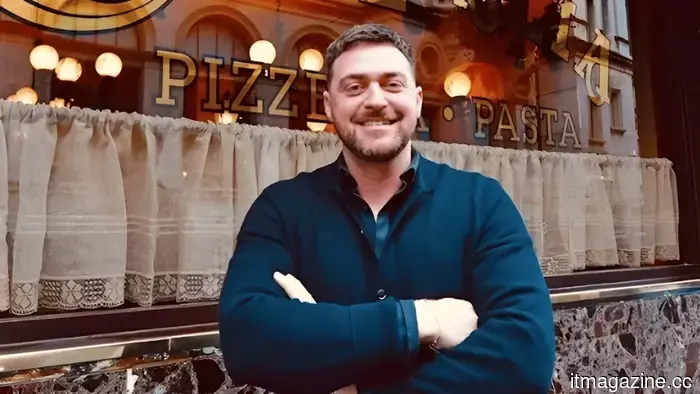
How AI is changing hospitality operations while maintaining the human touch
Hospitality has traditionally been characterized by human interaction, yet the systems that facilitate those interactions have continuously evolved. Arran Campolucci-Bordi, owner of Casa Italia, established 50 years ago in Liverpool, UK, shares his perspective on this evolution through personal experience, tracing the transition from handwritten reservation books to digital booking systems and now towards AI-driven operations. He believes that each shift signifies a larger change in how restaurants handle time, communication, and customer expectations.
He notes that previous generations depended entirely on manual processes, where reservations were recorded by hand, availability was checked manually, and customer inquiries were addressed one at a time. With the advent of digital tools, many of these tasks transitioned online, resulting in improved structure and consistency. Arran states that the current phase introduces a new dimension, where systems can respond to customer needs dynamically without human intervention.
From his standpoint, AI in hospitality should be seen as an operational support system rather than a replacement for human workers. He likens Ayra to a well-trained employee in specific scenarios, especially in information management. Once provided with details such as menus, booking systems, and policies, it can reply to customer inquiries in a conversational manner, handling tasks such as checking availability, managing reservations, and addressing common questions in real time. He believes this enables businesses to manage external interactions consistently while allowing staff to concentrate on critical areas.
This operational change is increasingly evident across various sectors. A report indicates that 58% of surveyed employees claim they are already saving time at work using AI tools, with users averaging a savings of 52 minutes daily, equating to nearly five hours weekly. In the hospitality industry, where a considerable amount of time is dedicated to responding to inquiries and managing bookings, these time savings can quickly accumulate, positively affecting where teams direct their efforts.
Arran stresses that this system is meant to complement existing teams. He observes that many roles in hospitality involve repetitive administrative duties that detract from direct customer interaction. He elaborates that reallocating that time can transform service delivery within the restaurant itself. “By transferring those tasks to an AI-driven interface, businesses can allow staff to concentrate on providing service in the restaurant’s physical environment,” he explains. “It aligns individuals with the aspects of their roles that require attention, awareness, and interpersonal interaction.”
The practical effects of this change are closely linked to how restaurants manage their time and resources. Arran explains that a large part of operational inefficiency arises from fragmented communication, particularly when customers submit similar questions or booking requests. “While each interaction may be brief, collectively they demand significant time commitment,” he notes. Ayra, he explains, can manage these interactions around the clock, thereby increasing time spent with customers and capturing potential missed opportunities.
This viewpoint also mirrors broader shifts in customer behavior. “As digital communication has become more immediate, expectations regarding response times have adjusted accordingly,” Arran points out. “Customers are increasingly seeking quick and precise answers, whether they are making a reservation or inquiring about menu options. Systems capable of responding instantly help meet those expectations while ensuring clarity and consistency in communication.”
A common misunderstanding is that hospitality is slow to embrace new technology due to its human-centered approach. According to Arran, the immediate and significant repercussions of adopting supposedly “robust” technology arise from the industry's inability to thoroughly evaluate what they implement.
He further underscores the necessity of simplicity in adoption. In his experience, the primary barrier for restaurant owners is not so much resistance to technology but rather uncertainty about its practical application. Consequently, the platform he has developed is structured to be robust, accurate, and easy to implement, needing only minimal information from businesses to train their AI agent. Once that information is provided, the system can begin functioning independently.
This approach signifies a broader change in how technology is integrated into traditional industries. Instead of requiring businesses to fundamentally alter their operations, tools are being created to integrate seamlessly into established structures. Arran suggests that this compatibility is crucial for long-term adoption, especially in sectors where consistency is vital.
Looking forward, he perceives AI as part of a continual evolution rather than a concluding point. The shift from manual processes to digital systems has already transformed hospitality operations, and the introduction of AI marks another phase in that progression. He notes that each stage has introduced new efficiencies while upholding the primary goal of serving customers effectively.
“People dine at a restaurant for the experience, and that will always remain true,” Arran states. “If technology can manage everything around that, it enables staff to focus on what they do best, providing customers with the best possible experience.”


Other articles
 Oracle has appointed Hilary Maxson as Chief Financial Officer to oversee its $50 billion investment in AI data centers.
Hilary Maxson, who was previously the group CFO at Schneider Electric, is joining Oracle as the company announces the reduction of 30,000 jobs and pledges $50 billion towards the construction of AI data centers.
Oracle has appointed Hilary Maxson as Chief Financial Officer to oversee its $50 billion investment in AI data centers.
Hilary Maxson, who was previously the group CFO at Schneider Electric, is joining Oracle as the company announces the reduction of 30,000 jobs and pledges $50 billion towards the construction of AI data centers.
 Workday's CTO swapped his executive position for a technical staff role at Anthropic.
Peter Bailis, who has served as Workday's CTO since May 2025, is now part of Anthropic's technical team, focusing on reinforcement learning as the company develops HR applications.
Workday's CTO swapped his executive position for a technical staff role at Anthropic.
Peter Bailis, who has served as Workday's CTO since May 2025, is now part of Anthropic's technical team, focusing on reinforcement learning as the company develops HR applications.
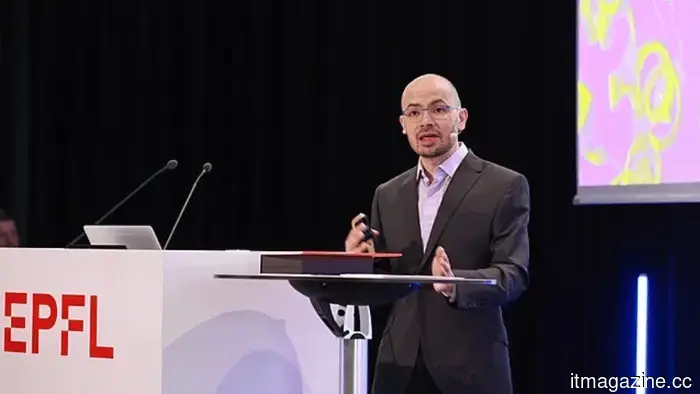 Demis Hassabis mentions that Google DeepMind needed to revisit its startup origins following the merger with Brain.
Hassabis mentions that after the merger with Brain, Google DeepMind needed to return to its startup origins and adopt a more resourceful approach, managing Isomorphic Labs as his second job starting at 10 PM.
Demis Hassabis mentions that Google DeepMind needed to revisit its startup origins following the merger with Brain.
Hassabis mentions that after the merger with Brain, Google DeepMind needed to return to its startup origins and adopt a more resourceful approach, managing Isomorphic Labs as his second job starting at 10 PM.
 The Galaxy Z TriFold is set to return to Samsung stores, potentially for the final time.
Samsung will reintroduce the Galaxy Z TriFold to the US on April 10 via Samsung.com and certain Samsung Experience stores, and this may be the final direct restock.
The Galaxy Z TriFold is set to return to Samsung stores, potentially for the final time.
Samsung will reintroduce the Galaxy Z TriFold to the US on April 10 via Samsung.com and certain Samsung Experience stores, and this may be the final direct restock.
 Google Cloud strengthens its AI infrastructure collaboration with Intel, focusing on Xeon processors and custom chips.
Google Cloud is enhancing its multi-year AI infrastructure collaboration with Intel by committing to Xeon 6 CPUs and co-developing specialized Infrastructure Processing Units.
Google Cloud strengthens its AI infrastructure collaboration with Intel, focusing on Xeon processors and custom chips.
Google Cloud is enhancing its multi-year AI infrastructure collaboration with Intel by committing to Xeon 6 CPUs and co-developing specialized Infrastructure Processing Units.
 How AI is changing hospitality operations while maintaining the human touch.
Arran Campolucci-Bordi discusses how AI-powered systems are transforming hospitality operations by enhancing efficiency while maintaining a focus on human interaction.
How AI is changing hospitality operations while maintaining the human touch.
Arran Campolucci-Bordi discusses how AI-powered systems are transforming hospitality operations by enhancing efficiency while maintaining a focus on human interaction.
How AI is changing hospitality operations while maintaining the human touch
Arran Campolucci-Bordi discusses how AI-powered systems are transforming hospitality operations by enhancing efficiency, all while maintaining human interaction as a central element.