
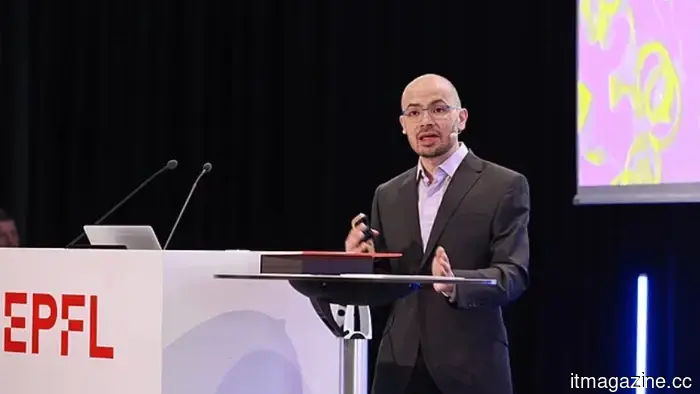
Demis Hassabis stated that Google DeepMind needed to revert to its startup origins following the merger with Brain.
In summary: Demis Hassabis shared insights on the 20VC podcast with Harry Stebbings in early April 2026, explaining how Google DeepMind has increased its momentum over the last two to three years. This acceleration has been achieved by integrating Google Brain’s computational resources with DeepMind’s research culture and reverting to what he termed a “startup or entrepreneurial” approach. He also mentioned that he manages Isomorphic Labs, the group's pharmaceutical AI offshoot, during a “second workday” starting around 10 PM, as they anticipate human trials in oncology later this year.
Merging the Elements
The official merger of DeepMind and Google Brain was finalized in 2023. Hassabis characterized the subsequent period as one focused on intentional acceleration: aligning talent across the company and unifying efforts, gaining access to previously lacking large-scale computational infrastructure, and fostering what he referred to as a “relentless focus and pace.” He emphasized that this transformation demanded both cultural and structural adjustments; the organization needed to reconnect with its “startup or entrepreneurial roots” by being more agile and delivering products swiftly. According to him, the current competitive landscape is “ferocious,” with seasoned employees, some with two to three decades of experience, asserting that it is possibly “the most intense environment they’ve ever encountered, maybe in the history of the technology sector.”
Hassabis indicated that he connects with Sundar Pichai, Alphabet’s CEO, “every day,” highlighting how Google DeepMind is now integral to Alphabet’s operational product and research strategy. This close relationship comes with a matching capital commitment of significant scale. Google’s expansion of computing resources, partly a result of its custom chip partnerships with firms like Broadcom, plays a crucial role: Alphabet's capital expenditures reached $91.4 billion in 2025, with projections between $175 billion and $185 billion for 2026, nearly doubling that amount, driven primarily by supply constraints rather than capital availability.
The 90% Assertion
One of Hassabis's more bold claims during the podcast was regarding DeepMind's influence on the history of AI. He stated that around 90% of the advancements forming the basis of the modern AI industry originated from either Google Brain, Google Research, or DeepMind. This assertion aligns with academic studies on fundamental progress, including the transformer architecture developed by Google Brain in 2017, initial research on reinforcement learning based on human feedback, and deep reinforcement learning methods created at DeepMind. The 2024 Nobel Prize in Chemistry awarded to Hassabis and John Jumper, alongside David Baker, for the AlphaFold protein-folding system stands out as the most officially recognized achievement among these. Whether 90% accurately reflects the proportion is subjective, as the industry has significantly diversified since these foundational contributions. The framing serves as both a positioning statement and a historical assertion.
The operational impact of this legacy is a significantly accelerated product release schedule. Google’s open-weight model program, particularly with Gemma 4, now releases models developed using the same research and training infrastructure as Gemini 3, bridging the gap between cutting-edge research and open-source contributions that previously existed. By the end of the fourth quarter of 2025, Gemini had around 750 million monthly active users, with Gemini 3 triggering an urgent internal reaction at OpenAI upon its release in November of that year.
The Second Workday
In addition to his leadership at Google DeepMind, Hassabis oversees Isomorphic Labs, the pharmaceutical AI spin-off established by DeepMind in 2021. He detailed his work arrangement during the 20VC discussion, describing a primary workday at DeepMind followed by a “second workday” starting around 10 PM devoted to Isomorphic’s drug discovery initiatives. This dual commitment indicates his belief that leveraging AI in drug discovery is both his most significant long-term goal and a project necessitating his continuous personal engagement rather than delegation.
In April 2025, Isomorphic raised $600 million and has partnership agreements with Eli Lilly and Novartis, with combined milestone values reaching up to $3 billion. In February 2026, the company introduced IsoDDE, a drug design tool that Isomorphic claims doubles the accuracy of AlphaFold 3 for generating drug candidates. Human clinical trials in oncology are expected later in 2026. The competitive landscape in AI-driven drug discovery is intensifying across the industry: Anthropic’s acquisition of Coefficient Bio for approximately $400 million in April 2026, a stealth startup founded by former Genentech computational biology researchers, indicates that general-purpose AI firms are now considering pharmaceutical discovery as a product category rather than just a showcase of model capabilities.
The Competitive Context
The conversation on the 20VC podcast, similar to Sebastian Mallaby’s biography of Hassabis, “The Infinity Machine,” released on 31 March 2026 and based on over 30 hours of interviews, presents a researcher who has entered the most commercially critical phase of his career with
Other articles
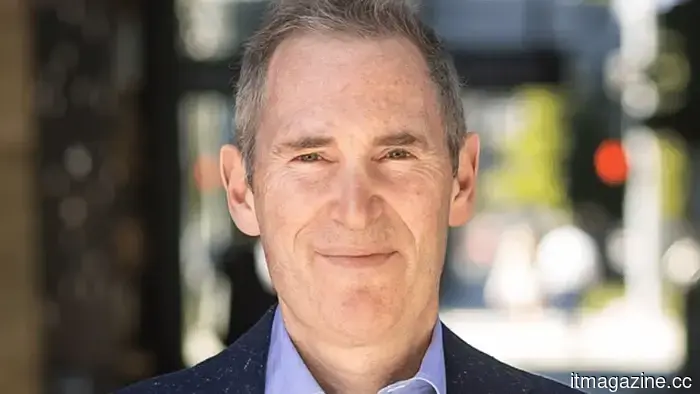 According to Jassy, Amazon's chip division might be valued at $50 billion, and he suggests that there could be plans to sell them externally.
In his 2026 letter to shareholders, Andy Jassy discloses that Amazon's Graviton, Trainium, and Nitro chips produce over $20 billion annually and have the potential to be marketed directly to external parties.
According to Jassy, Amazon's chip division might be valued at $50 billion, and he suggests that there could be plans to sell them externally.
In his 2026 letter to shareholders, Andy Jassy discloses that Amazon's Graviton, Trainium, and Nitro chips produce over $20 billion annually and have the potential to be marketed directly to external parties.
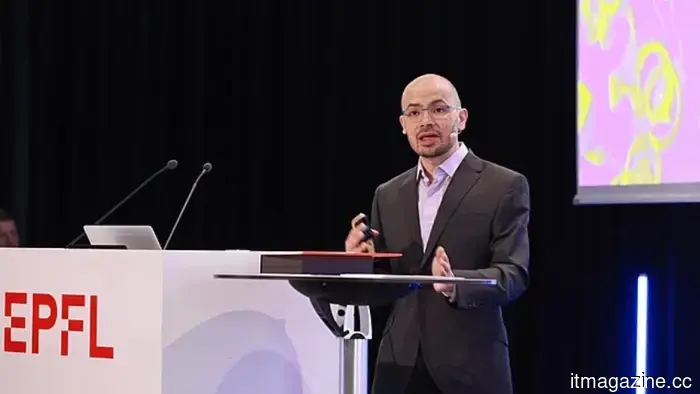 Demis Hassabis stated that Google DeepMind needed to revert to its startup origins following the Brain merger.
Hassabis states that after the Brain merger, Google DeepMind needed to revert to its startup origins and adopt a more resourceful approach, managing Isomorphic Labs as his side project from 10 PM.
Demis Hassabis stated that Google DeepMind needed to revert to its startup origins following the Brain merger.
Hassabis states that after the Brain merger, Google DeepMind needed to revert to its startup origins and adopt a more resourceful approach, managing Isomorphic Labs as his side project from 10 PM.
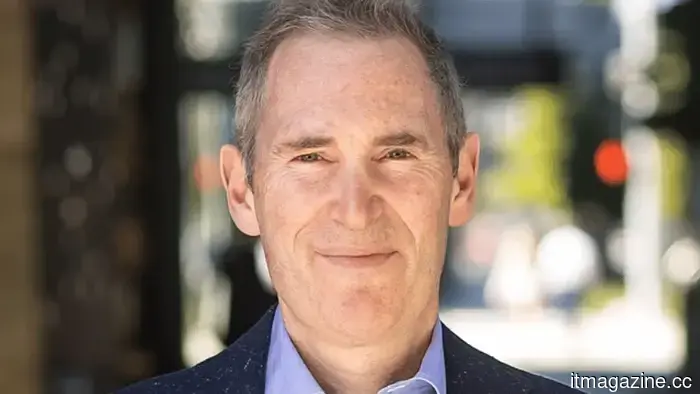 According to Jassy, Amazon's chip division could have a valuation of $50 billion, and he suggests that there may be plans to sell them to external customers.
In his 2026 shareholder letter, Andy Jassy disclosed that Amazon's Graviton, Trainium, and Nitro chips bring in over $20 billion annually and have the potential to be offered directly to third-party clients.
According to Jassy, Amazon's chip division could have a valuation of $50 billion, and he suggests that there may be plans to sell them to external customers.
In his 2026 shareholder letter, Andy Jassy disclosed that Amazon's Graviton, Trainium, and Nitro chips bring in over $20 billion annually and have the potential to be offered directly to third-party clients.
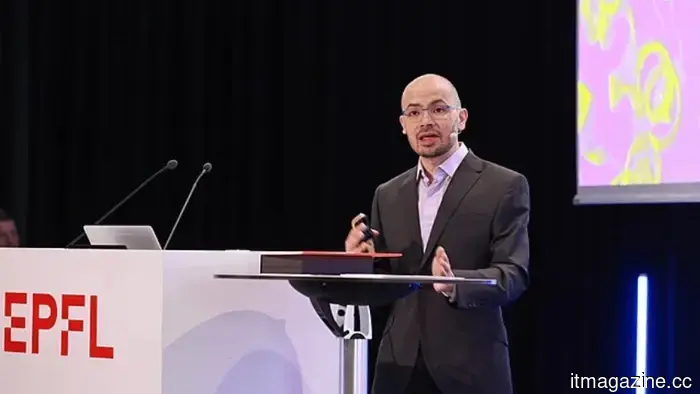 Demis Hassabis mentioned that Google DeepMind needed to revisit its startup origins following the Brain merger.
Hassabis mentions that Google DeepMind needed to revisit its startup origins and adopt a more resourceful approach following the Brain merger, managing Isomorphic Labs as his side job starting at 10 PM.
Demis Hassabis mentioned that Google DeepMind needed to revisit its startup origins following the Brain merger.
Hassabis mentions that Google DeepMind needed to revisit its startup origins and adopt a more resourceful approach following the Brain merger, managing Isomorphic Labs as his side job starting at 10 PM.
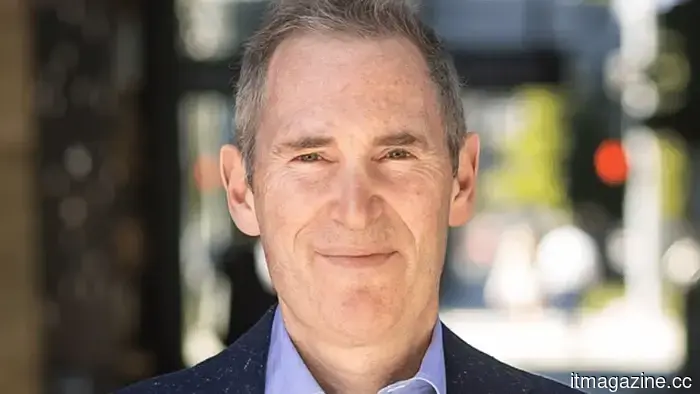 Jassy indicates that Amazon's chip division could have a value of $50 billion and suggests that there might be plans to sell them externally.
In Andy Jassy's 2026 letter to shareholders, it is disclosed that Amazon's Graviton, Trainium, and Nitro chips produce over $20 billion annually, with the potential for direct sales to third parties.
Jassy indicates that Amazon's chip division could have a value of $50 billion and suggests that there might be plans to sell them externally.
In Andy Jassy's 2026 letter to shareholders, it is disclosed that Amazon's Graviton, Trainium, and Nitro chips produce over $20 billion annually, with the potential for direct sales to third parties.
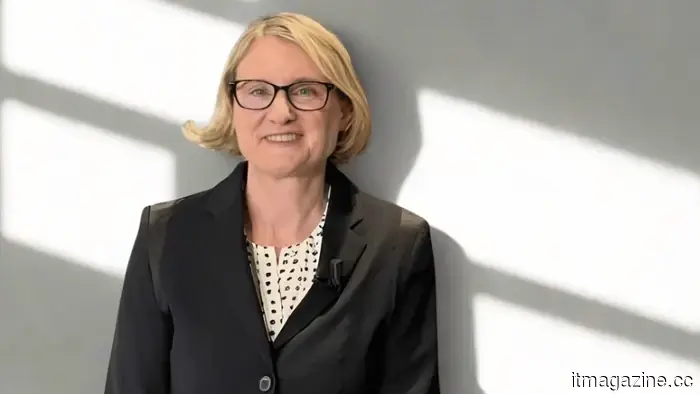 Oracle has named Hilary Maxson as CFO to oversee its $50 billion investment in AI data centers.
Hilary Maxson, who previously served as group CFO at Schneider Electric, is joining Oracle as the company announces the reduction of 30,000 jobs and a $50 billion investment in AI data center development.
Oracle has named Hilary Maxson as CFO to oversee its $50 billion investment in AI data centers.
Hilary Maxson, who previously served as group CFO at Schneider Electric, is joining Oracle as the company announces the reduction of 30,000 jobs and a $50 billion investment in AI data center development.
Demis Hassabis stated that Google DeepMind needed to revert to its startup origins following the merger with Brain.
Hassabis mentions that Google DeepMind needed to revert to its startup origins and adopt a more resourceful approach following the merger with Brain, managing Isomorphic Labs as a second job starting at 10 PM.