
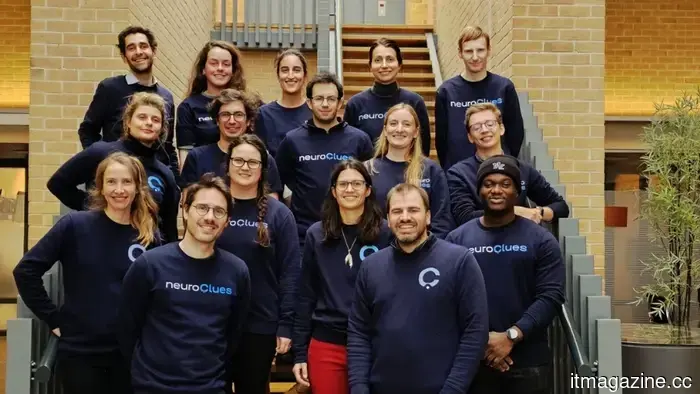
neuroClues has secured €10 million to enhance Parkinson’s diagnosis.
The French-Belgian medtech company employs a portable headset capable of capturing up to 800 infrared images per eye every second, which extracts oculomotor biomarkers that can reveal conditions like Parkinson’s, Alzheimer’s, and multiple sclerosis years prior to the onset of clinical symptoms. The firm obtained CE certification in January 2025 and aims for FDA clearance in 2026.
neuroClues, a French-Belgian medtech firm creating an AI-driven eye-tracking device for the early diagnosis of neurological disorders, has completed a €10 million Series A funding round. This financing follows the company’s achievement of CE certification for its Class IIa medical device in January 2025, allowing it to enter the European market, and brings its total funding since its establishment in 2020 to over €22 million, including grants.
The neuroClues device is a portable, connected headset that records up to 800 infrared images per eye per second as a patient visually tracks a moving target on a screen. Its AI algorithms extract oculomotor biomarkers within minutes, supplying neurologists with objective and quantifiable data that may suggest neurological disorders like Parkinson’s disease, Alzheimer’s disease, and multiple sclerosis, often years before clinical signs such as memory loss or tremors emerge. The device does not need calibration and is designed to seamlessly integrate into a standard clinical consultation.
Founded in 2020 as P3Lab by Antoine Pouppez, Pierre Daye, and Pierre Pouget—two of whom are neuroscience researchers with over 35 years of combined experience in studying oculomotor function—the company is leveraging a long-standing research foundation that associates eye movements with neurological diagnosis, a connection first documented in a scientific paper from 1905. Although extensive research has proven the clinical relevance of this technique across thousands of patients, it has not been widely adopted in clinical practice due to previous limitations concerning hardware costs or precision.
neuroClues aims to address the significant diagnostic gap in Parkinson’s disease, where one in four patients is misdiagnosed and individuals typically wait around 13 months for a confirmed diagnosis. Research indicates that during this waiting period, patients usually lose between 50 to 70 percent of their dopamine-producing neurons. The projected number of people with Parkinson’s is expected to rise to 13 million by 2040. The neuroClues device is currently being utilized in the Iceberg cohort study at the Paris Brain Institute within La Salpêtrière Hospital. This study, led by Professors Marie Vidailhet and Stéphane Lehéricy, is investigating biomarkers for early detection of Parkinson’s.
Previous presentations at the Society for Neuroscience conference revealed initial evidence of a test capable of identifying a preclinical Parkinson’s marker five years ahead of an imaging-confirmed diagnosis.
Before the Series A funding round, neuroClues had raised €4.7 million in seed funding in 2021, along with €2.5 million in grants from the European Commission’s EIC Accelerator program, which has committed up to €9 million in follow-on EIC equity, and €5 million in a pre-Series A funding round in April 2024 led by White Fund and the EIC Accelerator, with contributions from Invest.BW and business angels, including Fiona du Monceau and Olivier Legrain, CEO of IBA. The newly acquired funds will be utilized to expand the commercial team, seek FDA clearance in the United States by 2026, and broaden its reach into European markets. The company operates its headquarters and manufacturing site in Louvain-la-Neuve, Belgium, with an office located in the iPEPS incubator at La Salpêtrière Hospital in Paris.
Other articles
 Anthropic is in discussions to invest $200 million in a private equity initiative aimed at advancing Claude in the enterprise sector.
Anthropic is in discussions for a joint venture with Blackstone, H&F, and Permira to implement Claude within their private equity portfolio companies as it competes with OpenAI for a share of the enterprise market.
Anthropic is in discussions to invest $200 million in a private equity initiative aimed at advancing Claude in the enterprise sector.
Anthropic is in discussions for a joint venture with Blackstone, H&F, and Permira to implement Claude within their private equity portfolio companies as it competes with OpenAI for a share of the enterprise market.
 Anthropic is in discussions to invest $200 million in a private equity initiative aimed at promoting Claude within the enterprise sector.
Anthropic is in discussions for a joint venture with Blackstone, H&F, and Permira to integrate Claude into private equity portfolio companies while competing with OpenAI for a share of the enterprise market.
Anthropic is in discussions to invest $200 million in a private equity initiative aimed at promoting Claude within the enterprise sector.
Anthropic is in discussions for a joint venture with Blackstone, H&F, and Permira to integrate Claude into private equity portfolio companies while competing with OpenAI for a share of the enterprise market.
 AI has significantly accelerated coding, but it has also created its own set of issues.
Thanks to AI, everyone has become a coder. However, an increase in code leads to more bugs and vulnerabilities, while there aren't enough engineers to address them.
AI has significantly accelerated coding, but it has also created its own set of issues.
Thanks to AI, everyone has become a coder. However, an increase in code leads to more bugs and vulnerabilities, while there aren't enough engineers to address them.
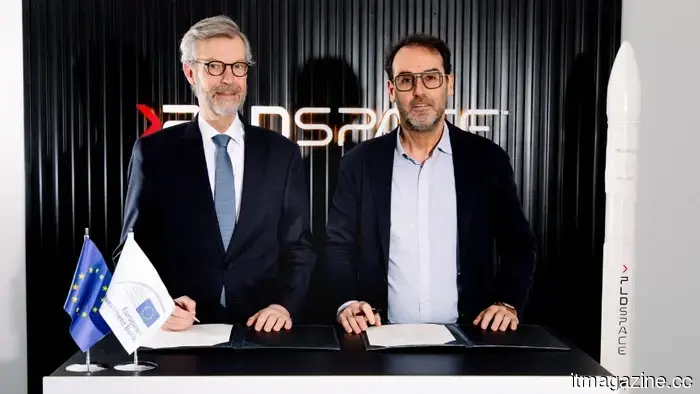 EIB provides PLD Space with a loan of €30 million to complete the construction of its MIURA 5 rocket.
EIB has agreed to a €30M venture debt loan with PLD Space, marking its initial direct investment in a small satellite launcher, in anticipation of MIURA 5's first test flight.
EIB provides PLD Space with a loan of €30 million to complete the construction of its MIURA 5 rocket.
EIB has agreed to a €30M venture debt loan with PLD Space, marking its initial direct investment in a small satellite launcher, in anticipation of MIURA 5's first test flight.
 QR code traffic scams may seem clever, but they raise significant concerns.
Fresh phishing schemes are employing QR codes in fraudulent traffic violation messages to acquire personal and financial information.
QR code traffic scams may seem clever, but they raise significant concerns.
Fresh phishing schemes are employing QR codes in fraudulent traffic violation messages to acquire personal and financial information.
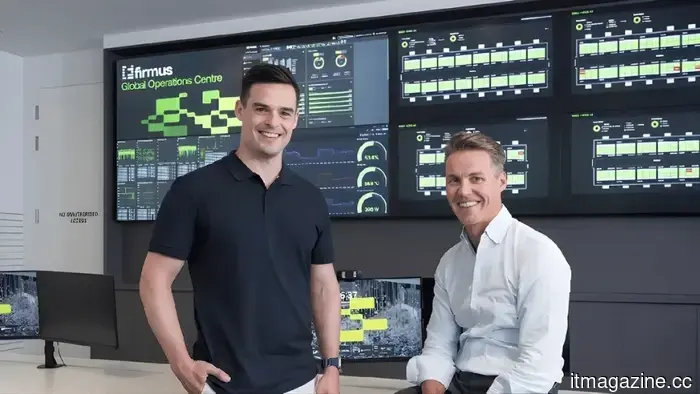 Nvidia-supported Firmus aims for a $2 billion IPO on the ASX following a $505 million fundraising and a $10 billion debt from Blackstone.
Firmus is on track for a $2 billion IPO on the ASX after securing $505 million at a $5.5 billion valuation, along with a $10 billion debt package from Blackstone to construct 1.6GW of AI factories throughout Australia.
Nvidia-supported Firmus aims for a $2 billion IPO on the ASX following a $505 million fundraising and a $10 billion debt from Blackstone.
Firmus is on track for a $2 billion IPO on the ASX after securing $505 million at a $5.5 billion valuation, along with a $10 billion debt package from Blackstone to construct 1.6GW of AI factories throughout Australia.
neuroClues has secured €10 million to enhance Parkinson’s diagnosis.
neuroClues has secured €10 million in a Series A funding round to commercialize its CE-marked eye-tracking technology aimed at aiding the early diagnosis of Parkinson’s and Alzheimer’s diseases.