

How AI marketplaces are transforming editorial advertising in 2026
For years, acquiring editorial coverage felt more like traditional marketing and less like a streamlined approach, resembling a tedious search through email archives. A brand would engage an agency, which would create a media list. This would then lead to dozens, sometimes even hundreds, of outreach emails to publishers. Conversations proliferated, negotiations extended, and only if everything aligned would a sponsored article or press release eventually be published. Both parties were all too familiar with this routine and weary of it, particularly the endless email threads with subjects like “Re:Re:Re: Re: Partnership opportunity.”
"Everyone in this industry has experienced that moment," says Alexander Storozhuk, founder of Medialister. "You open your inbox and find fifty emails in a single thread. And you realize: there must be a better way.”
For Storozhuk, that agitation ultimately transformed into a product, potentially leading to a change in how editorial advertising functions.
The outdated process no one appreciated
The framework of editorial advertising has scarcely evolved in over a decade. A brand seeks credibility or visibility in a media outlet; an agency or PR team identifies potential publications and initiates outreach. Discussions are held individually with each publisher, often via email. Agreements are formed, content is created, and then published.
In a simplified view, the process is as follows: brand → agency → email outreach → publisher.
Despite the expansion of digital marketing, the ecosystem surrounding editorial placements remains remarkably manual and fragmented, particularly on a global scale. This is in stark contrast to other advertising segments: display advertising operates through automated exchanges, social media ad management is centralized, and influencer marketing increasingly functions through specialized marketplaces. However, editorial placements still depend on spreadsheets, personal connections, and lengthy email discussions.
Transforming email into a marketplace
Storozhuk founded Medialister to alter this situation. His concept is straightforward: develop a marketplace where brands and agencies can find publishers, compare placement options, and manage campaigns all in one location, as opposed to through disparate email exchanges.
The platform compiles editorial opportunities from numerous publishers, such as sponsored articles, press releases, and guest posts, to ensure guaranteed media placements.
However, Medialister did not emerge spontaneously; it is a creation of PRNEWS, a company formed in Estonia under the government’s e-Residency digital identity program. With 72 employees, Storozhuk himself has 20 years of experience in news technologies, providing him with a unique blend of expertise in media, technology, and B2B communications. This background enabled him to recognize how technical infrastructure, editorial teams, and increasing brand needs could converge into a unified system.
At the same time, the demand for editorial advertising has been evolving. Brands are increasingly turning to sponsored content, native formats, and thought leadership to distinguish themselves in a crowded digital landscape and combat “banner blindness.”
The B2B sector is growing particularly swiftly, with technology, finance, and health-tech companies investing more in expert content and long-term media strategies to cultivate complex deals and influence multiple decision-makers.
As artificial intelligence began to change how professionals engage with software, Storozhuk anticipated another shift on the horizon. "If AI is becoming the interface for work," he thought, "then marketplaces also need to be accessible to AI."
Turning AI assistants into planners for media
This week, Medialister unveiled a Model Context Protocol (MCP) server that allows AI assistants like ChatGPT, Claude, and Gemini to interact directly with its editorial media marketplace.
In practical terms, marketers can now request their AI assistant to complete tasks that once took hours of research. For instance: “Identify technology publishers in the U.S. with domain authority above 50 and placements under $500.” The AI can search the marketplace, locate relevant outlets, and compile a shortlist of potential placements.
In essence, the conventional workflow may transform into something new: brand → AI agent → marketplace → publisher.
Storozhuk describes this transition as part of a larger evolution in how professionals utilize software: “AI assistants are becoming the operating system for knowledge work,” he states. “If that’s the case, then marketing platforms must be made accessible to AI agents.”
An immense and chaotic market
The prospects are substantial. The global content marketing market is predicted to reach hundreds of billions of dollars by the decade's end, with sponsored and native formats being among the fastest-growing sectors of digital advertising.
Brands increasingly depend on media placements not only for reach but also for credibility, search visibility, and thought leadership. Meanwhile, the infrastructure connecting advertisers and publishers is facing pressure from various directions. Publishers are grappling with decreasing open-web ad revenues, intensified competition from large platform “walled gardens,” and an influx of content sources vying for limited user attention.
Some outlets are pivoting towards subscription and paywall models, others are developing in-house content studios for brands, yet nearly all are searching for more stable and transparent ways to monetize editorial formats

Other articles
 Joby and Air Space Intelligence collaborate to oversee the skies for electric air taxis in the U.S.
Joby Aviation and Air Space Intelligence are employing AI-driven airspace simulation to ready the U.S. National Airspace System for large-scale eVTOL commercial activities.
Joby and Air Space Intelligence collaborate to oversee the skies for electric air taxis in the U.S.
Joby Aviation and Air Space Intelligence are employing AI-driven airspace simulation to ready the U.S. National Airspace System for large-scale eVTOL commercial activities.
 An Intel leak forecasts a formidable Serpent Lake processor equipped with Nvidia RTX capabilities.
A new leak reveals details about Intel's Serpent Lake, which is a collaborative System on Chip (SoC) developed by Intel and Nvidia, featuring RTX Rubin graphics alongside Copper Shark P-cores. This SoC is expected to launch between 2028 and 2029 and has the potential to transform high-performance computing in laptops.
An Intel leak forecasts a formidable Serpent Lake processor equipped with Nvidia RTX capabilities.
A new leak reveals details about Intel's Serpent Lake, which is a collaborative System on Chip (SoC) developed by Intel and Nvidia, featuring RTX Rubin graphics alongside Copper Shark P-cores. This SoC is expected to launch between 2028 and 2029 and has the potential to transform high-performance computing in laptops.
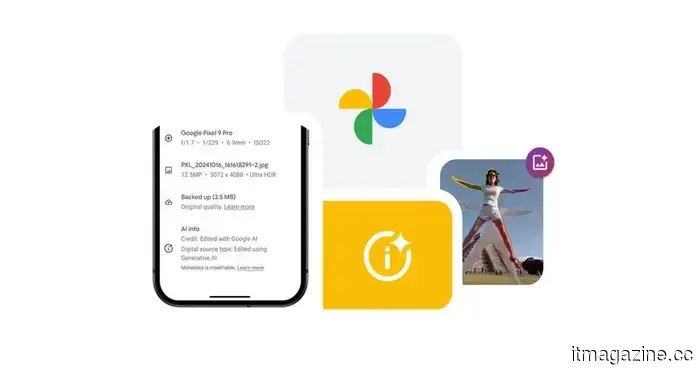 Google Photos introduces AI enhancement features and video playback speed controls.
Google Photos introduces AI Enhance and video speed controls on Android, allowing for quicker edits and more adaptable playback. However, the timing of the rollout may differ across devices and regions.
Google Photos introduces AI enhancement features and video playback speed controls.
Google Photos introduces AI Enhance and video speed controls on Android, allowing for quicker edits and more adaptable playback. However, the timing of the rollout may differ across devices and regions.
 Google Maps employs Gemini to generate captions for your images.
Google Maps is now offering AI-generated captions for photos that users upload, utilizing Gemini technology. This feature is currently available on iOS in the U.S., with a worldwide rollout for Android expected in the coming months.
Google Maps employs Gemini to generate captions for your images.
Google Maps is now offering AI-generated captions for photos that users upload, utilizing Gemini technology. This feature is currently available on iOS in the U.S., with a worldwide rollout for Android expected in the coming months.
 Curious about what people are searching for worldwide? Google Trends has received a mobile update to satisfy that curiosity.
Google Trends is now available on mobile with Gemini-powered recommendations that assist you in comparing topics and identifying trending searches more quickly, transforming a previously manual tool into a faster method for grasping what users are searching for.
Curious about what people are searching for worldwide? Google Trends has received a mobile update to satisfy that curiosity.
Google Trends is now available on mobile with Gemini-powered recommendations that assist you in comparing topics and identifying trending searches more quickly, transforming a previously manual tool into a faster method for grasping what users are searching for.
 Internal physical fans in gaming phones are experiencing their most significant surge in popularity to date.
Xiaomi is reintroducing active cooling with the forthcoming Redmi K90 Max, a smartphone that may extend the use of built-in fans beyond just specialized gaming devices.
Internal physical fans in gaming phones are experiencing their most significant surge in popularity to date.
Xiaomi is reintroducing active cooling with the forthcoming Redmi K90 Max, a smartphone that may extend the use of built-in fans beyond just specialized gaming devices.
How AI marketplaces are transforming editorial advertising in 2026
Investigate how AI assistants and platforms such as Medialister are revolutionizing editorial advertising by substituting manual outreach with automated media planning.