

Google's AI mental health tools seem beneficial – but they aren't sufficient on their own.
Google is intensifying its commitment to mental health safety with an important update to its Gemini platform, which features a “one-touch” crisis support option aimed at connecting users to real-life assistance more swiftly. This initiative is part of a larger effort to make sure AI tools function responsibly in sensitive contexts, particularly when users may be facing distressing situations.
Essential to this update is a revamped safety mechanism that activates upon detection of indicators of potential mental health crises, such as self-harm or suicidal thoughts. Rather than continuing a typical AI dialogue, the system swiftly shifts to prompt immediate intervention. Users are given a simplified interface that allows them to quickly connect with professional support via calls, texts, live chats, or official crisis hotline websites.
What sets this approach apart is its persistence.
Once the one-touch interface is activated, access to crisis support remains visible throughout the conversation, continually encouraging users to seek human assistance rather than depending solely on AI-generated replies. The design emphasizes urgency and easy access, minimizing obstacles during critical moments when quick action is essential.
This update signifies an increasing acknowledgment that AI must go beyond merely offering information – it should actively guide users towards safe outcomes. Google states that the system was developed in partnership with clinical experts, ensuring that responses are designed to promote help-seeking behavior without reinforcing harmful thoughts or actions.
Crucially, Gemini is also being trained to avoid endorsing dangerous beliefs or behaviors.
Instead, it is intended to gently steer users, differentiate between subjective feelings and objective reality, and prioritize connections to real-world resources. This balance between responsiveness and restraint is key to the platform’s developing safety framework.
The importance of this feature lies in its potential real-world effect. With more than a billion individuals worldwide affected by mental health issues, digital tools like Gemini are increasingly serving as the first point of contact during vulnerable times. By embedding a one-touch pathway to professional support, Google seeks to connect online interactions with offline care.
For users, this translates to quicker, more straightforward access to assistance when it is needed most. The update alleviates the burden of searching for resources, ensuring that support options are presented clearly and promptly.
Looking forward, Google intends to keep refining these safeguards through continual research, testing, and collaboration with mental health professionals. As AI becomes more embedded in everyday life, features like one-touch crisis support could significantly influence how technology addresses human vulnerability, emphasizing safety, accountability, and real-world interaction over mere convenience.
Our Perspective
Google’s AI mental health features appear to be a positive advancement, especially with tools that swiftly guide users toward real-world assistance. The one-touch crisis support and enhanced responses demonstrate a clear intention to prioritize safety over engagement.
However, there is an inherent limitation – AI can offer assistance, but it cannot substitute for human empathy, clinical judgment, or long-term care. For someone in distress, a timely prompt is beneficial, but it does not provide a complete solution. These tools serve best as bridges, not endpoints. The true challenge lies in ensuring users do not stop at AI interaction and actually seek professional support when it is most needed.


Other articles
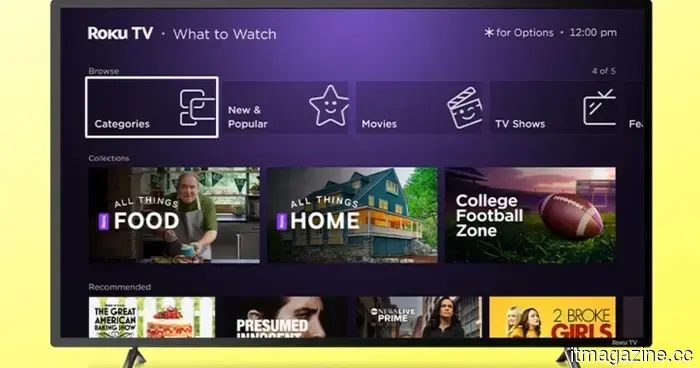 Roku has recently introduced six free channels featuring classic sitcoms, reality television, and movies.
Roku has introduced six additional free channels to The Roku Channel, offering classic Westerns, reality television, Spanish-language programming, and various other content to all Roku TVs and streaming devices.
Roku has recently introduced six free channels featuring classic sitcoms, reality television, and movies.
Roku has introduced six additional free channels to The Roku Channel, offering classic Westerns, reality television, Spanish-language programming, and various other content to all Roku TVs and streaming devices.
 Google Maps employs Gemini to generate captions for your images.
Google Maps is now offering AI-generated captions for photos that users upload, utilizing Gemini technology. This feature is currently available on iOS in the U.S., with a worldwide rollout for Android expected in the coming months.
Google Maps employs Gemini to generate captions for your images.
Google Maps is now offering AI-generated captions for photos that users upload, utilizing Gemini technology. This feature is currently available on iOS in the U.S., with a worldwide rollout for Android expected in the coming months.
 Paladin purchases ICT in a €60 million effort to lead the European ITAD market.
Paladin EnviroTech has purchased ICT, the first R2v3-certified ITAD provider in Ireland, finalizing a $70 million series of five acquisitions aimed at capitalizing on Europe’s growing demand for AI-driven hardware disposal.
Paladin purchases ICT in a €60 million effort to lead the European ITAD market.
Paladin EnviroTech has purchased ICT, the first R2v3-certified ITAD provider in Ireland, finalizing a $70 million series of five acquisitions aimed at capitalizing on Europe’s growing demand for AI-driven hardware disposal.
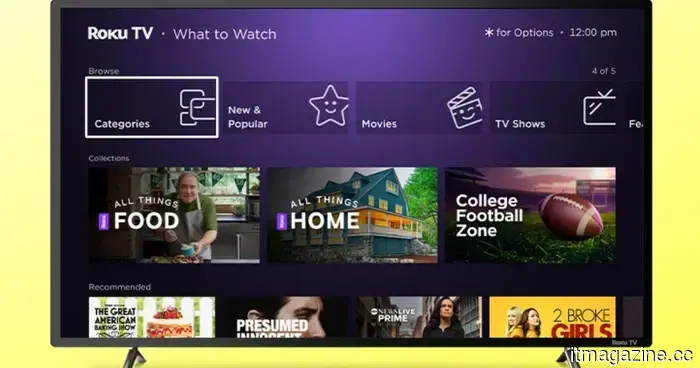 Roku has recently introduced six new free channels featuring classic sitcoms, reality shows, and movies.
Roku has introduced six additional free channels to The Roku Channel, offering classic Westerns, reality TV, Spanish-language programming, and more for all Roku TVs and streaming devices.
Roku has recently introduced six new free channels featuring classic sitcoms, reality shows, and movies.
Roku has introduced six additional free channels to The Roku Channel, offering classic Westerns, reality TV, Spanish-language programming, and more for all Roku TVs and streaming devices.
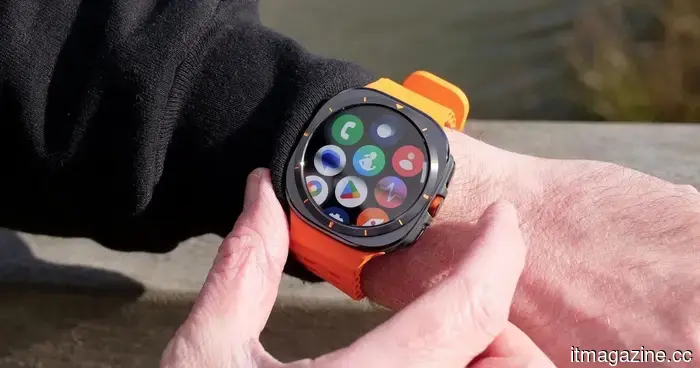 The most significant upgrade of the Galaxy Watch Ultra 2 might not be accessible to the majority of consumers.
The Galaxy Watch Ultra 2 may offer 5G connectivity, but a recent report indicates that this upgrade might be restricted to specific markets.
The most significant upgrade of the Galaxy Watch Ultra 2 might not be accessible to the majority of consumers.
The Galaxy Watch Ultra 2 may offer 5G connectivity, but a recent report indicates that this upgrade might be restricted to specific markets.
 Google's AI mental health tools seem beneficial, yet they aren't sufficient on their own.
Google aims to make it easier for you to access mental health support.
Google's AI mental health tools seem beneficial, yet they aren't sufficient on their own.
Google aims to make it easier for you to access mental health support.
Google's AI mental health tools seem beneficial – but they aren't sufficient on their own.
Google aims to assist you in locating mental health resources more conveniently.