
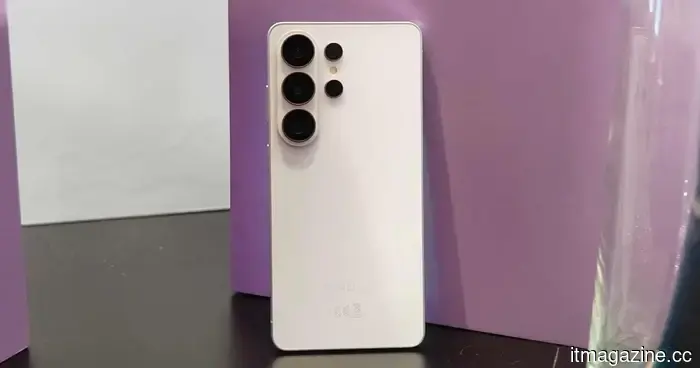
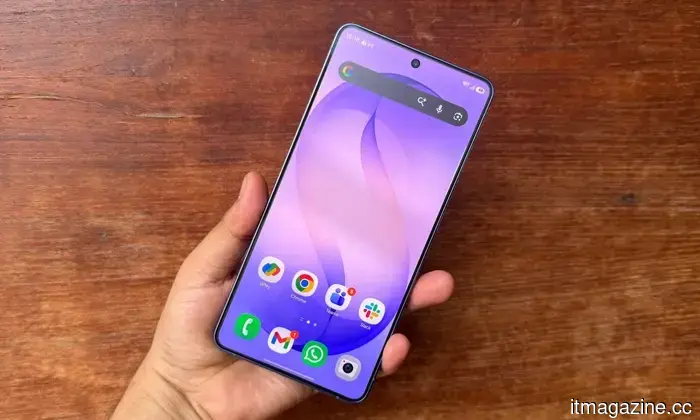
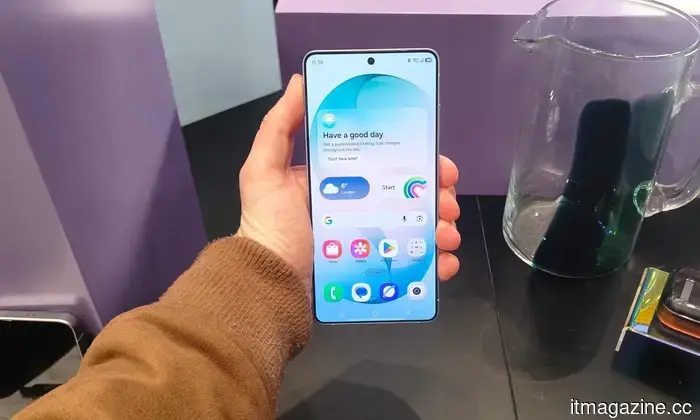
The Samsung Galaxy S26 Ultra seems more like a software update, which is why it feels unexciting.
There was a time when transitioning to a new flagship phone felt like entering a realm of significant enhancement. Larger batteries, clearer cameras, quicker charging – genuine, substantial improvements that justified both the excitement and the cost.
The Galaxy S26 Ultra doesn’t seem to represent that kind of advancement. It comes across as refinement pretending to be a reinvention.
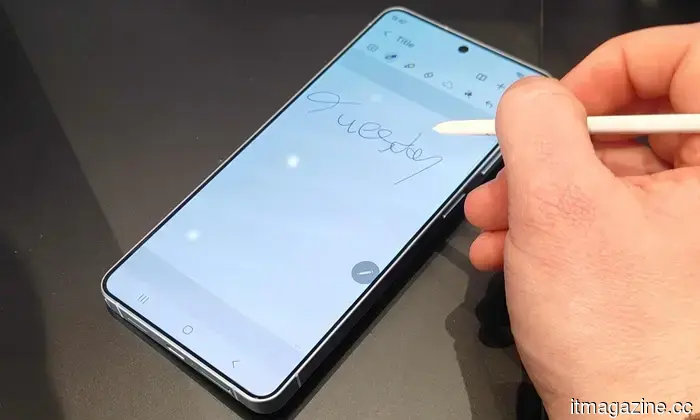
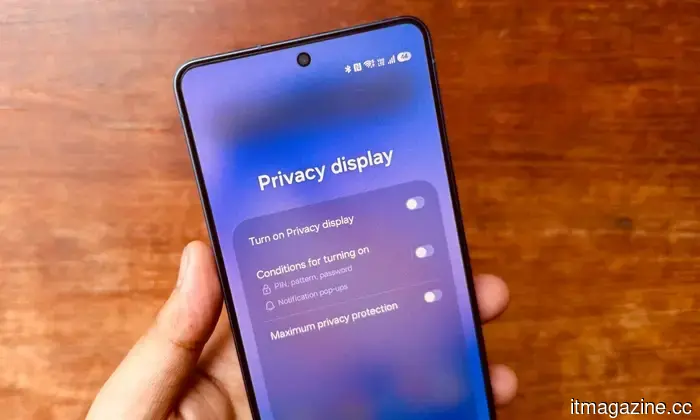
On paper, Samsung follows its usual pattern. The S26 Ultra features Qualcomm’s latest Snapdragon 8 Elite Gen 5 chip, boasting around a 10% CPU and a 15% GPU boost compared to last year’s version. It now offers up to 60W wired charging, an increase from 45W, and adds features like a privacy display and new AI-driven tools integrated throughout the system.
Individually, these enhancements sound significant. However, collectively, they don’t feel revolutionary, as the essentials – what users truly notice – haven’t changed substantially.
The battery remains at 5,000mAh, a capacity that Samsung has used across various models, from the S23 Ultra to the S25 Ultra. While charging is indeed faster, it isn’t dramatically so. In practical terms, it results in time savings of mere minutes rather than behavioral shifts. Furthermore, in some evaluations, battery performance shows only slight improvements, primarily due to efficiency gains from the new chip instead of a hardware advancement.
The camera situation is even more revealing
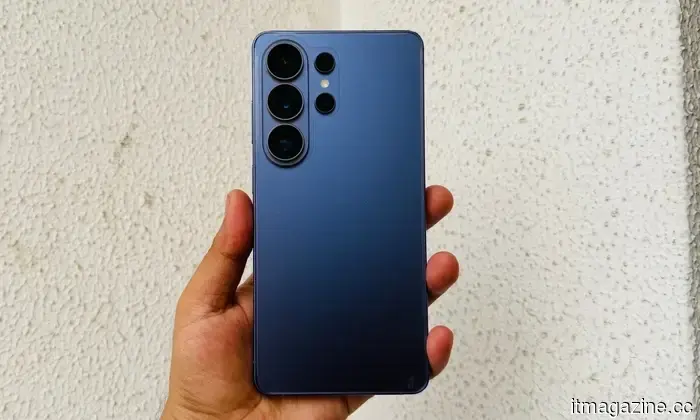
The S26 Ultra maintains a triple 200-10-50MP configuration, with minor adjustments such as a wider f/1.4 aperture on the main sensor. However, the size of the sensor has largely remained the same, a factor of significance. Competitors like Xiaomi and Vivo have adopted 1-inch-type sensors that can capture more light and detail, particularly in low-light settings. The difference isn't just technical; it’s evident in depth, dynamic range, and natural detail.
Samsung’s strategy, on the other hand, continues to depend heavily on computational photography. The results are still excellent but also familiar. The images are bright, sharp, and slightly processed, making them visually appealing for social media but not necessarily groundbreaking.
And this is the recurring theme: nothing is worse, yet nothing is notably better.
Hence, Samsung embraces AI
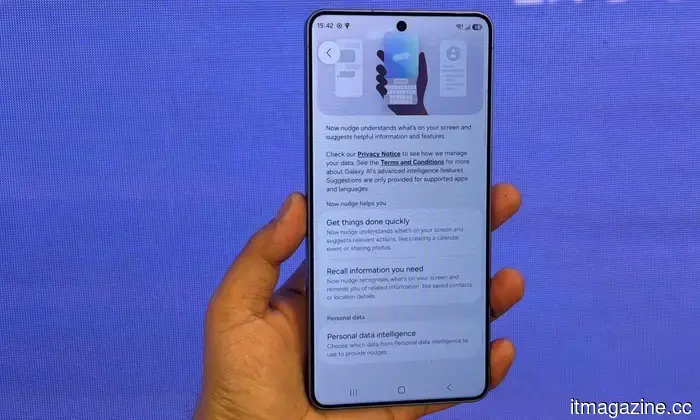
The S26 Ultra is loaded with AI functionalities – image generation, object removal, real-time editing, writing tools, and contextual suggestions. Some of these are genuinely impressive. You can photograph scenes, eliminate objects, adjust lighting, or even add entirely new elements using generative AI. You can rewrite messages in various tones or create content directly from prompts.
Technically, it’s powerful. Practically, it’s complex.
Because most of these features fit into two categories. The first is automation – tasks like translation, smart suggestions, or contextual actions. While useful, they remain inconsistent. Voice assistants like Bixby have seen improvements, but they still struggle with context and reliability. Pose a complex question, and you might receive an irrelevant answer.
The second category encompasses generative AI – the eye-catching aspects. Image edits, creative tools, and content creation. These can be enjoyable but are rarely essential. Moreover, there are compromises. Many of these tools can decrease image resolution by as much as 20–30% or produce content that doesn’t align with the device’s native display ratio. In some instances, a generated image may come out at 1024×1024 resolution on a phone boasting a 2K display.
While it's impressive technology, it doesn't always perform well in practical use.
This raises a bigger question. If the most prominent upgrades are software features that could theoretically be made available to older models, what exactly is the incentive to upgrade?
Here is where the S26 Ultra starts to feel less like a new phone and more like a software update disguised as hardware. This trend isn't limited to Samsung; it's indicative of the entire industry.
Flagship phones are no longer characterized by massive hardware advancements. They are defined by balance.
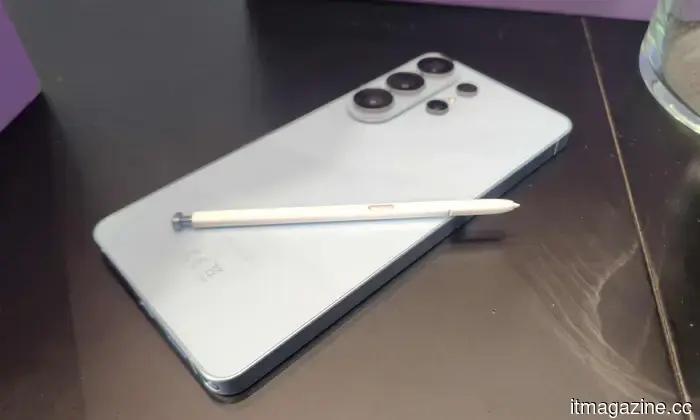
The S26 Ultra is arguably the most comprehensive Android device available. It features a superb display, impressive battery life, versatile cameras, extensive software support (up to seven years), and one of the most customizable software interfaces through One UI. It even includes unique features like the integrated S Pen.
However, in its quest to be the ideal all-rounder, it takes no risks. It doesn't have the largest battery, the biggest camera sensor, the fastest charging, or push any particular category to its extremes.
Instead, it plays it safe. And this sense of security is starting to feel predictable. Other brands are more aggressively experimenting. Some focus on enhancing camera hardware, while others explore battery technology or rapid charging. While not all approaches succeed, they foster a sense of momentum – a sense of advancement.
In contrast, Samsung favors optimization instead of reinvention. This makes the S26 Ultra an excellent choice for most users. It performs everything well, making it perfect for the average consumer, where the
Other articles
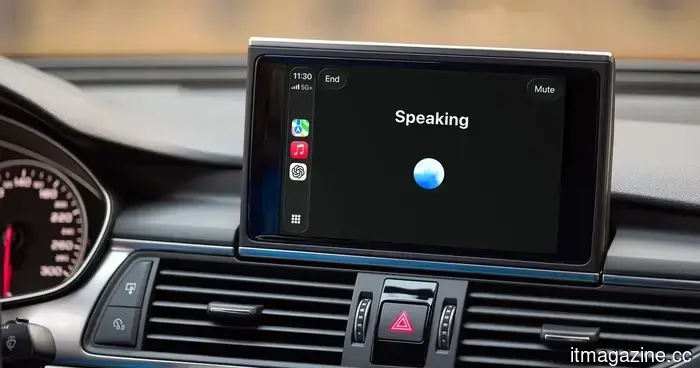 You can now communicate with ChatGPT through your car using CarPlay.
ChatGPT is now accessible on Apple CarPlay through iOS 26.4, providing voice-only AI interactions to ensure safer, hands-free usage while driving.
You can now communicate with ChatGPT through your car using CarPlay.
ChatGPT is now accessible on Apple CarPlay through iOS 26.4, providing voice-only AI interactions to ensure safer, hands-free usage while driving.
 Penemue secures €1.7M to enhance AI hate speech detection capabilities.
Penemue has secured €1.7M for its AI platform that identifies online hate speech and digital violence across 89 languages.
Penemue secures €1.7M to enhance AI hate speech detection capabilities.
Penemue has secured €1.7M for its AI platform that identifies online hate speech and digital violence across 89 languages.
 Microsoft is shifting its focus from borrowing AI to creating its own.
Microsoft aims to reduce its dependence on OpenAI and develop its own advanced AI models by 2027, a shift that could alter the way you interact with Teams, Copilot, and other services.
Microsoft is shifting its focus from borrowing AI to creating its own.
Microsoft aims to reduce its dependence on OpenAI and develop its own advanced AI models by 2027, a shift that could alter the way you interact with Teams, Copilot, and other services.
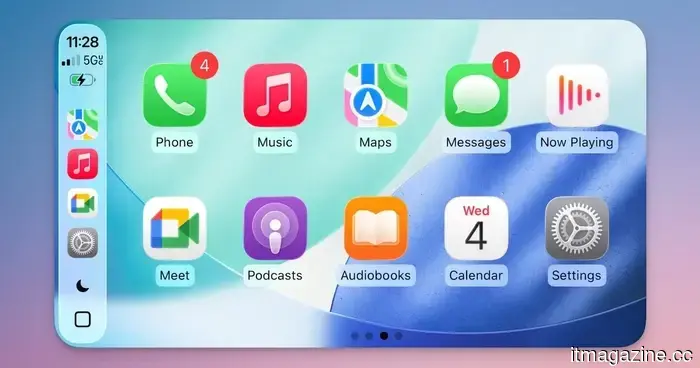 Google Meet launches on Apple CarPlay, leaving Android Auto users in the lurch.
Google Meet is now available on Apple CarPlay, allowing you to join meetings directly from your dashboard without needing to use your phone. Meanwhile, Android Auto is still awaiting its invitation.
Google Meet launches on Apple CarPlay, leaving Android Auto users in the lurch.
Google Meet is now available on Apple CarPlay, allowing you to join meetings directly from your dashboard without needing to use your phone. Meanwhile, Android Auto is still awaiting its invitation.
 The Artemis II moon crew has just entered the most crucial phase to date.
NASA's Artemis II crew had a fantastic beginning on Wednesday when their Orion spacecraft successfully entered Earth orbit after a stunning launch from the Kennedy Space Center in Florida. Following a day of system checks on the spacecraft, NASA astronauts Reid Wiseman, Victor Glover, and Christina Koch, along with Jeremy Hansen from the Canadian Space Agency (CSA), […]
The Artemis II moon crew has just entered the most crucial phase to date.
NASA's Artemis II crew had a fantastic beginning on Wednesday when their Orion spacecraft successfully entered Earth orbit after a stunning launch from the Kennedy Space Center in Florida. Following a day of system checks on the spacecraft, NASA astronauts Reid Wiseman, Victor Glover, and Christina Koch, along with Jeremy Hansen from the Canadian Space Agency (CSA), […]
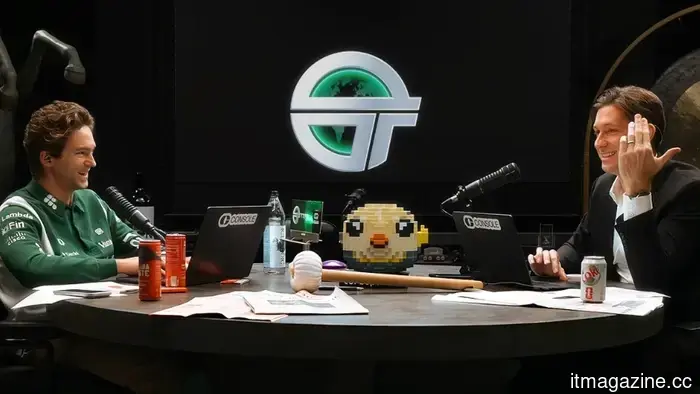 OpenAI has purchased the Silicon Valley talk show TBPN.
OpenAI has acquired TBPN, the daily tech talk program favored by Silicon Valley insiders, promising to maintain editorial independence while integrating it within its strategy division.
OpenAI has purchased the Silicon Valley talk show TBPN.
OpenAI has acquired TBPN, the daily tech talk program favored by Silicon Valley insiders, promising to maintain editorial independence while integrating it within its strategy division.
The Samsung Galaxy S26 Ultra seems more like a software update, which is why it feels unexciting.
The Galaxy S26 Ultra doesn’t exactly convey that sense of a significant change. Instead, it seems more like a polished version pretending to be something new.