

Next-generation AR technology transforms any surface into a touchscreen without the need for specialized equipment.
No more floating keyboards or uncomfortable arms. Just tap your desk and start working.
Typing on a virtual keyboard suspended in mid-air seems appealing until your arms tire. This is the experience many users of AR (augmented reality) and MR (mixed reality) headsets encounter today. You either struggle with handheld controllers or have to hold your hands aloft for extended periods, leading to fatigue.
Researchers at Tohoku University believe they have found a better solution. The team created a system that transforms any flat surface into a touch input area for AR and MR headsets. There are no additional sensors, special markers, or setup required.
How does it function?
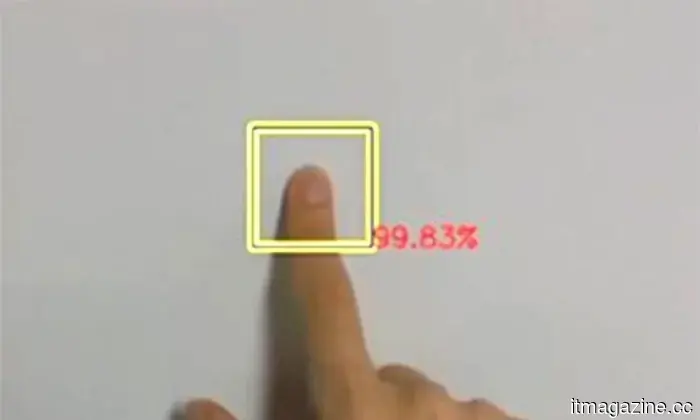
When you press your fingertip against a hard surface, the skin under your fingertip briefly turns white. This is known as the blanching effect, and the researchers have devised a method to detect it using the cameras on the headset.
Tohoku University
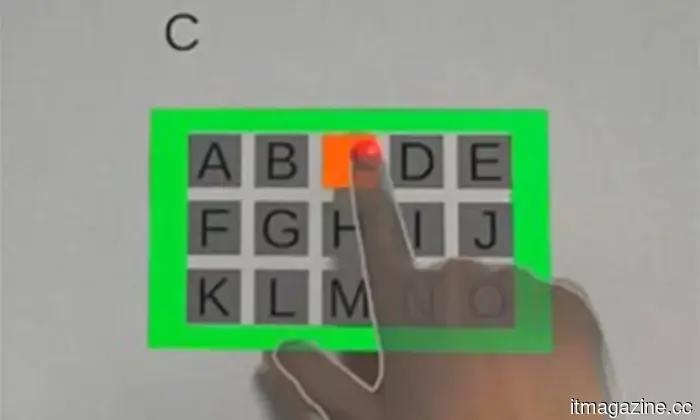
The researchers trained an AI model to recognize this color change in real time. When the camera detects the blanching effect, it registers a touch input, which corresponds to whatever is displayed on the surface in the AR environment.
“This research indicates that ordinary surfaces around us, such as walls, desks, or partitions, can serve as a touch input area,” explained Guanghan Zhao, the lead researcher. “Furthermore, this approach does not require special sensors, markers, or extra devices. It is accessible for anyone to use.”
Does it perform effectively?
User studies in the research confirmed that the system reliably detected touch inputs on various common surface materials, and participants completed interaction tasks accurately.
Tohoku University
“Our main goal was to create a technology that facilitates touch input on everyday physical surfaces for AR and MR without relying on specialized hardware,” stated Guanghan. Additionally, resting your fingers on a surface is far more comfortable than keeping your hands raised.
The findings were shared at the 33rd IEEE Conference on Virtual Reality and 3D User Interfaces in South Korea last week, and the paper has been accepted for publication in the IEEE Computer Society Digital Library.
Rachit is an experienced tech journalist with over seven years of expertise in covering the consumer technology landscape.
Scientists have developed a chip that operates at temperatures exceeding those of molten lava.
This discovery occurred by chance and could be one of the most significant advancements in chip technology in decades.
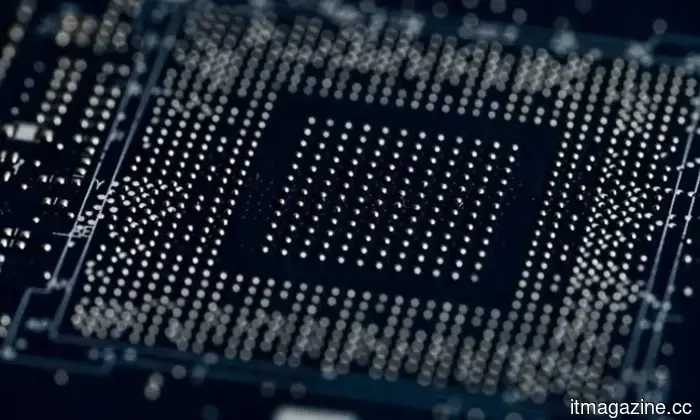
Heat has historically been the barrier preventing the creation of electronic devices capable of functioning in extreme temperatures. Not only do devices begin to thermally throttle under high temperatures, but they also stop working entirely when temperatures exceed 200 degrees. However, this may be changing, as a team at the University of Southern California has potentially surpassed this thermal limit. In a study published in Science, researchers engineered a new memory chip that remained operational at 700 degrees Celsius, which is hotter than molten lava.
Read more.
Slack is adding more features you can count on your fingers and toes.
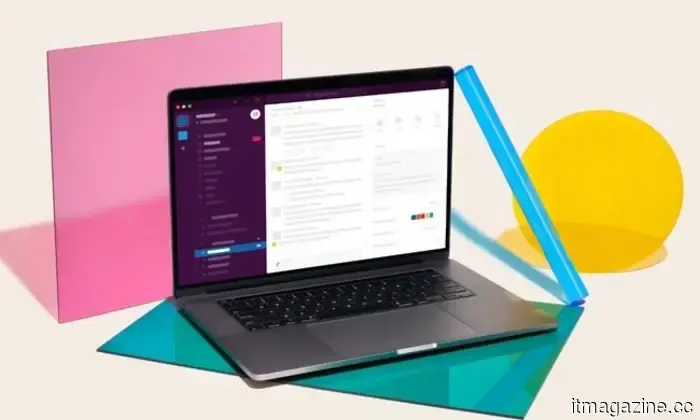
Slack is more than simply a chat application; it is a cloud-based workspace aimed at bringing teams together in one platform. Instead of managing countless emails, switching between various project tools, or pursuing individuals through direct messages, Slack consolidates everything into a single, organized hub. Its growing use of AI adds to its appeal. Slackbot, originally a simple assistant, is gradually becoming more adept. It can send reminders, respond to common inquiries, automate minor tasks, and help teams manage their work without constant communication. Slack has always excelled at synchronizing conversations and collaboration. With these enhancements, it seeks to transform Slackbot into a more reliable teammate.
What's new here?
Read more.
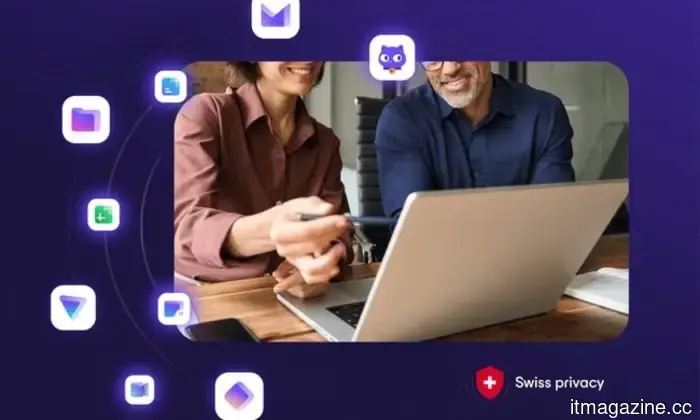
Proton has just launched a privacy-focused alternative to Google Workspace and Microsoft 365.
The Swiss privacy firm behind Proton Mail has finally created the office suite that Big Tech never wanted you to have—fully encrypted, ready for compliance, and competitively priced.
Google and Microsoft have long dominated the workplace productivity sector while simultaneously building empires from your data, and Proton is tired of observing from the sidelines. On March 31, 2026, Proton officially introduced its own workspace alternative, called Proton Workspace (the name says it all).
According to the company, Proton Workspace is a fully integrated productivity suite designed to offer businesses a genuine encryption-first alternative to those provided by major tech firms.
Read more.


Other articles
 The new Supergirl trailer resembles a crossover between John Wick and a Guardians of the Galaxy film.
The newest trailer for Supergirl combines cosmic mayhem with a John Wick-inspired quest to rescue Krypto, set against a Guardians-like backdrop that is both thrilling and somewhat reminiscent.
The new Supergirl trailer resembles a crossover between John Wick and a Guardians of the Galaxy film.
The newest trailer for Supergirl combines cosmic mayhem with a John Wick-inspired quest to rescue Krypto, set against a Guardians-like backdrop that is both thrilling and somewhat reminiscent.
 The latest Supergirl trailer resembles a blend of John Wick with a Guardians of the Galaxy film.
Supergirl's newest trailer blends cosmic turmoil with a John Wick-style quest to rescue Krypto, all set in a world reminiscent of the Guardians that feels thrilling yet somewhat too recognizable.
The latest Supergirl trailer resembles a blend of John Wick with a Guardians of the Galaxy film.
Supergirl's newest trailer blends cosmic turmoil with a John Wick-style quest to rescue Krypto, all set in a world reminiscent of the Guardians that feels thrilling yet somewhat too recognizable.
 Credibur reaches €2 billion in debt facility volume on its private credit infrastructure platform.
Credibur has attained a debt facility volume of €2 billion merely six months following its $2.2 million pre-seed funding. The fintech focuses on ongoing monitoring of private credit portfolios.
Credibur reaches €2 billion in debt facility volume on its private credit infrastructure platform.
Credibur has attained a debt facility volume of €2 billion merely six months following its $2.2 million pre-seed funding. The fintech focuses on ongoing monitoring of private credit portfolios.
-integrate-with-3rd-party-apps?.jpg) Is the Intuit Enterprise Suite (IES) compatible with third-party applications?
Intuit Enterprise Suite (IES) connects with third-party applications via APIs and the extensive QuickBooks ecosystem. These integrations enable businesses to tie together accounting with various tools, including project management, payroll, payments, and marketing platforms. By integrating systems, IES minimizes manual data entry, enhances data consistency, and assists teams in managing financial information more effectively across […]
Is the Intuit Enterprise Suite (IES) compatible with third-party applications?
Intuit Enterprise Suite (IES) connects with third-party applications via APIs and the extensive QuickBooks ecosystem. These integrations enable businesses to tie together accounting with various tools, including project management, payroll, payments, and marketing platforms. By integrating systems, IES minimizes manual data entry, enhances data consistency, and assists teams in managing financial information more effectively across […]
 Finnish neurowellness startup Audicin secures $1.9 million in funding.
Audicin has secured $1.9 million in funding from the co-founders of Oura to broaden its brainwave-based technology for nervous system regulation into sectors such as defense, healthcare, and enterprise.
Finnish neurowellness startup Audicin secures $1.9 million in funding.
Audicin has secured $1.9 million in funding from the co-founders of Oura to broaden its brainwave-based technology for nervous system regulation into sectors such as defense, healthcare, and enterprise.
 Pickmybrain secures $2.1 million in pre-seed funding.
Pickmybrain has secured $2.1 million in pre-seed funding for its AI expert platform, which allows over 1,000 professionals to monetize their expertise through AI and asynchronous video.
Pickmybrain secures $2.1 million in pre-seed funding.
Pickmybrain has secured $2.1 million in pre-seed funding for its AI expert platform, which allows over 1,000 professionals to monetize their expertise through AI and asynchronous video.
Next-generation AR technology transforms any surface into a touchscreen without the need for specialized equipment.
Researchers have discovered a method to transform any flat surface into a keyboard for AR headsets by leveraging the body’s natural response to pressure.