
Google is getting ready to launch a fitness band aimed at competing with the screen-free trend of Whoop.
Digital Trends may receive a commission if you make a purchase through links on our site. Why rely on us?
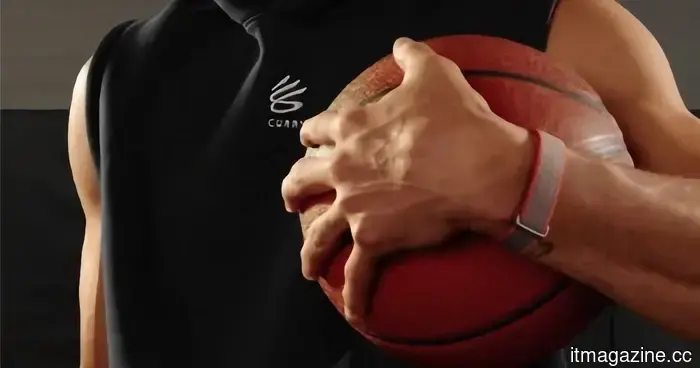
Google enlisted Steph Curry to introduce its latest Fitbit band, aiming directly at Whoop.
As the Apple Watch effectively dominates the consumer fitness sector, Whoop has established a strong presence in the athletic fitness space. Google is eager to enter this market and has been quietly developing a screen-free Fitbit fitness band to compete with Whoop's dominance.
NBA player Steph Curry hinted at the device on social media this week, stating it will foster a “new relationship with your health.” Bloomberg reports that Google has confirmed Curry has been “collaborating with the team to create something unique,” with more information expected soon.
The device looks like a knitted gray fitness band with orange accents and closely resembles Whoop’s current products. However, unlike Whoop’s model, which includes hardware in its subscription, Google plans to sell the hardware separately while also offering a paid subscription for enhanced features.
Can Fitbit’s personal AI health coach provide a competitive advantage?
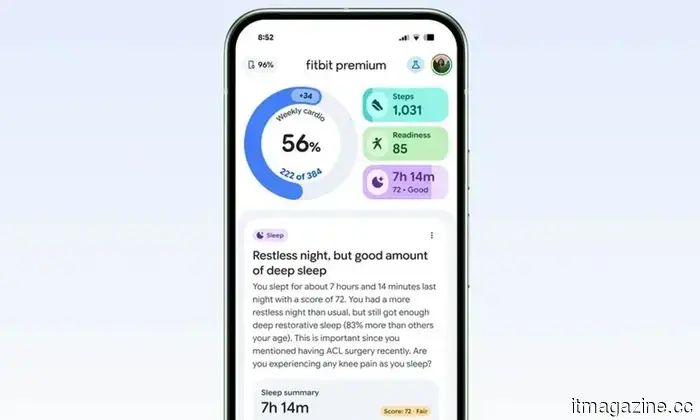
The hardware aspect is just part of the equation. Google is integrating the new band with an AI-driven Fitbit personal health coach, featured in an updated Fitbit app. This coach was made available in public preview last October for selected Fitbit Premium users in the US.
Picture it as combining a fitness trainer, sleep consultant, and health advisor all in one application. Users can request a 30-minute workout suitable for hotel rooms, inquire about reasons for waking up fatigued, or monitor how their cardio regimen impacts their sleep. The coach utilizes your biometric data over time, becoming more intelligent and tailored with continued use.
It even allows users to prepare questions for upcoming doctor visits. This feature is reminiscent of Copilot Health and Perplexity Health, which Microsoft and Perplexity recently introduced, respectively.
Should Whoop feel concerned?
Whoop recently secured $575 million in funding and currently boasts a valuation of $10.1 billion, indicating it’s not going anywhere soon. Whoop’s primary advantage lies in its brand recognition, visible on the wrists of numerous prominent athletes across various sports, including football, cricket, and basketball.
Google has certain advantages over Whoop, such as a well-established ecosystem, a well-known brand, and the AI capabilities of Gemini operating in the background. However, to position itself as a serious competitor in the athletic market, Google will need to form alliances with well-known sports figures.
Rachit is an experienced tech journalist with over seven years of expertise covering the consumer technology arena.
This device resembles a smartwatch but measures something far more alarming.
This smartwatch-like gadget doesn’t just track steps—it investigates microplastics.
Most wearables offer the typical features: monitoring heart rate, tracking sleep, and perhaps an unsolicited stress score. However, this one is targeting something much more concerning. Researchers at the University of Tartu’s Institute of Computer Science are developing a smartwatch-like device designed to detect micro- and nanoplastic particles within the human body. This work was shared in the Proceedings of the 27th International Workshop on Mobile Computing Systems and Applications.
Nothing is also exploring AI smart glasses. I hope they are transparent and have illumination.
Are we finally getting clear glasses with glyph lights? Go for it, Nothing!
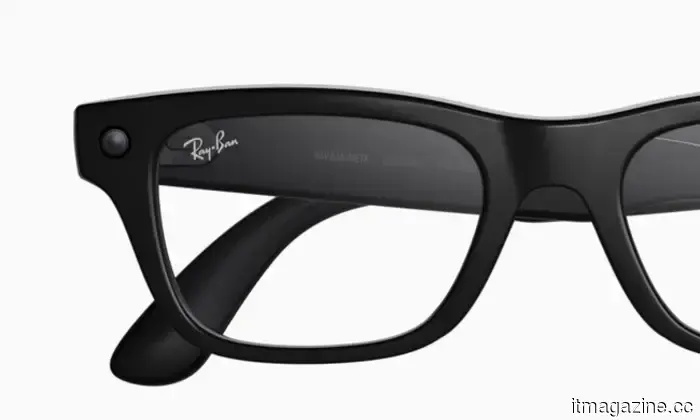
The competition for smart glasses will be intense next year, and it appears the UK-based company Nothing is eager to join the fray. According to Bloomberg, they plan to launch AI-enhanced smart glasses in the upcoming year, entering the market alongside Meta (and soon, Samsung).
A bold competitor to the prominent Meta?
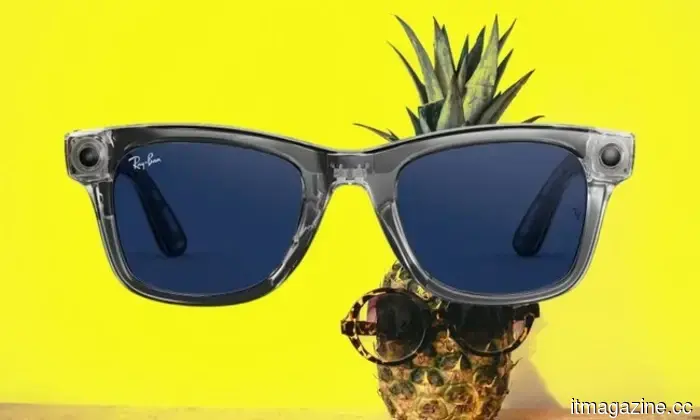
Meta reveals new prescription-ready AI glasses to integrate wearables into everyday life.
Meta has launched a new generation of AI-powered smart glasses specifically designed for prescription users, marking a significant advancement in making wearable technology more functional for daily use. Developed in collaboration with eyewear leader EssilorLuxottica, the new models aim to merge traditional eyewear with intelligent features.



Other articles
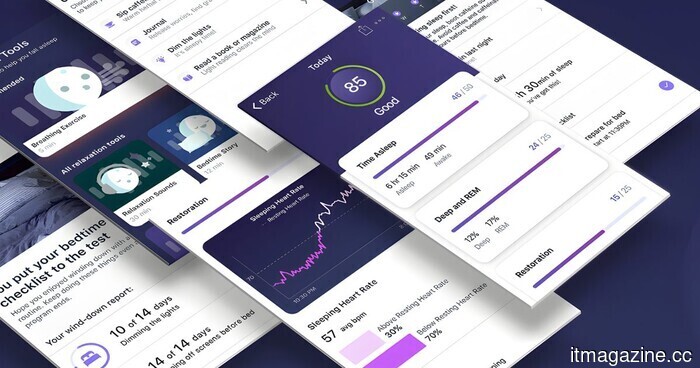 The Fitbit app has undergone a significant redesign, and you don't need a Premium subscription to experience it.
The redesign of Fitbit's app is now available without a waitlist; free users can now utilize the new four-tab layout along with updated features such as calorie tracking, mood logging, and an improved stress score.
The Fitbit app has undergone a significant redesign, and you don't need a Premium subscription to experience it.
The redesign of Fitbit's app is now available without a waitlist; free users can now utilize the new four-tab layout along with updated features such as calorie tracking, mood logging, and an improved stress score.
 US Senator describes Chinese vehicles as carcinogenic, vowing to enforce a strict import ban.
A proposed legislation seeks to impose a permanent ban on Chinese automobiles from entering the US market, encompassing hardware, software, and collaborations.
US Senator describes Chinese vehicles as carcinogenic, vowing to enforce a strict import ban.
A proposed legislation seeks to impose a permanent ban on Chinese automobiles from entering the US market, encompassing hardware, software, and collaborations.
 Next-generation AR technology transforms any surface into a touchscreen without the need for specialized equipment.
Researchers have discovered a method to transform any flat surface into a keyboard for AR headsets by leveraging the body’s natural response to pressure.
Next-generation AR technology transforms any surface into a touchscreen without the need for specialized equipment.
Researchers have discovered a method to transform any flat surface into a keyboard for AR headsets by leveraging the body’s natural response to pressure.
 What will the NASA Artemis II moon astronauts have to eat?
NASA’s Reid Wiseman, Victor Glover, and Christina Koch, along with the Canadian Space Agency’s Jeremy Hansen, are set to launch to the moon in under 24 hours. The Artemis II mission is scheduled to launch from the Kennedy Space Center on Wednesday, April 1. After NASA’s robust SLS rocket carries the crew...
What will the NASA Artemis II moon astronauts have to eat?
NASA’s Reid Wiseman, Victor Glover, and Christina Koch, along with the Canadian Space Agency’s Jeremy Hansen, are set to launch to the moon in under 24 hours. The Artemis II mission is scheduled to launch from the Kennedy Space Center on Wednesday, April 1. After NASA’s robust SLS rocket carries the crew...
 Credibur reaches €2 billion in debt facility volume on its private credit infrastructure platform.
Credibur has attained a debt facility volume of €2 billion merely six months following its $2.2 million pre-seed funding. The fintech focuses on ongoing monitoring of private credit portfolios.
Credibur reaches €2 billion in debt facility volume on its private credit infrastructure platform.
Credibur has attained a debt facility volume of €2 billion merely six months following its $2.2 million pre-seed funding. The fintech focuses on ongoing monitoring of private credit portfolios.
 The new Supergirl trailer resembles a crossover between John Wick and a Guardians of the Galaxy film.
The newest trailer for Supergirl combines cosmic mayhem with a John Wick-inspired quest to rescue Krypto, set against a Guardians-like backdrop that is both thrilling and somewhat reminiscent.
The new Supergirl trailer resembles a crossover between John Wick and a Guardians of the Galaxy film.
The newest trailer for Supergirl combines cosmic mayhem with a John Wick-inspired quest to rescue Krypto, set against a Guardians-like backdrop that is both thrilling and somewhat reminiscent.
Google is getting ready to launch a fitness band aimed at competing with the screen-free trend of Whoop.
Google is developing a Fitbit band without a screen to compete with Whoop, featuring an AI health coach driven by Gemini.